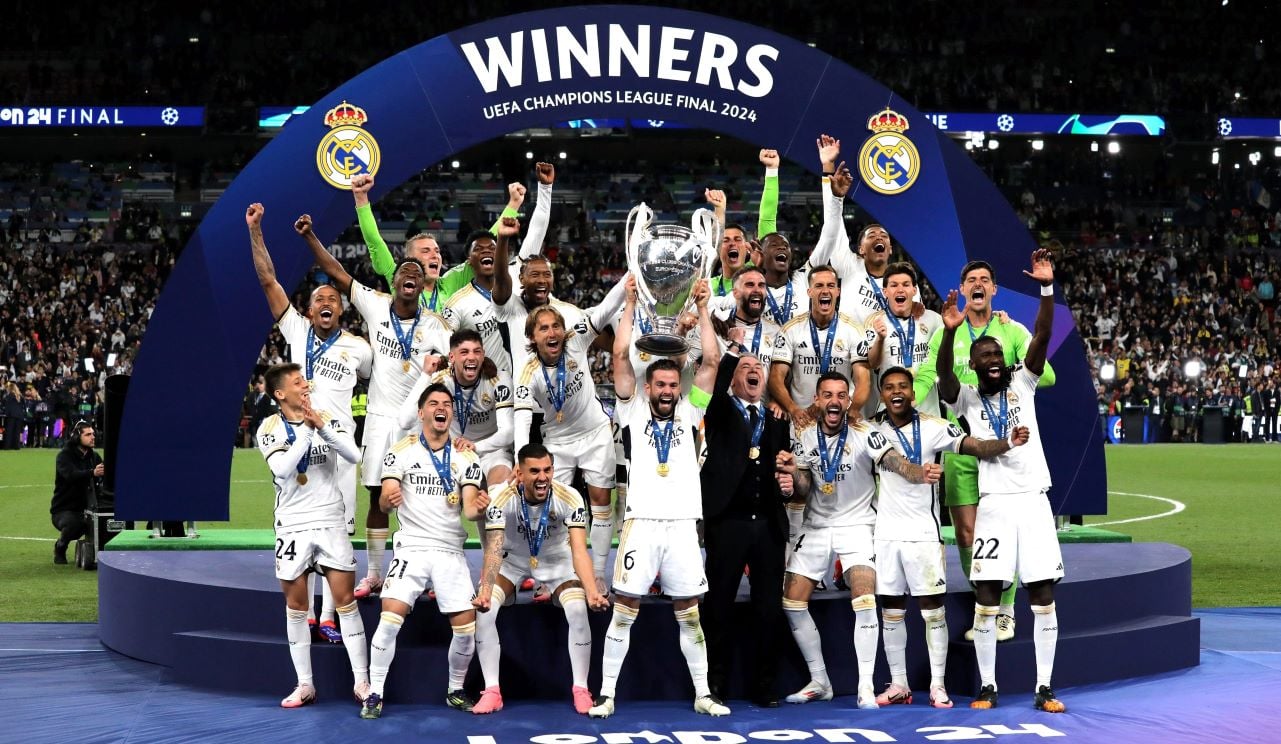
The Real Madrid football club was crowned as the best team for the 2023/2024 season at the prestigious Ballon d’Or ceremony in Paris. However, the team made headlines not for their success, but for their absence at the event. In a rare move, Real Madrid decided not to attend the award ceremony, citing dissatisfaction with the decision-making process—particularly regarding Vinícius Júnior’s position in the competition for the best player. Vinícius, who many expected to take home the Ballon d’Or trophy, was ultimately not chosen, which led the club to abstain from the ceremony in protest.
Reason for the Protest and Vinícius Júnior’s Dominant Season
Vinícius Júnior had a standout season, scoring 26 goals and delivering 11 assists across club and international competitions. His performances made him one of the season’s most consistent and impactful players, positioning him as a fan-favorite to win the Ballon d’Or. However, rumors that another player was being favored in the voting process were enough to cause friction between the Real Madrid leadership and the award’s organizers. In response, the club showed solidarity with Vinícius by boycotting the event and questioning the transparency and fairness of the selection process.
The club’s bold statement drew widespread attention and support from fans who believed that Vinícius deserved the award. Real Madrid’s decision highlights the club’s commitment to advocating for its players, with this protest serving as both a show of support for Vinícius and a critique of the award organizers’ alleged lack of transparency.
Real Madrid’s Championship Success and Recognition at the Ballon d’Or
In addition to Vinícius Júnior’s individual achievements, Real Madrid secured the UEFA Champions League title, solidifying their position as one of Europe’s top football clubs. This success contributed to their title as the season’s best team at the Ballon d’Or, an honor celebrated even without the club’s attendance. Despite their official absence, Real Madrid’s protest became a significant focal point of the event, casting a shadow over the proceedings and prompting renewed calls for clearer criteria in awarding football’s highest honors.
Historical Context and Potential Impact on Future Awards
This protest is unprecedented for a club with Real Madrid’s level of influence in global football. Over the years, Real Madrid players have received numerous individual and team awards, with many of its star players—past and present—being frequently honored at the Ballon d’Or. The club’s absence, therefore, sends a strong message and has intensified discussions on the criteria used to judge players. Real Madrid’s stance might inspire other clubs to voice concerns if they believe the voting process lacks impartiality, potentially leading to structural changes in how future awards are determined.
Other Highlights and Winners of the Ceremony
Beyond Real Madrid’s protest, other notable moments and winners shaped the Ballon d’Or event. Players such as Harry Kane and Kylian Mbappé shared the Gerd Müller award, given to the top scorers of the season. Nevertheless, the absence of Vinícius Júnior and his team was strongly felt, as fans and analysts alike speculated on how this symbolic gesture might impact the award’s prestige in the eyes of players and fans worldwide.
Fans and Expert Reactions to Real Madrid’s Boycott
Following the ceremony, fans took to social media platforms to support Vinícius Júnior and to express disappointment with the award’s outcome. They argued that Vinícius’ contributions in the Champions League and domestic matches warranted greater recognition. Football experts echoed these sentiments, with many underscoring the importance of maintaining a fair and transparent voting system that truly reflects players’ performances.
Although Real Madrid’s boycott did not change the ceremony’s results, it underscored the importance of aligning awards with players’ achievements. This move could encourage other clubs and players to speak out, potentially affecting future awards.
Rethinking Award Ceremonies: Future Implications
Real Madrid’s decision to boycott highlights the need for more transparent criteria in player and team recognition. The episode shows that top-tier clubs expect a close alignment between player performances and recognition. This moment may push award organizers to consider a more transparent process, which could include more publicized voting procedures, clearer criteria, and potentially even structural adjustments to maintain trust in football’s most prestigious award.
