
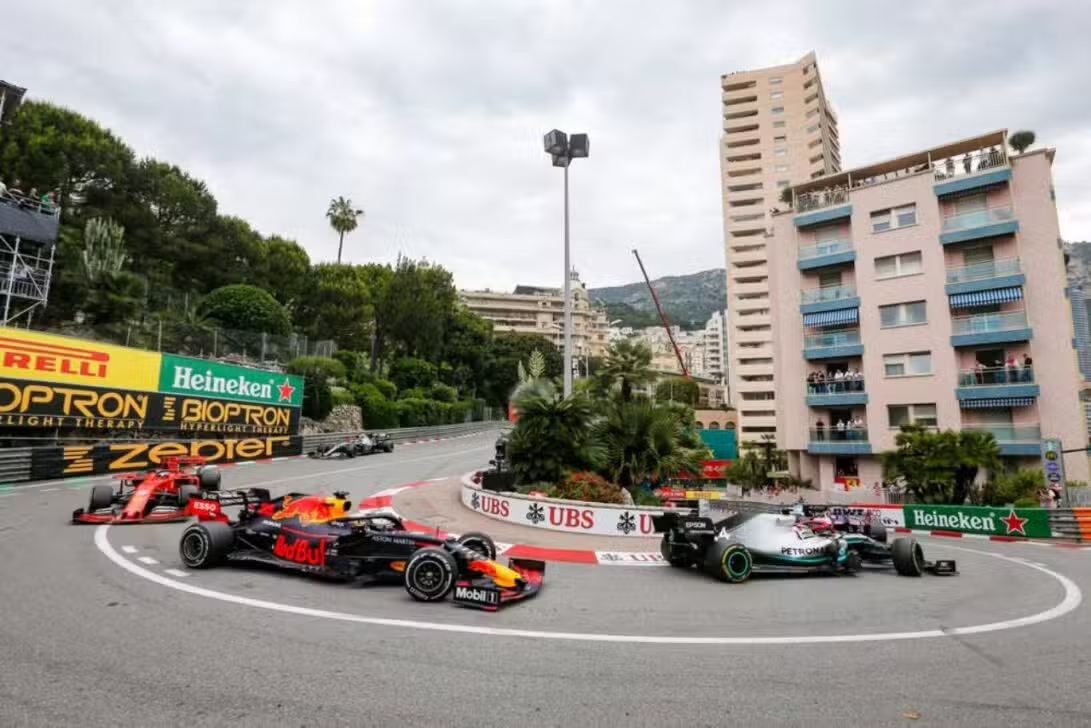
Formula 1 has confirmed the extension of the contract with the iconic Monaco Grand Prix until 2031, marking a significant milestone that ensures the continued presence of one of the most historic events on the calendar. Starting in 2026, the event’s date will undergo a crucial change, aimed at optimizing organization and avoiding conflicts with other major competitions like the Indianapolis 500.
The Monaco GP, held on the narrow streets of Monte Carlo, is considered one of the most challenging circuits for drivers and remains one of the most prestigious and anticipated races of the season. This contract renewal highlights the essential role of the event in Formula 1’s storied history.
The tradition of the Monaco GP and its historical value
Since its debut in the world championship in 1950, the Monaco GP has become a central event in the sport, blending tradition, glamour, and technical challenge. The street race demands surgical precision from drivers, as there is almost no margin for error. Unlike other circuits, Monaco does not offer long straights for overtaking, forcing competitors to strive for perfection in their race strategy.
Even with advances in technology and car development, the Monte Carlo circuit maintains its relevance and allure. Teams face unique challenges, such as adapting the cars to the narrow track and managing tire wear on a highly abrasive surface. In 2020, the COVID-19 pandemic led to the cancellation of the event, underscoring the importance of its continuity after that interruption.
Date change and its logistical impact
Starting in 2026, the Monaco GP will take place on the first full weekend of June, a strategic change to avoid overlap with the Indianapolis 500. This adjustment will allow Formula 1 to better manage the sequence of events on the calendar, benefiting team logistics, which often face challenges organizing their schedules.
Logistical planning is one of the biggest challenges teams face throughout the season. Transporting equipment, cars, and personnel to various locations worldwide requires a precise schedule. The date change for the Monaco GP will ease the pressure on teams and improve the efficiency of their operations. Additionally, the new date will create opportunities for the event, attracting more spectators at the beginning of the European summer.
Economic aspects and the global relevance of the event
The Monaco GP is more than a race; it is an event that generates millions of dollars and attracts spectators from all over the world. The economic impact on the region is substantial, generating revenue not only for the Principality but also for businesses that benefit from the influx of tourists and fans. In 2024, for instance, the accumulated audience of the race exceeded 70 million viewers, reflecting the event’s global dimension.
Tourism plays a crucial role during race weekend. Hotels, restaurants, and local establishments see a significant increase in business, contributing to Monaco’s economic growth. The event is also a meeting point for celebrities, tycoons, and influencers, creating a unique and distinguished atmosphere.
Statements on the contract renewal
Stefano Domenicali, CEO of Formula 1, celebrated the contract renewal, emphasizing Monaco’s importance to the championship. He highlighted that the Monte Carlo track is a jewel on the calendar and that its continuity symbolizes stability for fans and the sport. Domenicali also pointed out that Formula 1 is constantly looking to innovate while still valuing the traditional pillars that shape the sport’s history.
On the other hand, Michel Boeri, president of the Automobile Club of Monaco, stated that the renewal represents a commitment to the event’s tradition and future. Boeri emphasized the pride of keeping Monaco as part of the Formula 1 calendar, considering the circuit’s defining role in the sport.
Main challenges and criticisms of the Monaco circuit
Despite its long history, the Monaco GP does not escape criticism. Many fans and experts note that the circuit offers few opportunities for overtaking, which can make the races predictable. The difficulty of finding overtaking spots has been a recurring problem, especially as Formula 1 cars become wider and faster.
Even so, organizers remain committed to preserving the event’s essence. Formula 1 has shown interest in exploring subtle changes to the layout to increase overtaking opportunities without compromising the circuit’s tradition. The contract renewal until 2031 suggests that any modifications will be carefully considered to maintain Monaco’s unique experience.
Curiosities and details about the Monaco GP
Here are some notable facts about the Monaco GP:
- The circuit is the shortest and one of the slowest on the Formula 1 calendar, but this does not diminish its complexity.
- The race is famous for the Fairmont Hairpin, the slowest turn in the entire championship, where cars take the corner at just 50 km/h.
- The Monte Carlo tunnel is one of the circuit’s most iconic points, posing an additional challenge due to changes in light.
- Winning in Monaco is a feat few drivers achieve, being one of the most coveted triumphs in Formula 1.
- In terms of infrastructure, the event requires months of preparation, with the assembly of grandstands and safety barriers.
- Since its inception, the Monaco GP has witnessed historic victories, such as Ayrton Senna’s six wins.
- The Principality of Monaco is known for its strict regulations, making the organization of the event even more complex.
Behind the scenes of event preparation
The Monaco GP requires extensive preparation, including setting up safety barriers and constructing specific areas for spectators. Monaco’s authorities begin preparations months in advance, transforming the Principality’s streets into a real racing circuit. This transformation impacts the city’s daily life but is seen as a necessary sacrifice to maintain tradition.
Monaco’s residents have a complex relationship with the event. On one hand, the GP is a symbol of prestige and significance for the city. On the other, the intense movement and noise from the cars can be bothersome. Still, most locals recognize the cultural and economic value the event brings to the Principality.
Future plans and potential evolutions
With the contract extended until 2031, Formula 1 has room to consider adjustments that could enhance the experience for fans and drivers. The search for solutions to the circuit’s limitations is always on the agenda. Simulation technologies and feedback from engineers are used to analyze the impact of potential layout changes.
Sustainability is also an increasing concern. Formula 1, committed to reducing its carbon emissions by 2030, is working on ways to make the event more sustainable. This includes implementing new fuels and optimizing logistics to minimize the environmental impact. The Monaco GP can serve as an example of how tradition and modernity can coexist.