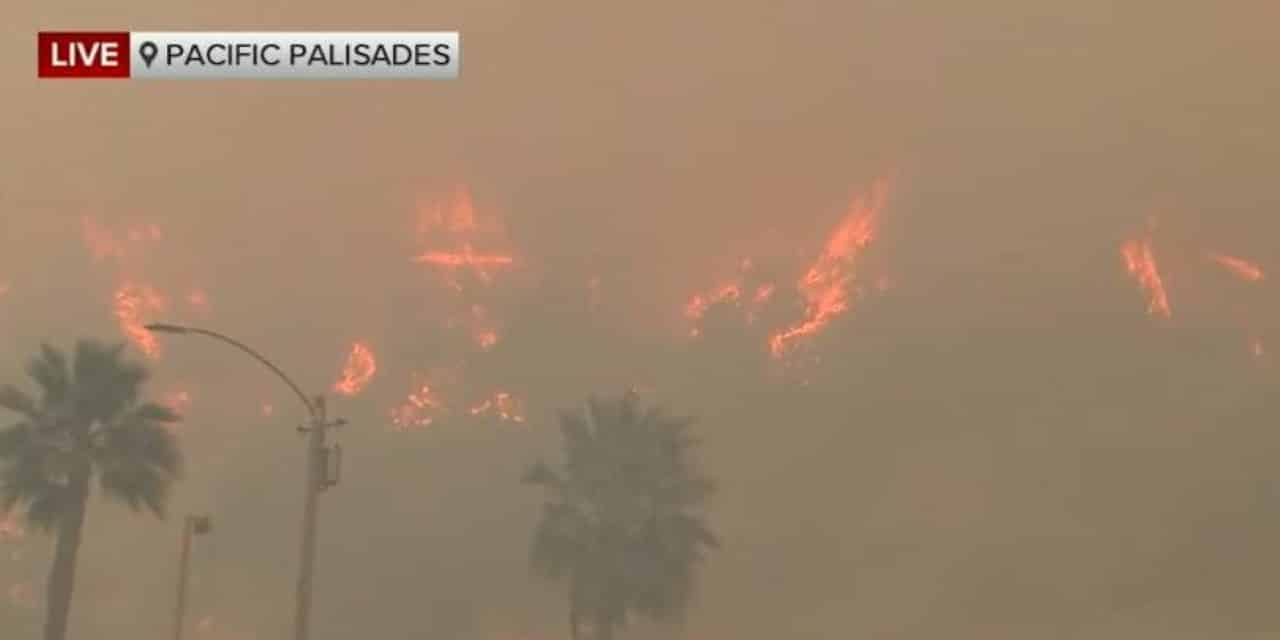
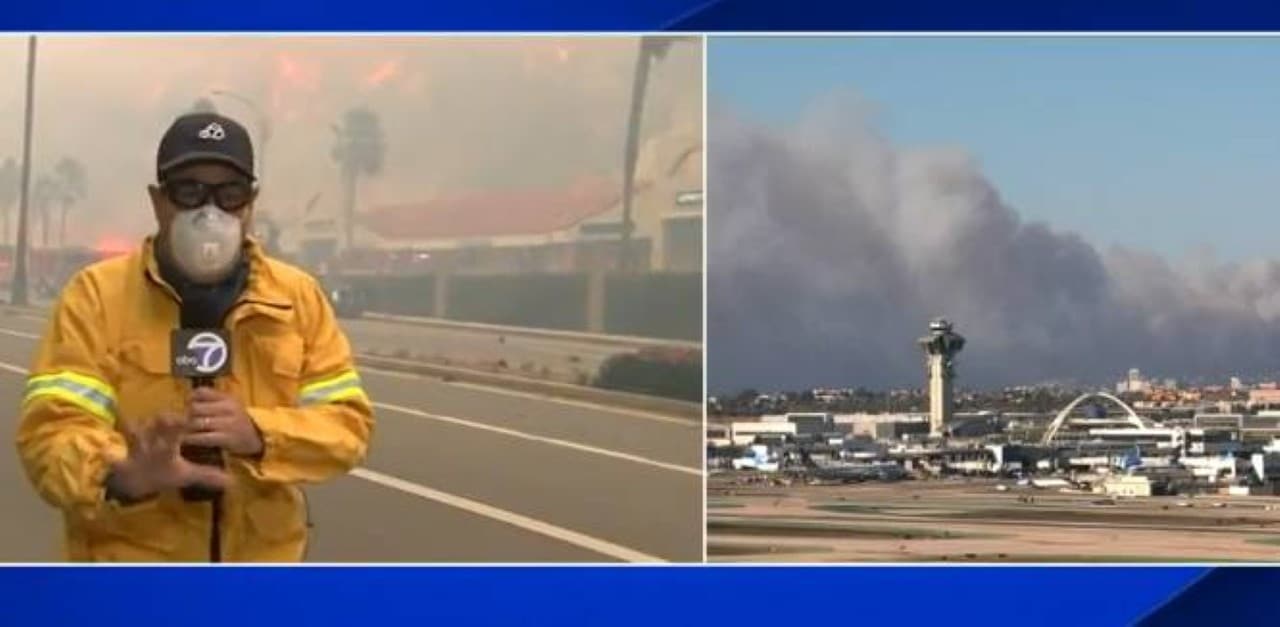
On January 7, 2025, a massive wildfire swept through the Pacific Palisades area in Los Angeles County, California, rapidly burning 200 acres of dry vegetation and leading to mandatory evacuation orders for local residents. Named the “Palisades Fire,” the blaze began around 10:30 a.m. near Temescal Ridge Trail and quickly spread due to strong Santa Ana winds, which reached speeds of up to 100 mph (160 km/h).
Extreme winds and critical fire conditions
The National Weather Service issued warnings about “extreme” winds in the Los Angeles area, with the potential to topple trees, power lines, and create highly hazardous fire conditions. Wind gusts, expected to peak in the early hours of Wednesday, January 8, prompted authorities to adopt maximum alert levels. Some roads were closed, and schools were relocated to ensure the safety of students. Pepperdine University in nearby Malibu also implemented shelter-in-place orders for its students as a precautionary measure.
History of wildfires in the region
The Pacific Palisades and Malibu areas have a significant history of devastating wildfires. In December 2024, the Franklin Fire ravaged over 4,000 acres, destroying 20 structures and damaging 28 others. That fire led to the evacuation of thousands of residents, including public figures such as Cher and Dick Van Dyke. The region’s dry weather and strong winds contribute to the rapid spread of flames, making it particularly vulnerable to these natural disasters.
Impact on local communities
Recurring wildfires have profoundly impacted the communities in Pacific Palisades and Malibu. In addition to property destruction, frequent power outages, road closures, school disruptions, and constant threats to safety weigh heavily on residents. Local authorities have worked tirelessly to implement preventive measures and rapid response strategies, including deploying additional resources and running awareness campaigns about wildfire risks.
Preventive measures and authorities’ response
In light of adverse weather conditions and heightened fire risks, energy companies considered preemptive power shutoffs for approximately half a million customers across eight counties to prevent damaged lines from igniting new fires. Additionally, over 1,500 firefighters were mobilized to combat the flames using ground and aerial resources. California Governor Gavin Newsom secured federal grants to aid firefighting efforts, highlighting the severity of the situation and the urgent need for additional resources to protect affected communities.
Challenges in firefighting
The rugged terrain and adverse weather conditions pose significant challenges for firefighting teams. Strong winds not only fuel the flames but also hinder the use of aircraft to drop water and fire retardants. Moreover, dry vegetation, a result of an unusually dry season following a wet period, serves as abundant fuel, facilitating the rapid spread of wildfires. Authorities have emphasized the importance of residents complying with evacuation orders and safety guidelines to minimize risks and losses.
Recommendations for residents
Given the recurrence of wildfires in the region, authorities recommend residents maintain updated evacuation plans, prepare emergency kits, and remain alert to weather warnings and official orders. Creating defensible spaces around properties by removing dry vegetation and flammable materials is also a crucial preventive measure to reduce the risk of damage during wildfires. Community awareness and preparedness play vital roles in mitigating the impacts of these natural disasters.
Future outlook and climate change
Experts point out that climate change has contributed to the increasing intensity and frequency of wildfires in California. Rising temperatures, combined with prolonged dry periods, create conditions conducive to these events. State authorities have invested in green energy and sustainability initiatives to counter climate change effects. However, recent reports indicate that these measures have also led to higher energy bills for consumers, underscoring the complexity of the challenges faced in pursuing balanced and effective solutions.
Key takeaways
The January 2025 Palisades Fire underscores the ongoing vulnerability of Southern California communities to wildfires, exacerbated by extreme weather conditions and environmental changes. Coordinated responses from authorities and community preparedness are crucial in tackling these challenges and safeguarding lives and properties. Awareness of risks and the implementation of effective preventive measures remain priorities to mitigate future impacts of these natural disasters.