

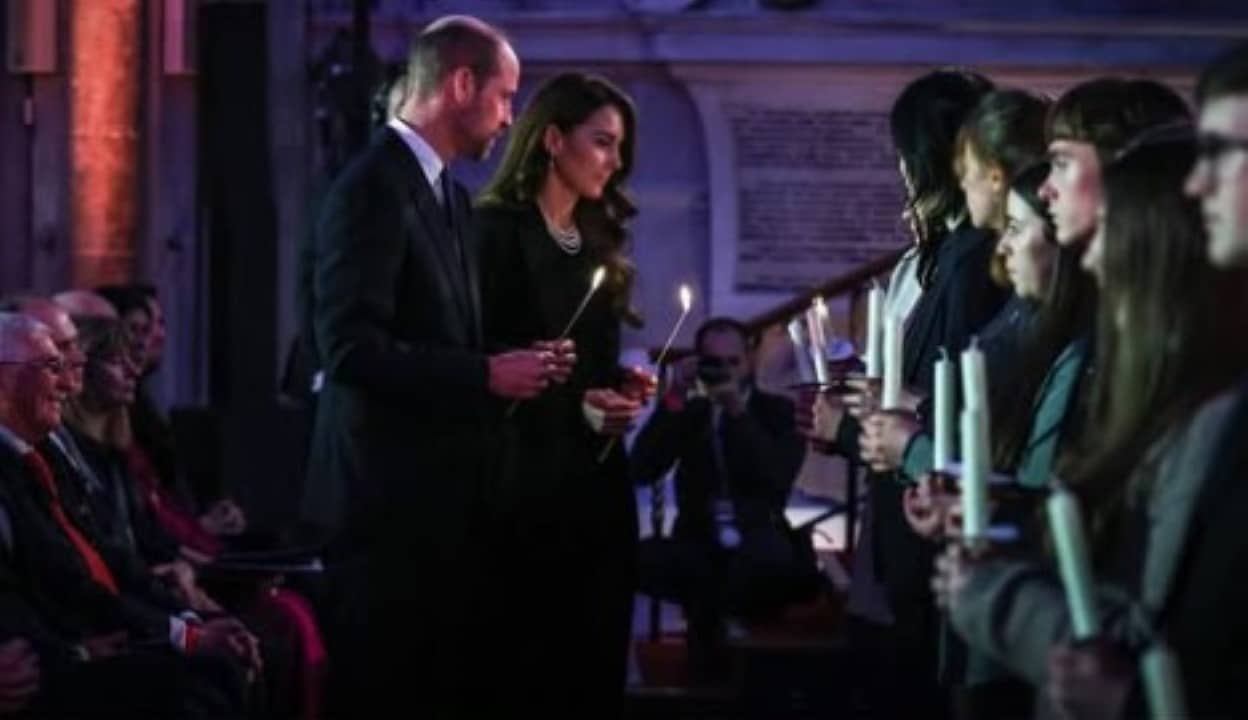
On Monday, January 27, 2025, the Princess of Wales, Kate Middleton, accompanied by Prince William, attended an event at Guildhall in London marking the 80th anniversary of the liberation of Auschwitz, the largest concentration camp of World War II. The ceremony brought together Holocaust survivors, religious and civic leaders in a powerful act of remembrance and respect for the victims of the Nazi genocide. Kate Middleton had emotional moments as she reunited with survivors she had met years prior, strengthening bonds formed in earlier interactions.
Among the most touching moments, Kate embraced Steven Frank, 89, one of the Auschwitz survivors present. Throughout the ceremony, Kate expressed her admiration for those who endured the horrors of the Holocaust, emphasizing the importance of keeping their stories alive. The event symbolized an ongoing effort to honor not only the victims but also to raise awareness about the dangers of hatred and intolerance.
Guildhall, one of London’s most iconic historic venues, served as a fitting setting for the ceremony. Its imposing architectural features and historical significance turned it into a place of reflection and a reminder of the need to preserve the memory of the darkest events of the 20th century.
The significance of the event for collective memory
January 27 is internationally recognized as Holocaust Remembrance Day. On this date in 1945, Soviet troops liberated thousands of prisoners who remained in Auschwitz, revealing to the world the atrocities committed by the Nazi regime. The date was established to ensure that future generations understand the devastating impact of the Holocaust and prevent similar tragedies.
Historical data indicates that approximately 1.3 million people were sent to Auschwitz during its operation, of which about 1.1 million were murdered. These figures underscore the importance of events like the one held at Guildhall, which not only honor the victims but also educate the public about the enduring impacts of this period.
Key moments of the London event
- Kate Middleton’s reunion with Holocaust survivors Steven Frank and Yvonne Bernstein.
- Moving speeches by religious leaders emphasizing the need for unity across faiths to prevent future genocides.
- Testimonies from survivors sharing their stories of resilience and perseverance.
- Participation by Prince William, reinforcing the royal family’s commitment to preserving historical memory.
- The presence of multiple generations symbolizing the continuity of the fight against forgetting.
The royal family’s role in preserving historical memory
Kate Middleton and Prince William have been central figures in initiatives to promote Holocaust remembrance and awareness. Since the beginning of their public roles, the couple has prioritized participating in events that encourage education and dialogue about past mistakes. These efforts aim to prevent history from repeating itself and foster a culture of empathy and inclusion.
Kate Middleton’s approach at such events is always marked by sensitivity and a willingness to listen to the stories of those who endured extreme adversity. Her connection with survivors, such as Steven Frank and Yvonne Bernstein, reflects a genuine dedication to keeping alive the memories of those who suffered during the Holocaust.
The history of Auschwitz and the global impact of the Holocaust
Auschwitz was established in 1940, initially as a concentration camp for Polish political prisoners. Over the years, it became the largest and most notorious extermination camp of the Nazi regime. Located in occupied Poland, it was the epicenter of the Nazi plan for mass extermination, known as the “Final Solution.”
It is estimated that, in addition to Jews, hundreds of thousands of other victims, including Soviet prisoners of war, Romani people, political dissidents, and people with disabilities, were murdered at Auschwitz. The camp’s liberation in 1945 revealed the scale of the atrocities to the world, marking a turning point in the global fight against intolerance and hate.
List of historical facts about the Holocaust
- Six million Jews were murdered during the Holocaust.
- Auschwitz operated for approximately five years, from 1940 to 1945.
- Over 200,000 children were killed at the camp.
- In January 1945, about 7,000 prisoners were still alive in Auschwitz when the camp was liberated.
- The Holocaust is considered the largest genocide in modern history.
The importance of Holocaust education
Recent studies show that ignorance about the Holocaust has grown among younger generations. Data indicates that 41% of young people in some countries do not know that Auschwitz was an extermination camp. This lack of knowledge highlights the urgent need for educational initiatives that keep the memory and lessons of this historical period alive.
In the United Kingdom, schools and educational institutions have implemented specific programs to teach about the Holocaust, including guided tours of historical sites and survivor-led lectures. These efforts aim to ensure that survivors’ stories are passed down to future generations.
Speeches at Guildhall and the message of unity
During the ceremony, religious leaders emphasized the importance of building bridges between different cultures and faiths to prevent future conflicts. The presence of leaders from various religions at the event was a powerful reminder that unity and empathy are essential tools for combating intolerance.
Kate Middleton reinforced this message during her interactions with the survivors, listening to their stories attentively and demonstrating deep respect for their experiences. Her empathetic approach exemplifies the royal family’s role as advocates for humanitarian causes and historical remembrance.
Kate Middleton’s contribution to preserving memory
In recent years, Kate Middleton has emerged as one of the royal family’s most active figures in historical preservation initiatives. Her participation in events like the one at Guildhall reflects her commitment to promoting empathy and global awareness. Through simple yet meaningful gestures, such as hugs and words of encouragement, the Princess has forged genuine connections with Holocaust survivors, creating a lasting impact.


