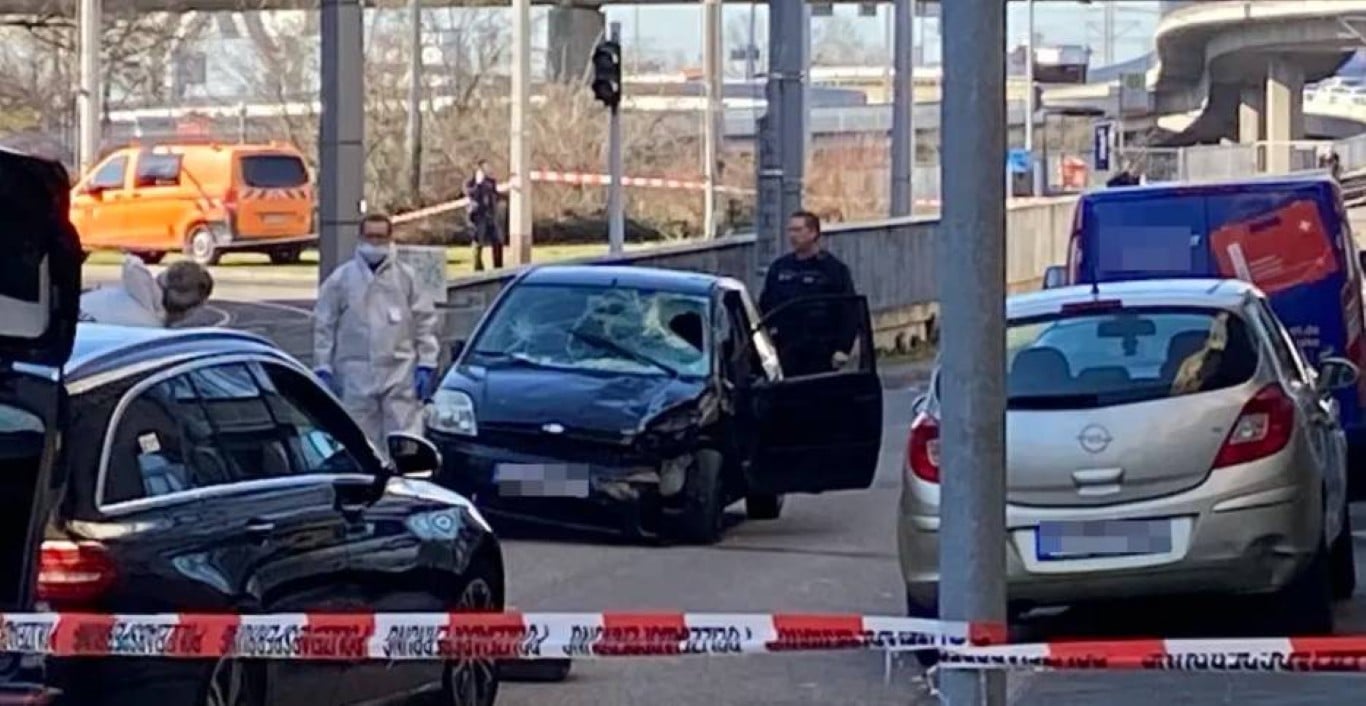
A car sped into a crowd in the pedestrian zone of Mannheim, a city in southwestern Germany, on the morning of March 3, leaving two people dead and at least 25 injured, 15 of them seriously. The incident unfolded on the bustling Planken shopping street near the iconic Wasserturm (Water Tower), a central area packed with stores and frequented by locals and tourists. German police swiftly arrested the suspect, identified as a German national, who was taken to a clinic due to injuries. Authorities have yet to confirm whether this was an accident or a deliberate attack, but the severity of the situation sparked a massive police and emergency response in the city.
The impact was catastrophic, with the vehicle, described as a black SUV, barreling through the area between the Wasserturm and Paradeplatz square, a key pedestrian thoroughfare in Mannheim. Witnesses described scenes of panic as people fled for safety while rescue teams tended to the injured on-site. Universitätsklinik Mannheim, the region’s leading hospital, triggered its emergency protocol to treat victims, admitting at least three in critical condition—two adults and one child. Police cordoned off large swaths of the city, issuing warnings via the Katwarn app and social media, urging residents to avoid the downtown area and stay indoors.
Located in Baden-Württemberg, Mannheim is home to about 326,000 people and is known for its vibrant urban life and proximity to Frankfurt, roughly 85 kilometers north. The event comes at a tense time in Germany, following recent vehicle-based attacks in cities like Magdeburg and Munich, heightening public safety concerns. As investigators probe the driver’s motives, Interior Minister Nancy Faeser canceled her attendance at the Rosenmontag parade in Cologne to oversee developments in Mannheim firsthand.
Chaos on Planken street: what we know so far
The incident on Planken street struck during a busy time, with the commercial district teeming with pedestrians starting their week. The vehicle roared from the Wasserturm vicinity toward Paradeplatz square, covering about a kilometer and striking dozens along the way. Social media footage captured the aftermath: bodies on the ground, some draped with tarps, and medics working amid scattered debris.
Mannheim police confirmed two fatalities and 25 injuries, 15 of them severe, including fractures and critical trauma. The suspect, a German man whose identity remains undisclosed, was apprehended at the scene after the vehicle came to a stop. He sustained injuries and was taken to a clinic under police guard. The car, deemed the alleged weapon, was seized for forensic analysis, though the reason behind its plunge into the crowd—whether intentional or accidental—remains under investigation.
Authorities reacted swiftly: streets were sealed off, bridges secured, and officers armed with submachine guns patrolled the area, supported by a helicopter overhead. Universitätsklinik Mannheim declared a catastrophe alert, mobilizing staff to handle the influx of gravely injured patients, underscoring the strain on local healthcare resources.
????⚡Car plows into a crowd of people at high speed in Mannheim, Germany. Police and rescue response underway
— vanhoa (@vanhoa2272) March 3, 2025
According to BILD, at least two people were killed & 25 injured, 15 of them seriously. Numbers are rising by the minute. The driver has been detained, the police say.????✝️ pic.twitter.com/aOq7vWVKAW
Germany’s recent wave of violent incidents
Germany has faced a string of vehicle-related attacks in recent months, raising the stakes for security forces. Last December, a Saudi-born man drove into a Christmas market in Magdeburg, killing six. Earlier this year in Munich, a car killed a mother and her two-year-old daughter. Mannheim itself saw a stabbing attack in May 2024, leaving the community shaken.
Unlike those cases, the Mannheim incident lacks clear evidence of terrorist or ideological intent so far. Police are exploring whether the driver acted deliberately or lost control due to mechanical failure or personal factors. The heavy police presence—armed officers and aerial surveillance—reflects the gravity with which officials are approaching the situation, especially amid heightened vigilance tied to carnival season events like Rosenmontag.
With the Rosenmontag carnival underway, the timing adds urgency. Though Mannheim held its main parade the previous Sunday, security was already tight due to threats linked to festivities in Cologne and Nuremberg, where Islamic State affiliates reportedly called for attacks. This backdrop fuels caution as authorities dissect the Planken street event.
Incident details and emergency response
The car’s rampage through Planken street turned a routine morning into a nightmare. The black SUV struck pedestrians at high speed, leaving destruction across the pedestrian zone. Emergency crews arrived promptly, treating victims on-site as police barricaded the area to ensure safety and aid investigative efforts. One victim, covered by a tarp near a tram stop, underscored the tragedy’s toll.
Among the injured, three were rushed to Universitätsklinik Mannheim with top priority: two adults and a child, all in critical condition. The hospital activated its mass-casualty protocol, rallying doctors and nurses for emergency surgeries and intensive care. Less severely injured patients were diverted to nearby facilities, while police urged the public to steer clear of the area to ease pressure on responders.
The suspect’s arrest followed quickly, though details about him are scarce. Known only as a German national, he was hospitalized for injuries possibly sustained during the incident or apprehension. The SUV was towed for examination, with experts seeking mechanical faults or clues to clarify what drove it into the crowd.
Timeline of events in Mannheim on March 3
The Mannheim incident unfolded rapidly, marking March 3 with a grim sequence of events. Here’s a breakdown of key moments:
- Early morning: A black SUV plows into pedestrians on Planken street, from Wasserturm to Paradeplatz.
- Shortly after: Social media posts highlight the chaos, with victims down and cries for help.
- Mid-morning: Police confirm two deaths and 25 injuries; suspect is detained and hospitalized.
- Afternoon: Universitätsklinik issues a catastrophe alert, and Nancy Faeser heads to Mannheim.
Investigations continue, with teams analyzing the vehicle’s path and witness accounts to piece together the incident.
City impact and security measures
Mannheim ground to a halt post-incident, its commercial heart turned into a restricted zone. All access roads were blocked, and bridges linking urban sectors were guarded by armed police. A helicopter circled above, aiding operational coordination, while Katwarn alerts instructed residents to avoid unnecessary travel.
Local merchants shuttered their shops, and traffic was rerouted to outer areas, causing backups at key points. The intense police presence—officers with submachine guns—stood in stark contrast to the deserted streets typically buzzing with activity. Nancy Faeser’s decision to visit Mannheim signaled national attention, as she joined local leaders to monitor the situation.
Public transit took a hit, with tram and bus lines diverted or halted downtown. Residents voiced unease online, especially given recent attacks elsewhere in Germany, amplifying fears that such incidents are growing more common.
Tips for residents and visitors in Mannheim
Given the crisis, practical steps can help those in Mannheim navigate the fallout. Here are some recommendations:
- Avoid the city center, particularly Planken street and Paradeplatz, until authorities give the all-clear.
- Monitor official updates via the Katwarn app or Mannheim police social media.
- Use alternate routes for travel, as traffic is snarled in multiple areas.
- Seek medical care outside the central zone if needed, to avoid overwhelming emergency services.
These tips aim to streamline daily life amid the ongoing restrictions.
Next steps in the Mannheim investigation
Mannheim police are now focused on unraveling the circumstances of the car’s plunge into the crowd. Forensic teams are scrutinizing the seized SUV for mechanical issues or signs of tampering, while investigators interview witnesses to map the driver’s actions and route. The suspect’s condition, under guard in a clinic, is pivotal—his statement could clarify intent.
Meanwhile, Universitätsklinik continues treating the most critical victims, with surgeries and intensive care ongoing. The presence of a child among the severely injured heightens the tragedy’s emotional weight, spurring medical teams to save lives. Police pledged updates as facts emerge, but the lack of a clear motive keeps residents on edge.
Nancy Faeser’s trip to Mannheim underscores federal concern, particularly amid carnival season and recent violence nationwide. The probe will assess whether this was an isolated act or part of a broader risk pattern, potentially shaping security policies in the weeks ahead.
