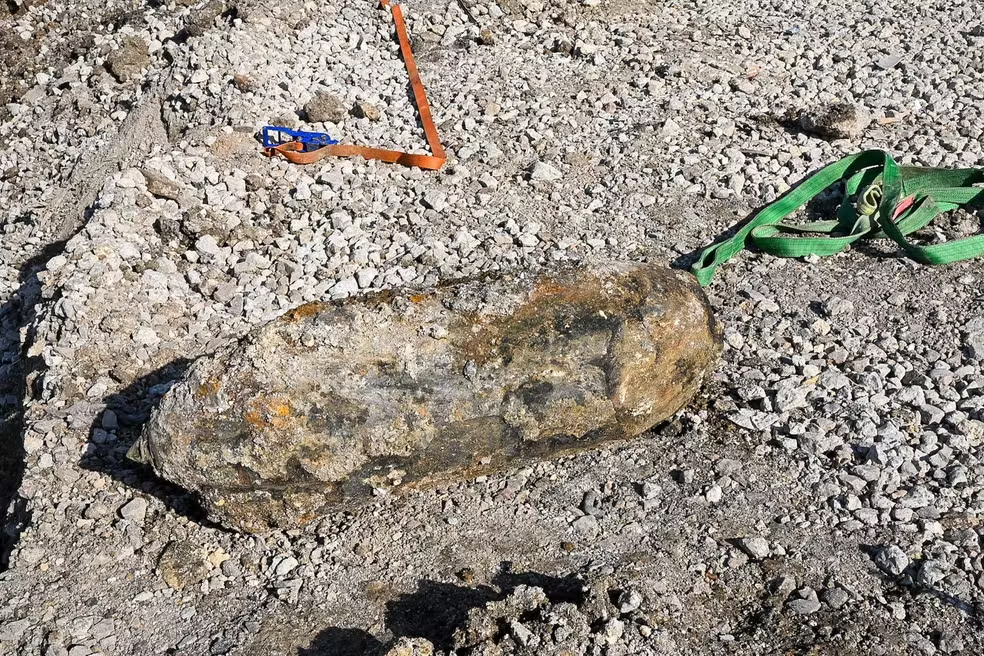
Friday morning brought an unexpected upheaval for thousands of travelers in Paris. A still-active World War II bomb was unearthed during maintenance work on railway tracks near Gare du Nord, the world’s third-busiest train station. Weighing approximately 500 kg, including 200 kg of explosives, the device triggered a complete shutdown of train services, impacting nearly 600,000 people and leading to the cancellation of almost 500 trips, according to French Transport Minister Philippe Tabarot. Found by workers at 4 a.m. in Saint-Denis, 2.5 km from the station, the discovery caused immediate disruptions to both local and international transport, including Eurostar routes to London and Brussels.
The incident turned the daily operations of one of Europe’s largest railway hubs upside down, with Gare du Nord welcoming around 220 million passengers annually. Described as “really huge” by a spokesperson for SNCF, France’s national rail company, the bomb was located amid the tracks during a bridge replacement project. Authorities swiftly cordoned off the area and suspended all operations at the station, stranding travelers and forcing a reshuffling of weekend plans.
With services set to resume gradually from 6 p.m. local time, the situation began to ease throughout the day. Philippe Tabarot expressed relief as he announced the successful completion of the bomb disposal efforts, allowing roads to reopen and trains to return. The event, however, reignited conversations about the lingering remnants of war beneath European soil, catching even those familiar with such finds off guard.
Polícia de Paris divulga fotos da bomba intacta da 2ª Guerra Mundial encontrada em trilhos de trem https://t.co/DaDSL09RT1 #g1
— g1 (@g1) March 7, 2025
Alert on the tracks: how the bomb was uncovered
Late at night, workers were conducting routine maintenance in Saint-Denis, a northern suburb of Paris, when an excavator uncovered the artifact buried about 2 meters deep. The bomb, a relic of World War II, lay between the tracks connecting Gare du Nord to destinations in northern France and beyond its borders. Spotted around 3:30 a.m. local time, it prompted an immediate response from bomb disposal teams and police, who established an initial safety perimeter to assess the threat.
SNCF reported that the explosive, with 200 kg of active material, posed a significant risk to human life, justifying the total suspension of rail traffic. Such discoveries are not uncommon in Europe, where wartime remnants still emerge in urban and rural areas, but its strategic location near one of the continent’s busiest stations heightened the severity. Approximately 300 police officers were deployed to secure the area, while explosives experts worked to neutralize the device.
By noon, the safety perimeter was expanded to 500 meters, impacting homes, six schools, and a nursing home nearby. The Saint-Denis town hall oversaw the evacuation of buildings with windows facing the bomb site, while traffic on the A1 highway and parts of Paris’s ring road was also halted. The operation, lasting roughly 12 hours, concluded with the bomb’s successful deactivation, though not before causing unprecedented disruptions in the French capital.
Ripple effect: disruptions for travelers and residents
The suspension of services at Gare du Nord threw thousands of passengers’ plans into disarray. Julie King, a mother intending to celebrate her daughter’s 18th birthday in Paris, found herself stuck at St. Pancras station in London, calling it “very frustrating.” Eurostar, which operates high-speed links between Paris, London, and Brussels, canceled all its Friday services, offering refunds or free rescheduling but no additional compensation, sparking complaints among affected travelers.
Meanwhile, in Paris, the daily commute of suburban and regional train users was upended. The station, handling around 700,000 people daily, became a scene of long queues, red alert screens, and barriers blocking access to the international terminal. Some regional trains were rerouted to Gare de Lyon, but this proved inadequate to meet demand, especially on a Friday typically busy with weekend travelers.
Timeline of a chaotic day at Gare du Nord
The Paris incident unfolded through a series of events that turned Friday into a landmark of disruption. Here’s a breakdown of key moments:
- 3:30 a.m.: Workers uncover the 500 kg bomb during maintenance in Saint-Denis.
- 4 a.m.: Bomb disposal teams arrive and begin assessing the device.
- 6 a.m.: Gare du Nord halts all operations; Eurostar announces cancellations.
- 12 p.m.: Safety perimeter extends to 500 meters, with evacuations underway.
- 4 p.m.: SNCF confirms bomb disposal completion; police authorize gradual traffic resumption.
- 6 p.m.: Trains resume, though significant delays persist into the evening.
Swift action from authorities averted greater risks, but the effects lingered for hours, impacting both local and international travel.
Why World War II bombs still surface
Decades after World War II ended, artifacts like the one in Saint-Denis continue to emerge across Europe. France, a battleground during the 1939-1945 conflict, harbors thousands of unexploded bombs, many dropped by Allied forces to disrupt German operations. It’s estimated that around 175 such devices have been uncovered in the country in recent years, particularly during construction or renovation projects in urban areas.
The bomb’s presence in a critical spot like the Gare du Nord tracks is rare but not unprecedented. Experts suggest it may have been buried during the German occupation of Paris, when railway stations were frequent targets due to their logistical importance. Time and urban development concealed these hazards, only revealed in situations like Friday’s find. In cities like Berlin, similar discoveries are even more common, but Paris’s population density magnified this event’s impact.
For Chloe Ternand, a passenger waiting at the station, the incident wasn’t entirely surprising. Hailing from Lorient in western France, where wartime explosives are regularly found, she noted the irony of encountering the same issue in the capital. Yet, familiarity with these relics didn’t lessen the inconvenience for the 600,000 affected, who faced a day of uncertainty and improvisation.
Emergency measures and lessons from the incident
The response involved a complex, coordinated effort. Beyond the 300 police officers mobilized, bomb disposal teams worked under pressure to defuse the 500 kg device, while SNCF adjusted routes and updated passengers. Philippe Tabarot called the operation “no small feat,” emphasizing the focus on safety and risk reduction. Services resumed gradually after police cleared the area, though delays continued until the night’s final train.
The event exposed the vulnerability of key infrastructure like Gare du Nord, which serves over 226 million passengers yearly, per SNCF data. The disruption affected not just tourists but also local workers, who turned to alternatives like buses to Charles-de-Gaulle airport. Gabrielle Cotton, an American stuck in Brussels en route to Paris, learned of the bomb via a family call, highlighting how quickly news spread among travelers.
What to expect after train services resume
With the bomb neutralized, Eurostar stated that London-Paris services would normalize by Saturday, though it cautioned about potential schedule tweaks. SNCF noted that domestic traffic would remain “severely disrupted” through Friday, with a fuller recovery expected over the weekend. Passengers were urged to check updates and reschedule trips, as authorities pledged to inspect the tracks to prevent further surprises.
Tips for those planning to travel through Gare du Nord soon:
- Check updated schedules on Eurostar or SNCF websites.
- Consider regional trains from alternate stations like Gare de Lyon.
- Arrive early to account for possible lingering delays.
The station, Europe’s busiest, resumed operations, but the incident’s echoes lingered among travelers.
A past that still disrupts the present
The Saint-Denis bomb episode underscores how history continues to shape daily life. World War II, concluded 80 years ago, left traces beyond textbooks, resurfacing as explosives that challenge modernity. In Paris, where Gare du Nord links France to the continent, the find served as a reminder of the resilience needed to handle such unexpected events.
For the 600,000 affected, the day demanded adaptability and patience. Lee Bailey, a British traveler, lamented the lack of compensation beyond a refund, dreaming of a Michelin-starred dinner on Eurostar’s dime. Meanwhile, the station regained its rhythm, carrying the memory of a day when the past halted the present.