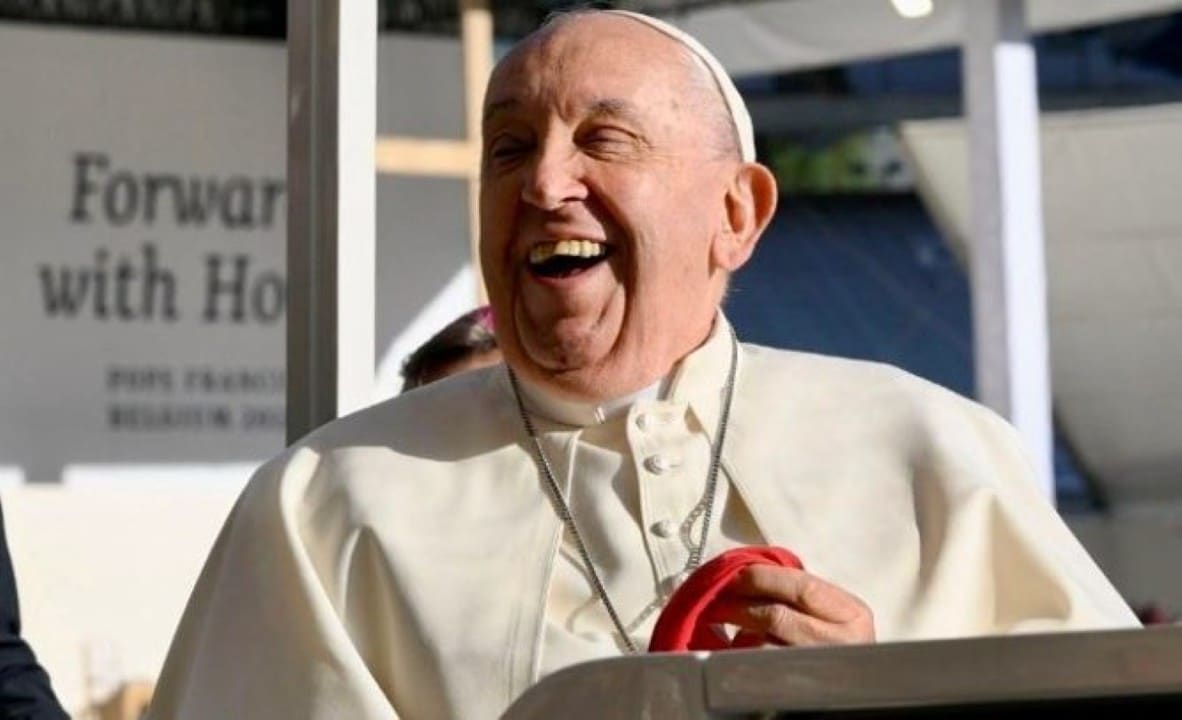
Pope Francis celebrated 12 years as the leader of the Catholic Church on Thursday, March 13, amid a delicate moment in his journey as the spiritual guide of 1.4 billion faithful worldwide. Hospitalized since February 14 at Gemelli Hospital in Rome, the 88-year-old Argentine pontiff is grappling with bilateral pneumonia, a condition the Vatican describes as “complex and stable.” Despite the challenges, the milestone was marked by a symbolic gesture: the medical team brought a cake with candles to his room, commemorating the start of his papacy in 2013. While recovering, Francis has continued some religious engagements virtually, alternating respiratory therapies to combat the infection that has kept him bedridden for a month.
This prolonged hospitalization, the longest since he assumed office, underscores the severity of the situation faced by Jorge Mario Bergoglio, the pope’s birth name. Initially diagnosed with bronchitis, his condition progressed to a polymicrobial infection and later to pneumonia affecting both lungs. Even with his health compromised, the Vatican reports that the pontiff remains alert and engaged, participating in events like the spiritual exercises of the Roman Curia via video conference. The modest celebration in the hospital contrasts with the intensity of a papacy defined by reforms and a progressive agenda, now clouded by uncertainties surrounding his clinical state.
Signs of respiratory distress had been noticeable since early February during public appearances, leading to his admission. Bilateral pneumonia, considered more severe due to its impact on both lungs, requires meticulous treatment, including non-invasive mechanical ventilation at night and high-flow oxygenation through nasal cannulas during the day. His discharge date remains uncertain, but a new medical update is expected on the evening of Friday, March 14, raising anticipation about the progression of the Catholic leader’s health.
A 12-year journey shadowed by health struggles
Francis took office on March 13, 2013, becoming the first Latin American pope in the history of the Catholic Church. Over these 12 years, he has faced numerous health challenges that have tested his physical endurance, though they had not significantly slowed his pace until recently. The current hospitalization, now exceeding four weeks, is his longest absence from duties and the fourth since 2021, reigniting discussions about his ability to lead amid a demanding schedule, particularly with the 2025 Jubilee, an event that draws millions of pilgrims to Rome.
The pope’s health has long been a point of focus due to past incidents. At age 21, he lost part of his right lung following a severe pneumonia episode that led to pleurisy and the removal of three cysts—an ordeal he once described as “cruel” in an interview. More recently, abdominal surgeries in 2021 and 2023, along with chronic knee and hip issues requiring a cane or wheelchair, have marked his medical history. Despite these setbacks, Francis maintained a robust agenda, including international trips, such as one planned for Turkey later this year.
The current bout of bilateral pneumonia has introduced additional complications, including prolonged respiratory crises and the need for blood transfusions due to thrombocytopenia linked to anemia, reported on February 22. These conditions heightened concern among the faithful and the Church’s leadership, but recent medical updates suggest stabilization, with the pope responding positively to treatment, albeit slowly.
Treatment details and hospital routine
Balancing rest and religious duties, Francis has adhered to a strict medical protocol at Gemelli Hospital. Non-invasive mechanical ventilation at night eases the strain on his lungs, while daytime high-flow oxygenation keeps oxygen levels stable. This regimen reflects the complexity of the polymicrobial infection, involving multiple microorganisms and necessitating constant adjustments to pharmacological therapy, including antibiotics and corticosteroids.
On Thursday morning, after a restful night, the pope had breakfast and read newspapers, maintaining a routine that showcases his determination to stay active even from a hospital bed. In the afternoon, he joined the Roman Curia’s spiritual exercises virtually from the Paul VI Hall, a traditional event uniting Vatican administrators. Meanwhile, the medical team surprised him with a birthday cake, offering a moment of levity amid the seriousness of his condition.
Timeline of Francis’s hospitalization
The trajectory of Pope Francis’s current hospitalization reveals the evolution of a condition initially underestimated into one requiring intensive care. Key moments include:
- February 14: Francis is admitted to Gemelli Hospital with bronchitis symptoms after respiratory difficulties in public events.
- February 18: Tests confirm bilateral pneumonia, and the Vatican labels the condition “complex,” adding pharmacological therapy.
- February 22: A prolonged asthma crisis necessitates high-flow oxygenation and a blood transfusion due to anemia and thrombocytopenia.
- February 27: The pope shows significant improvement, exiting critical condition, though he remains hospitalized without a discharge date.
- March 13: Marking 12 years of pontificate, Francis celebrates with a cake in the hospital, with his condition still “complex and stable.”
This timeline highlights the severity of the situation and the medical team’s efforts to stabilize the pontiff, who, despite improvements, faces a cautious prognosis.
Bilateral pneumonia and its risks
The bilateral pneumonia afflicting Francis is an infection impacting both lungs, unlike typical pneumonia, which often affects just one side. Caused by viruses, bacteria, or fungi, this condition is more severe due to the extensive lung damage, potentially leading to complications like respiratory failure or sepsis, a systemic blood infection. In the pope’s case, the polymicrobial nature, combined with a history of asthmatic bronchitis and bronchiectasis, complicates treatment further.
Medical adjustments have been frequent since the diagnosis, aiming to balance medication and respiratory support. On February 22, sepsis was flagged as the primary threat, but the absence of fever and improved blood test results in recent weeks signal progress, though gradual. Francis’s advanced age and pulmonary history heighten his vulnerability, yet his response to therapy offers a hopeful sign to his caregivers.
Faithful and Vatican responses
As Francis battles this health crisis, Catholics worldwide have shown solidarity through prayers and symbolic acts. Candles, flowers, and letters have piled up at Gemelli Hospital’s entrance over the past weeks, reflecting both concern and affection for the pontiff. In Rome, Jubilee pilgrims continue arriving, but without the pope’s physical presence at traditional events like the Angelus prayer in St. Peter’s Square, which he has missed for the second consecutive time.
Within the Vatican, leaders remain guarded about the pope’s condition. Cardinal Pietro Parolin, Secretary of State, led a rosary in St. Peter’s Square on February 23, praying for Francis’s recovery, while Cardinal Matteo Zuppi held a mass in Bologna for the same purpose. The pope’s extended absence also prompts questions about his agenda’s continuity, especially in a busy Jubilee year, though the Vatican avoids firm predictions about his return to in-person duties.
What to expect from the next medical update
A new medical bulletin is slated for Friday evening, March 14, and is expected to provide further insight into Francis’s recovery trajectory. Observers anticipate details on whether significant progress has been made or if the hospitalization will extend further. So far, the stable condition without recent setbacks fosters cautious optimism among specialists tracking the case.
Monitoring of mechanical ventilation and high-flow oxygenation will remain critical, alongside blood tests showing improved inflammatory markers. Discharge hinges on the pope’s ability to breathe without intensive support—a milestone yet to be fully achieved given the infection’s complexity.
A pontificate under global scrutiny
At 88, Francis remains a pivotal global figure, not only as a religious leader but also as an advocate for social justice, environmental issues, and immigration. His 12-year papacy has ushered in significant changes to the Catholic Church, such as opening debates on celibacy and greater inclusion of minorities. Yet, his frail health raises doubts about his capacity to sustain this pace, particularly with major events like the Jubilee on the horizon.
Even from the hospital, the pope has not fully stepped back. Beyond virtual engagements, he recently connected with a parish in Gaza, underscoring his concern for communities in conflict zones. This resilience mirrors a pontificate that, despite adversity, strives to leave a lasting legacy.
