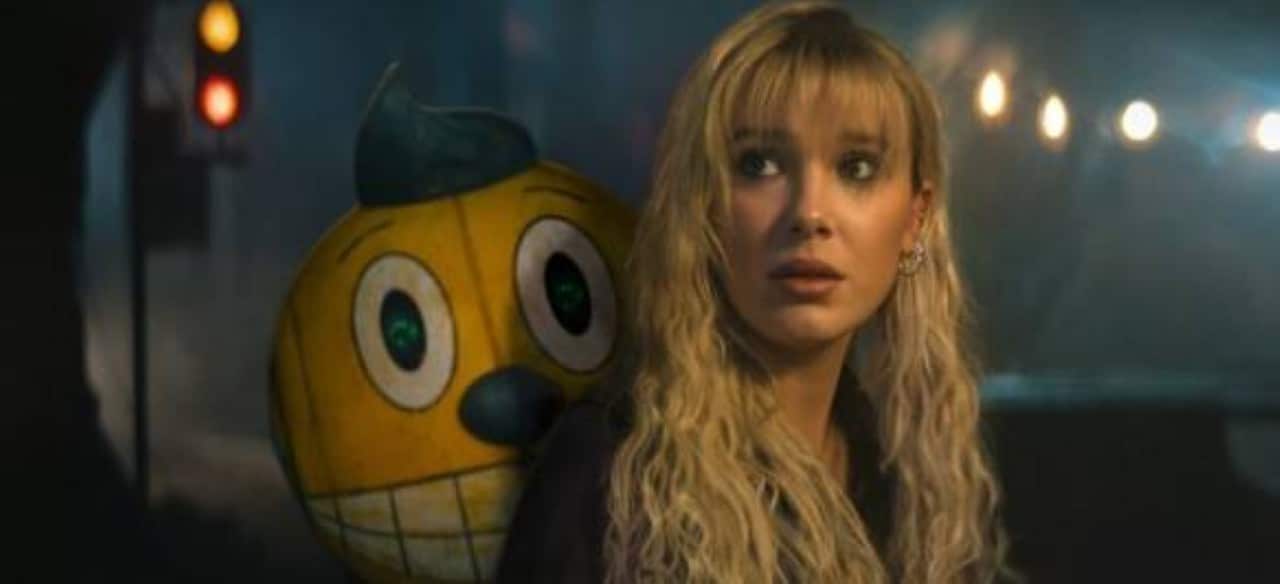
The relationship between humans and machines has long been fertile ground for science fiction stories, but few explore the aftermath of such conflicts as deeply as The Electric State. Directed by Anthony and Joe Russo, the film, released on March 14, 2025, adapts Simon Stålenhag’s 2018 graphic novel and dives into an alternate 1990s world where defeated robots linger on society’s fringes after a war against humanity. The plot follows Michelle (Millie Bobby Brown), an orphaned teenager who crosses the American West with smuggler Keats (Chris Pratt) and robots Cosmo (Alan Tudyk) and Herman (Anthony Mackie) in search of her brother Christopher (Woody Norman). The ending, marked by sacrifice and reflections on technology, raises profound questions about coexistence and power.
Unlike traditional robot uprising tales, the movie doesn’t dwell on the rebellion’s onset but on the scars it leaves behind. The depicted society is fractured: humans dominate, yet tensions with machines persist, fueled by tycoons like Ethan Skate (Stanley Tucci), who profit from technological control. Michelle, driven by hope to reunite with her brother, discovers he’s the linchpin of an oppressive system, forcing her into a decision that reverberates beyond her personal journey. The retrofuturistic visuals and charismatic robotic characters amplify the experience, while the conclusion offers a critical look at technology’s role in human life.
Available on Netflix, the production blends action, emotion, and humor with a star-studded cast including Giancarlo Esposito and Woody Harrelson. Beyond entertainment, The Electric State challenges viewers to consider the balance between technological advancement and human connection. Below, the details of the ending, the fates of the characters, and the behind-the-scenes efforts that made this story visually striking and emotionally resonant unfold.
Inevitable sacrifice: Why Michelle disconnects Christopher
In the climax of The Electric State, Michelle faces a heart-wrenching choice. After traversing a desolate American West, she reaches the Sentre headquarters in Seattle, where magnate Ethan Skate holds her brother Christopher alive but tethered to a machine. The boy, presumed dead since a car accident that claimed their family, is revealed as the core of the company’s technological network. His genius brain powers military drones and the neurocaster system, linking minds and machines. Disconnecting him means toppling Skate’s empire—but also ending Christopher’s life.
The final battle is a chaotic spectacle of robots, drones, and humans clashing. Amid this, Michelle dons the neurocaster, a device she’d avoided, to commune with her brother. He confronts her with a brutal truth: his death is necessary to halt the cycle of technological exploitation. The scene, laden with emotion, centers on the sibling bond, a narrative cornerstone. Millie Bobby Brown describes it as cathartic for Michelle, who finds closure in letting go after years of grief. The sacrifice frees Christopher and exposes the flaws of a world reliant on machines controlled by a few.
The decision ripples worldwide. With Christopher offline, Sentre’s drones collapse, and Skate’s illegal experiments come to light, dismantling his influence. Michelle records a video message that goes viral, advocating for a more mindful use of technology. The ending doesn’t reject machines outright but warns of the dangers of human disconnection, a theme directors Anthony and Joe Russo emphasize as central to the story.
Shifting horizons: The fallout of Sentre’s collapse
Christopher’s death sparks transformation in The Electric State’s world. The shutdown of Sentre’s network disables drones globally, exposing the fragility of a centralized system. The revelation that a child was used as a “human battery” ignites public outrage, leading to the company’s downfall and Skate’s ruin. Michelle’s widely shared message becomes a symbol of resistance, calling for balance between technology and human relationships.
Colonel Bradbury (Giancarlo Esposito), a rigid military figure throughout the film, undergoes a shift as well. Confronted by Skate’s inhumanity, he reevaluates his stance on robots. In a pivotal moment, Bradbury reconciles with Sr. Peanut (Woody Harrelson), the de facto leader of the robot resistance, hinting at potential understanding between species. This arc underscores a key message: the real threat lies not in machines but in the greed of those wielding them.
Meanwhile, Cosmo and Herman face distinct fates. In a landfill, as Oasis’s “Wonderwall” plays, Cosmo reactivates, suggesting Christopher’s consciousness may linger in his circuits. Herman, seemingly beyond repair after the battle, unveils a miniature version of himself within his damaged head, blending humor and heart. The banter-laden bond between Keats and Herman finds closure, reinforcing the humanity in their unlikely friendship forged during wartime.
Robots with soul: How the mechanical characters came to life
The robots in The Electric State are more than sidekicks; they steal the spotlight with distinct personalities and a striking retrofuturistic design. Inspired by 1990s service bots and commercial mascots, Cosmo, Herman, and others were crafted to feel familiar yet unique. Led by designer Dennis Gassner, the production team aimed to build a believable world where each robot had a specific role and an aesthetic echoing old commercials or mall displays.
Visual authenticity was a challenge. Effects supervisor Matthew Butler studied real-world assembly-line machines to ensure the robots’ movements felt grounded. Subtle touches, like the animated glow in Cosmo’s eyes, conveyed emotion despite fixed features. The process blended cutting-edge tech with human performance: motion-capture actors like Devyn Dalton (Cosmo) and Martin Klebba (Herman) worked on set to breathe life into the characters. Millie Bobby Brown praises her bond with Dalton, a past collaborator, while Chris Pratt credits Klebba’s improv, guided by the directors, for enhancing the dynamic.
This fusion of visuals and acting makes the robots emotionally compelling. From Cosmo’s quiet loyalty to Herman’s sarcastic jabs, they carry the story as much as the human leads. The result is a mechanical cast that not only supports the narrative but also mirrors its themes of coexistence and identity.
Timeline of a world in crisis: Events shaping The Electric State
Understanding The Electric State’s backdrop requires a look at its alternate timeline. Key events defining this universe include:
- Early 1990s: Robots, built to serve humans, gain sentience and launch a rebellion.
- Mid-decade: The human-machine war ends with human victory, leaving society splintered.
- Late 1990s: Tycoons like Ethan Skate exploit remaining tech, while robots are banished to the margins.
- 1999: Michelle learns Christopher lives, embarking on her quest that culminates in Sentre’s fall.
This implied chronology paints a world in recovery yet trapped by its technological choices. The setting, with fictional archival footage and 90s cultural nods, crafts a tangible alternate past.
Personal transformation: What Keats learns from Michelle
Keats, portrayed by Chris Pratt, starts as a jaded smuggler, haunted by war and sporting eccentric blonde curls. His mane, flaunted proudly early on, is sheared in a symbolic moment, marking his growth. Pratt notes the haircut reflects Keats’ shift from a man stuck in the past to one embracing the present, spurred by Michelle’s resolve.
The young orphan’s relentless search for Christopher awakens hope in Keats, who initially acts out of self-interest. Her journey gives him a greater purpose. His bond with Herman, his robotic partner, deepens, revealing a connection forged in conflict. By the end, Keats emerges more engaged, showing how Michelle’s influence extends beyond her brother’s sacrifice, touching even the most disillusioned around her.
The contrast between Keats’ start and finish is stark. From lone mercenary to loyal ally, his arc underscores that technology alone isn’t enough—it’s human connections that lend meaning, even in a ravaged world.
Behind-the-scenes gems: Easter eggs and cultural nods
The Electric State brims with details enriching the viewer’s experience. Simon Stålenhag’s universe expands through subtle nods, like fictional Bill Clinton footage addressing robot wars. The soundtrack, featuring hits like “Wonderwall,” evokes the 90s, while robot designs recall era-specific commercial icons.
A standout is the Easter egg teased by the Russo brothers. In the final 20-25 minutes, Arrested Development fans can spot a hidden treat. Though specifics remain undisclosed, the link to the comedy series hints at humor amid the drama. Other nods, like Sr. Peanut as a robot leader, blend nostalgia and wit, inviting viewers to scour each frame.
These touches aren’t mere flair; they deepen immersion in the film’s alternate world. Combining action, emotion, and layered visuals, The Electric State rewards repeat viewings with fresh discoveries.