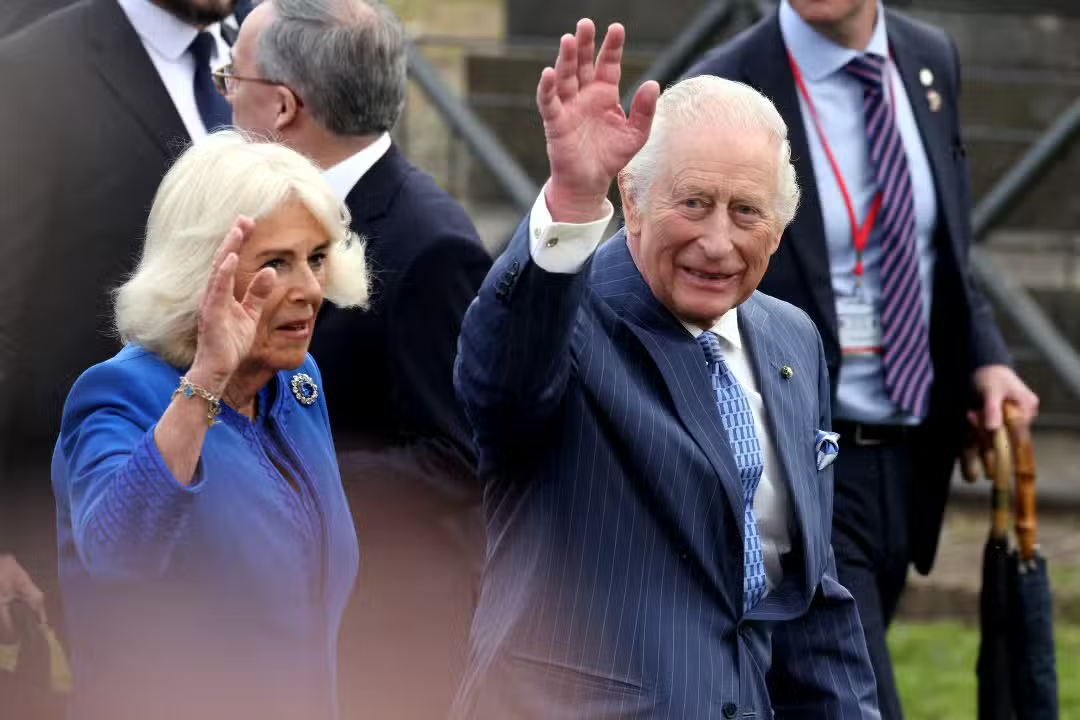
King Charles III, at 76, made a poignant visit to Auschwitz in January 2025 to commemorate 80 years since the liberation of the Nazi concentration camp, an event that underscores his role as a symbol of memory and unity. Following a challenging 2024 marked by a cancer diagnosis and a return to public duties, the British monarch also spearheaded a historic tour of Australia in October, reigniting debates about the monarchy’s future in the country. As head of state for the United Kingdom and 14 Commonwealth nations, he maintains a demanding schedule that includes meetings with the prime minister, opening Parliament, and events like Remembrance Day, balancing ceremonial roles with global influence.
Diagnosed with cancer in February 2024, Charles faced months of treatment but never stepped away from his constitutional duties, such as reviewing daily government dispatches delivered in a red leather box. His public re-emergence came at Easter in Windsor alongside Queen Camilla, and since then, he has resumed engagements, including visits to cancer treatment centers and military barracks. The Australian tour, his most significant overseas trip since the diagnosis, showcased his resilience, despite protests from an Aboriginal senator who confronted him in Parliament, accusing him of genocide and questioning his legitimacy as king.
To the public, Charles is also the patriarch of a royal family in transition. His heir, Prince William, and grandchildren George, Charlotte, and Louis represent the monarchy’s future, while others, like Harry and Meghan, live distantly in California. The Coronation in May 2023, witnessed by over 2,000 guests, solidified his reign, and now, in 2025, he oversees a royal budget bolstered by wind farm profits, with the Sovereign Grant projected to reach £132 million in the next fiscal year.
- Tribute in Auschwitz: Charles joined a solemn ceremony honoring Holocaust victims.
- Australian protest: Senator Lidia Thorpe was removed from Parliament after challenging the king.
- Public return: Post-cancer, he visited patients and troops, signaling recovery.
A royal agenda marked by symbolism and duty
Charles’s visit to Auschwitz in late January 2025 was a moment of global reflection. He walked through the camp where over 1.1 million people perished during World War II, laying a wreath and meeting survivors. At 76, the king used the occasion to emphasize the importance of remembering past atrocities, a message that resonated in speeches prepared for world leaders in attendance. The choice of venue highlights his role as head of state, extending beyond British borders to embrace humanitarian causes.
Following the Australian tour in October, Charles encountered a contrasting scene. Welcomed with honors in Canberra, he addressed Parliament but was interrupted by Lidia Thorpe, an Aboriginal senator who shouted “you are not my king” before being escorted out. The incident reignited debate about the monarchy in a nation where 45% of citizens voted for a republic in a 1999 referendum. Charles responded diplomatically, stating that the decision rests with the Australian people, upholding his characteristic political neutrality.
In the UK, his duties remain rigorous. Every Wednesday, he meets privately with Prime Minister Keir Starmer at Buckingham Palace to discuss state matters, with no official records kept. In November 2024, Charles opened Parliament with the King’s Speech, outlining the government’s agenda, and led the Remembrance Day ceremony at the Cenotaph in London, an annual tribute to war fallen that draws thousands of veterans and citizens.
Cancer’s impact on the king’s routine
Charles learned of his cancer in February 2024 after a routine medical procedure revealed the illness. Buckingham Palace announced the diagnosis without specifying the type, confirming that treatment began immediately. In the following months, the king paused public events but continued behind-the-scenes work, signing documents and receiving daily briefings. His first public appearance post-diagnosis was on March 31, 2024, at Easter, greeting crowds after a service in Windsor with Camilla by his side.
His official return came in April with a visit to a cancer treatment center in London. There, he spoke with patients, sharing his own shock at the diagnosis and offering support. In May, a surprise stop at a Hampshire army barracks brought levity: Charles quipped he’d been “let out of my cage,” marking his full return. In June, he attended the Trooping of the Colour, also welcoming the Princess of Wales, Kate, back after her own cancer diagnosis.
The illness didn’t halt his constitutional roles. Even during treatment, Charles kept weekly meetings with Starmer and granted Royal Assent to laws, a process unchanged since its last refusal in 1708. His endurance impressed the public, with polls showing 62% of Britons still support the monarchy, though backing dips to 37% among 18- to 24-year-olds.
The royal family in the spotlight
As Charles leads the monarchy, his family reflects both continuity and change. Prince William, the direct heir, holds titles as Prince of Wales and Duke of Cornwall, married to Catherine, Princess of Wales. The couple has three children: George, second in line to the throne, Charlotte, third, and Louis, fourth. William has taken on a more prominent role since Queen Elizabeth II’s death in 2022, balancing royal duties with initiatives like the Earthshot Prize for environmental solutions.
Princess Anne, Queen Elizabeth’s only daughter, keeps a busy schedule at 74 alongside her husband, Vice-Admiral Timothy Laurence. Her children, Peter Phillips and Zara Tindall, lead quieter lives. Meanwhile, Prince Edward, Duke of Edinburgh, and his wife Sophie have two children, Lady Louise and James, Earl of Wessex, representing the younger generation of working royals. In contrast, Prince Andrew, Duke of York, stepped back from duties in 2019 amid controversy, while his daughters, Beatrice and Eugenie, pursue independent careers.
Harry, Duke of Sussex, and Meghan Markle reside in the United States since 2020 with their children, Archie and Lilibet. Their decision to step away from senior royal roles sparked debate, yet Charles maintains occasional contact with his younger son, who remains fifth in line. The family’s dynamics, with active members and others detached, mirror the challenges of modernizing the monarchy in a shifting world.
- Key roles: William leads as heir; Anne and Edward support the king.
- Harry’s exit: He and Meghan have lived in California since 2020.
- Next generation: George, Charlotte, and Louis embody the future of the Crown.
Royal finances boosted by wind energy
The British monarchy enjoys a strong financial position in 2025. The Sovereign Grant, an annual government payment tied to Crown Estate profits, will rise to £132 million in the 2025-2026 fiscal year, up from £86.3 million held steady since 2021. The increase stems from earnings from six new offshore wind farms, boosting the value of the Crown Estate, a £15.5 billion property portfolio managed independently but owned by the monarch. Without formula adjustments, the amount would have hit £275 million, though the government scaled back the percentage for stability.
Charles also draws private income from the Duchy of Lancaster, a £646 million estate generating £27.4 million in profits through March 2024. William, as Duke of Cornwall, benefits from the Duchy of Cornwall, valued at £1.1 billion, with £23.6 million in profit over the same period. Both voluntarily pay income tax on these earnings, which they can spend freely. Private collections of art and jewelry further supplement some family members’ finances.
Royal expenses, however, outstrip the Sovereign Grant. The 10-year, £369 million refurbishment of Buckingham Palace, started in 2017, taps accumulated reserves. Still, the monarchy sustains residences like Clarence House, Highgrove, Windsor Castle, and Balmoral, ensuring a commanding physical presence across the UK and Scotland.
The coronation that cemented the reign
Charles ascended the throne on September 8, 2022, following his mother Elizabeth II’s death. The Coronation, held on May 6, 2023, at Westminster Abbey, was a landmark event attended by over 2,000 guests, including global leaders and celebrities. Camilla was crowned alongside him by the Archbishop of Canterbury in a ceremony costing millions and drawing crowds to London’s streets. The event featured a mile-and-a-half procession back to Buckingham Palace, despite protests from anti-monarchy groups like Republic.
Two months later, in July 2023, Charles received the Scottish crown jewels in Edinburgh during a service at St Giles’ Cathedral. Some protesters chanted “not my king,” but the ceremony strengthened his ties to Scotland. These moments, paired with his first post-Coronation international tour to Australia, depict an active king, even amid public scrutiny and health challenges.
Public support for the monarchy varies. A 2023 poll showed 80% of Britons over 65 back the institution, compared to just 37% of 18- to 24-year-olds. In nations like Scotland and Wales, approval lags behind England, hinting at an uncertain future Charles and William must navigate.
Milestones in Charles’s journey as king
Charles’s life as monarch is dotted with significant events. Here’s a timeline:
- November 14, 1948: Born in London, first child of Elizabeth II.
- September 8, 2022: Becomes king upon his mother’s death.
- May 6, 2023: Crowned at Westminster Abbey.
- February 2024: Diagnosed with cancer and begins treatment.
- October 2024: Leads Australian tour, facing protests.
- January 2025: Visits Auschwitz for 80th liberation anniversary.
Royal residences and the weight of tradition
Where King Charles resides reflects his status and history. Buckingham Palace, the official residence, undergoes a £369 million refurbishment until 2027, prompting Charles and Camilla to split time between Clarence House in London and Highgrove in Gloucestershire. Other properties, like Windsor Castle, Sandringham in Norfolk, and Balmoral in Scotland, serve as retreats and venues for royal events. The Palace of Holyroodhouse in Edinburgh ties the king to Scottish heritage.
William and Kate relocated to Adelaide Cottage in Windsor in 2022, seeking proximity to family and their children’s school. These residences, funded by the Sovereign Grant and private profits, symbolize monarchical continuity but spark debate over costs. Buckingham’s renovation, for instance, draws on reserves to preserve a landmark attracting millions of visitors yearly.
Charles’s choice to maintain multiple homes mirrors a tradition he inherited and adapts. His Auschwitz visit and London duties portray a king bridging past and present, living amid castles and global commitments.
Fascinating facts about Charles’s reign
Charles III blends tradition with modernity. Check out these highlights:
- Patron of over 400 organizations, including RNLI and Samaritans.
- First king to visit Australia post-cancer diagnosis.
- Generates £27.4 million yearly from the Duchy of Lancaster.
- Led a Coronation watched by 18 million in the UK.