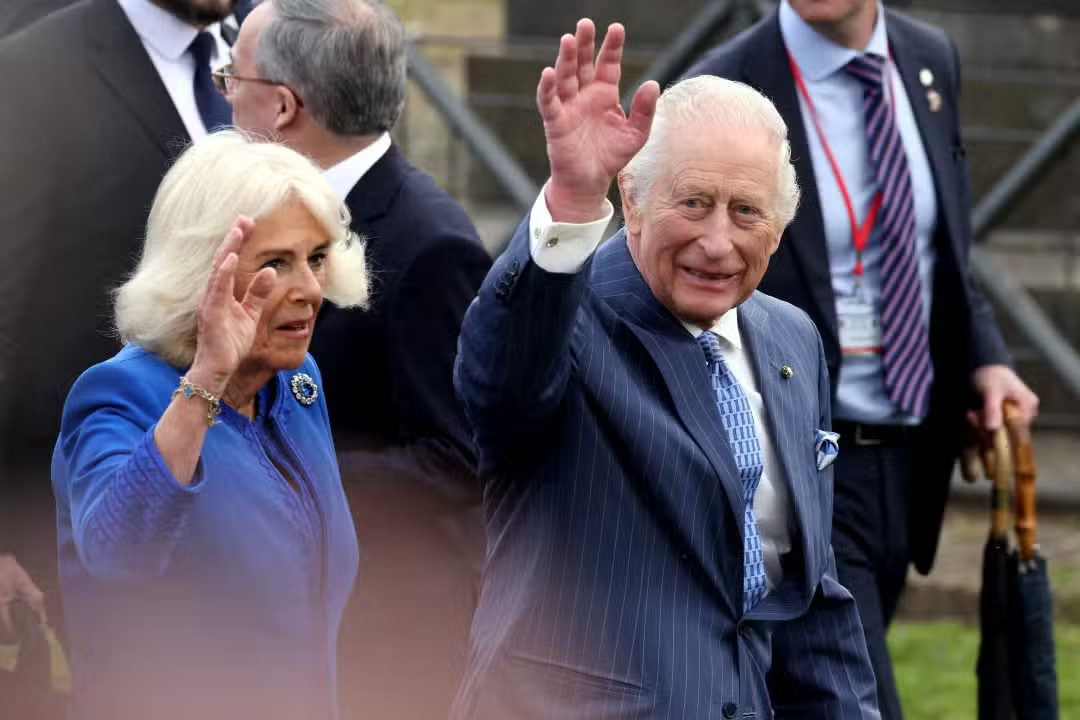
King Charles III, the reigning monarch of the United Kingdom, was admitted to a London hospital on Thursday, March 27, after experiencing temporary side effects from his ongoing cancer treatment. The 76-year-old king, who has been battling the disease since February 2024, underwent a scheduled procedure that morning, but unexpected reactions prompted a short period of medical observation. Buckingham Palace quickly reassured the public that Charles was discharged later that day and is now resting at Clarence House, his official residence. However, the incident led to the cancellation of his engagements through Friday, March 28, including a planned visit to Birmingham and diplomatic meetings. The health update underscores the challenges the monarch faces as he balances his royal duties with a year-long fight against cancer, first detected during a prostate surgery in early 2024.
Since ascending the throne in May 2023 following the death of Queen Elizabeth II, Charles III has navigated a reign marked by both personal and institutional transitions. His decision to disclose the cancer diagnosis—an unusual move for the typically private monarchy—aimed to curb speculation and raise awareness about the disease. Despite the recent hospitalization, palace officials emphasize that the king remains committed to his role, handling state paperwork from home and maintaining weekly audiences with the prime minister when possible. The brief medical setback highlights the physical toll of his treatment, yet Charles continues to project resilience, a trait honed over decades as the longest-serving heir in British history.
The king’s health journey began over a year ago when a routine surgery for benign prostate enlargement revealed the presence of cancer. Diagnosed in its early stages, the condition prompted immediate treatment, with Charles stepping back from public duties intermittently. The latest hospitalization, though resolved swiftly, reflects the ongoing nature of his care, which has now spanned 14 months. Public interest in his condition remains high, fueled by his transparency and the simultaneous cancer battle of Princess Kate Middleton, who announced her remission earlier this year. Together, their experiences have brought unprecedented attention to the royal family’s health struggles.
Health scare prompts schedule changes
The sudden cancellation of Charles III’s agenda sent ripples through the UK. His planned trip to Birmingham, where he was set to attend community events, was postponed, disappointing local organizers who had prepared for the royal visit. Buckingham Palace expressed the king’s regret, noting that the decision aligned with medical advice to prioritize his recovery. Meanwhile, Queen Camilla, aged 77, carried on with her duties, appearing at an ITV studio event in London on the same day, showcasing the monarchy’s ability to adapt under pressure.
Medical experts note that side effects from cancer treatments, such as fatigue or immune system fluctuations, are not uncommon, particularly for patients in their mid-70s undergoing prolonged therapy. The king’s swift discharge suggests that the episode was manageable, but it underscores the need for careful monitoring. This balance between health and duty has defined Charles’s reign, as he strives to uphold the monarchy’s relevance in a modern era while managing a serious illness.
Key moments in Charles’s cancer journey
Charles III’s fight against cancer has unfolded over more than a year, with several notable developments:
- January 2024: Prostate surgery uncovers early-stage cancer.
- February 2024: Treatment begins, and public duties are scaled back.
- March 2025: Brief hospitalization occurs due to treatment side effects.
These milestones illustrate a monarch adapting to health challenges while maintaining his responsibilities, a testament to his dedication amid adversity.
A reign shaped by resilience
Crowned at 74, Charles III holds the distinction of being the oldest individual to assume the British throne, ending a 70-year wait as heir to Queen Elizabeth II. His long preparation included championing environmental causes, a passion that has shaped his public image. Yet, his reign, now approaching its second year, has been overshadowed by health concerns that test his endurance. The cancer diagnosis, announced in February 2024, broke from royal tradition by offering rare insight into his condition, a shift from the secrecy surrounding King George VI’s fatal lung cancer in the 1950s.
This openness has kept Charles in the spotlight, with each health update scrutinized globally. Despite the recent hospitalization, he remains active behind the scenes, planning international engagements for mid-2025, including a potential visit to Canada. Queen Camilla has stepped up as a key support, maintaining her own schedule while standing by the king, a dynamic evident in her solo appearances during his latest medical episode. The couple’s partnership, solidified by their 2005 marriage, continues to anchor the monarchy through turbulent times.
Beyond personal implications, Charles’s health affects the institution he leads. The monarchy faces ongoing debates about its role in contemporary society, and the king’s ability to perform amid illness is closely watched. His experience resonates with millions worldwide, shedding light on the realities of cancer treatment and the importance of early detection, a message he has subtly endorsed through his public disclosures.
Understanding treatment side effects
Cancer therapies often bring side effects that challenge patients’ daily lives, and Charles III’s case is no exception. Though specifics of his recent reaction remain undisclosed, common issues include:
- Extreme fatigue, limiting physical activity.
- Nausea or appetite loss, complicating nutrition.
- Immune suppression, raising infection risks.
At 76, the king’s age may amplify these effects, necessitating brief hospital stays like the one on March 27. His medical team, among the UK’s finest, acted swiftly to stabilize him, allowing a same-day discharge—a sign of effective care tailored to his unique circumstances as a public figure.
Timeline of a challenging year
Charles III’s cancer battle has unfolded across key dates, shaping his first years as king:
- January 2024: Prostate procedure reveals cancer.
- February 2024: Diagnosis shared; treatment starts.
- October 2024: First major overseas trip to Australia and Samoa.
- March 2025: Hospitalization for side effects, with quick recovery.
This timeline reflects a monarch navigating health hurdles while fulfilling a global role, adapting as needed to maintain stability.
Royal family under strain
The past year has tested the British royal family, with Charles III and Princess Kate Middleton both facing cancer diagnoses in 2024. While Kate, married to Prince William, has reached remission, the king’s treatment persists, marking a dual health crisis for the monarchy. This overlap has intensified public and media focus, challenging the family’s tradition of stoic reserve. Charles’s reign, launched with pomp in May 2023, now contends with vulnerability, a contrast to Elizabeth II’s enduring stability.
Camilla, a steady presence since their 2005 wedding, has emerged as a vital figure, balancing her commitments—like the ITV visit—with support for her husband. The king’s latest health scare, though minor, reinforces the ongoing adjustments required to sustain the monarchy’s operations. His determination to resume duties soon after reflects a resolve forged over decades awaiting the crown.
Broader health implications
Charles III’s ordeal highlights broader health issues in the UK, where the National Health Service (NHS) supports millions of cancer patients annually. Early detection, as in his case, significantly boosts survival rates, a point emphasized by his openness. However, the NHS faces pressures like treatment delays, a context that frames the king’s privileged access to top-tier care. His experience aligns with efforts by charities like Maggie’s, which Camilla supports, to provide holistic care for cancer patients.
The king’s transparency has sparked discussions on prevention and resources, amplifying his influence beyond ceremonial duties. By sharing his journey, he connects with countless individuals facing similar struggles, bridging the gap between royalty and everyday life.
A king undeterred
Back at Clarence House after his hospital stay, Charles III resumed light duties, reviewing state papers despite the canceled public schedule. His next engagements, including diplomatic receptions, await medical clearance, but his intent to return swiftly is clear. At 76, he confronts a reign defined by adaptation, from environmental advocacy in his youth to leading through illness today.
The cancer fight, now over a year long, shows progress, with palace updates framing it as manageable. The March hospitalization, while a setback, reinforces his commitment to duty—a legacy shaped by both triumphs and trials. As he recovers, Charles remains a symbol of perseverance, steering the monarchy forward amid personal and public challenges.