
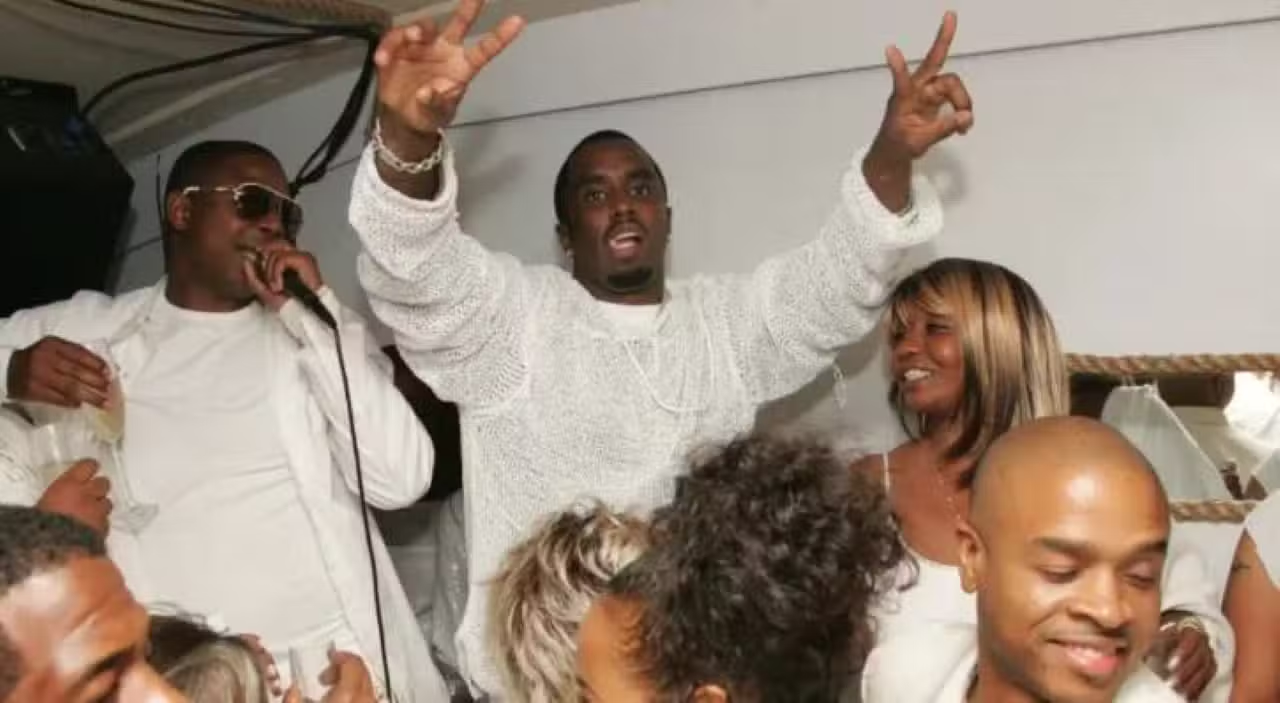
Sean Combs, widely recognized as P. Diddy, Puff Daddy, or simply Diddy, stood at the pinnacle of the 1990s hip-hop scene, building an empire through his Bad Boy Entertainment label, collaborations with icons like Notorious B.I.G. and Mary J. Blige, and ventures in fashion and media. His influence shaped music and culture, but a cascade of grave allegations has dismantled his legacy. Arrested on September 16, 2024, in New York, Combs faces charges of sex trafficking, assault, rape, and coercion, with over 120 individuals—men, women, and minors—reporting abuses spanning three decades. A new documentary, “Diddy: How a Bad Boy is Born,” streaming on Globoplay, exposes chilling details through victim testimonies, exclusive footage, and accounts from former associates. Among the most harrowing stories, a woman recounts a 2018 incident where Combs allegedly held a knife to her mouth, threatening to mutilate her face and deport her. Detained without bail at Brooklyn’s Metropolitan Detention Center, Combs denies all charges as he awaits a trial set for May 5, 2025, which could lead to life imprisonment. The documentary paints a stark contrast between his public persona and a hidden world of violence, marking one of the entertainment industry’s most shocking scandals.
The unraveling began in November 2023, when Cassie Ventura, Combs’ former girlfriend and a singer signed to his label, filed a lawsuit alleging a decade of physical abuse, rape, and forced participation in sex trafficking. Though settled privately, her case opened the floodgates, with dozens of others coming forward. Surveillance footage from 2016, released in 2024, captured Combs assaulting Ventura in a hotel, lending credibility to her claims and fueling federal investigations. The allegations describe a sophisticated operation, leveraging Combs’ wealth and influence to silence victims through intimidation and payoffs.
Victims range from aspiring artists to employees, with some as young as 9 at the time of the alleged crimes. The documentary delves into Combs’ rise from Harlem’s streets to global stardom, juxtaposing his charisma with accounts of predatory behavior. His so-called “freak off” parties, described as drug-fueled, days-long events, are central to the accusations, with claims of coercion, secret recordings, and violence. As the trial looms, the case challenges the music industry to confront its culture of secrecy and power.
Scope of the accusations
Over 120 people have accused Combs of abuse, with allegations including rape, sex trafficking, assault, and exploitation of minors. At least 25 victims were under 18 when the incidents occurred, some as young as 9, according to legal filings. The charges paint a picture of a decades-long pattern, with crimes allegedly committed in studios, hotels, and private residences across the United States.
Prosecutors claim Combs operated a criminal enterprise, using his businesses and entourage to facilitate abuses. Victims were allegedly lured with promises of fame, money, or career advancement, only to face coercion and violence. The defense argues that many interactions were consensual, but the sheer volume of accusers complicates this narrative.
- Key allegations against Combs:
- Sex trafficking through coerced participation in “freak off” parties.
- Rape and physical assault of men, women, and minors.
- Exploitation of teenagers, including 13- and 17-year-olds.
- Use of drugs and threats to control victims.
Rise of a music mogul
Born on November 4, 1969, in Harlem, Sean Combs grew up amid hardship. His father, a local drug dealer, was killed when Combs was 3, shaping a childhood of resilience. He found his calling in music, landing an internship at Uptown Records in 1990. By 21, he founded Bad Boy Entertainment, launching the careers of Notorious B.I.G., Faith Evans, and others, cementing his status as a visionary.
Combs’ flair for promotion extended beyond music. His Sean John clothing line, Ciroc vodka partnership, and media ventures built a fortune estimated at $400 million. He mingled with Hollywood elite, hosted lavish parties, and earned accolades like three Grammy Awards. His influence made him a cultural force, often dubbed the “king of hip-hop.”
Yet, early signs of trouble emerged. In 1991, a charity basketball event organized by Combs at City College of New York led to a stampede, killing nine and injuring 27. Though not criminally charged, the incident highlighted his inexperience managing large-scale events, a theme that resurfaced in later controversies.
Triggering the allegations
The public unraveling started with Cassie Ventura’s 2023 lawsuit, filed in New York. She alleged Combs subjected her to physical beatings, forced drug use, and coerced sexual encounters with others from 2007 to 2018. A 2016 hotel video, showing Combs kicking and dragging her, corroborated her claims, prompting widespread outrage when released in May 2024.
Following Ventura’s case, others emerged. Liza Gardner, then 16, claimed Combs and another man raped her in 1991. Another plaintiff, anonymously identified, alleged a gang rape in 2003 at age 17. By late 2024, over 120 civil lawsuits piled up, detailing similar patterns of violence and manipulation.
Combs initially dismissed the accusations as extortion attempts. After the hotel footage surfaced, he issued a brief apology, calling his behavior “inexcusable,” but later deleted it, doubling down on his not-guilty stance. The mounting evidence, however, shifted public and legal perceptions against him.
Arrest and federal probe
On September 16, 2024, Combs was arrested at a Manhattan hotel after months of investigation by the Department of Homeland Security. Charged with racketeering, sex trafficking, and transportation for prostitution, he was denied bail three times due to concerns about witness tampering. He remains at Brooklyn’s Metropolitan Detention Center, a facility notorious for poor conditions.
Raids on his Los Angeles, Miami, and Florida homes in March 2024 uncovered three AR-15 rifles with defaced serial numbers, over 1,000 bottles of baby oil allegedly used in “freak offs,” and electronic devices with potential evidence. Prosecutors allege Combs ran a network that orchestrated abuses, with employees facilitating events and covering tracks.
The bail denials hinged on messages showing Combs contacting victims post-arrest, suggesting obstruction. His legal team, led by Marc Agnifilo, argues the charges are overblown, but the judge cited Combs’ wealth and influence as flight risks, keeping him detained.
Stories of terror
One victim’s testimony in the documentary recounts a 2018 assault where Combs allegedly pressed a knife to her mouth, threatening to cut her face and deport her. She fled but remains traumatized, living in isolation with trust issues. Her story echoes others who describe Combs as volatile and controlling.
Teenage victims add a harrowing dimension. A 13-year-old girl claimed rape by Combs and others at a 2000 awards afterparty, while a 17-year-old reported similar abuse at a “freak off.” These accounts, supported by witnesses, highlight the vulnerability of young attendees at Combs’ events.
Men also came forward. A 16-year-old boy in 1998 alleged sexual assault, and a former employee claimed harassment and threats. The range of accusers—men, women, minors, and adults—underscores the alleged breadth of Combs’ misconduct.

The “freak off” parties
Central to the case are the “freak off” parties, described as multi-day events involving sex, drugs like ecstasy and GHB, and hidden cameras. Prosecutors say Combs used recordings to blackmail victims, ensuring compliance. The parties, held in luxury hotels and private homes, allegedly involved staff coordinating logistics and security.
Victims reported being given spiked drinks, leading to disorientation and assault. The documentary includes footage of one such event, showing opulence marred by coercion. The scale of these gatherings, with hundreds of attendees over years, suggests a systemic operation, per the prosecution.
- Features of “freak offs”:
- Prolonged events, often lasting days.
- Drug use to incapacitate participants.
- Secret recordings for blackmail purposes.
- Security and staff enforcing control.
Insights from insiders
Former employees provided damning accounts. A longtime bodyguard described a culture of fear, with Combs allegedly assaulting colleagues to assert dominance. Another Bad Boy staffer from the 1990s said abuse rumors were an open secret, suppressed by Combs’ clout.
Lisa Bloom, an attorney for one victim, noted the challenge of confronting Combs’ power. His wealth funded legal defenses and settlements, delaying accountability. Employees who spoke out risked careers, illustrating the barriers victims faced in exposing him.
The documentary’s interviews reveal a network that enabled Combs, with payoffs and threats maintaining silence. This dynamic allowed allegations to fester for decades, only surfacing when public pressure became undeniable.
Celebrity connections
Combs’ circle included stars like Jay-Z, Usher, and Justin Bieber, sparking speculation about their knowledge of his actions. Jay-Z faces a related lawsuit for an alleged 2000 rape, which he denies, labeling it extortion. No formal charges link other celebrities to Combs’ crimes.
Jennifer Lopez, Combs’ girlfriend from 1999 to 2001, has remained silent. Usher, who lived with Combs at 13, recalled witnessing inappropriate behavior but faces no accusations. Social media buzz about celebrity involvement persists, though prosecutors focus solely on Combs’ inner circle.
Bloom suggested settlements protected other high-profile names, but details remain scarce. The lack of charges against others keeps the spotlight on Combs, though public curiosity fuels ongoing debates.
Music industry fallout
The scandal has rocked hip-hop, exposing a culture of complicity. Bad Boy Entertainment, once a genre-defining label, faces reputational and financial decline as artists distance themselves. Combs’ contributions to music, like producing hits for TLC and Mase, are now overshadowed.
Institutions cut ties. Howard University rescinded Combs’ honorary doctorate and returned a $1 million donation. New York City revoked his ceremonial key, and Miami canceled “Sean Combs Day.” Radio stations began editing his name from songs, reflecting a broader rejection.
The Recording Academy reconsidered Combs’ 2024 Grammy nomination, while artists like Kesha altered lyrics to erase his mention. The industry faces pressure to address systemic issues, with calls for better protections against abuse.
Prison conditions
Combs is held at Brooklyn’s Metropolitan Detention Center, a facility criticized for overcrowding and neglect. In 2024, it reported two violent deaths and four suicides, operating with only 55% staff capacity. Combs is in a high-security wing, alongside figures like Sam Bankman-Fried.
His lawyers argue the conditions—moldy cells, limited medical care—are unfit for a pre-trial detainee. Requests for transfer or bail, including a $50 million offer, were denied, citing Combs’ potential to intimidate witnesses.
The harsh environment contrasts with Combs’ former lavish lifestyle, adding complexity to his defense. Supporters claim he’s being unfairly targeted, but prosecutors emphasize the severity of the charges.
Trial preparations
Set for May 5, 2025, Combs’ trial is poised to be a media spectacle. Led by prosecutor Damian Williams, the case will feature victim testimonies, videos, and seized items like weapons and drugs. The defense plans to challenge witness credibility, arguing the accusations stem from financial motives.
Jury selection, starting in April, faces hurdles due to Combs’ fame. Pretrial hearings will address evidence admissibility, with prosecutors holding a strong hand after months of investigation. A conviction could mean 15 years to life, depending on the charges.
The trial’s outcome will ripple through entertainment, testing accountability for powerful figures. Its duration, likely months, ensures sustained public focus on Combs’ fate.
- Key trial milestones:
- Jury selection: April 2025.
- Trial start: May 5, 2025.
- Evidence hearings: ongoing until March 2025.
- Potential sentences: 15 years to life if convicted.
Social impact
Combs’ case has reignited discussions on power dynamics in music. The #MeToo movement gained momentum, encouraging victims to speak out. The exposure of “freak offs” highlighted risks in celebrity-driven spaces, prompting calls for stricter oversight.
Support organizations reported a 10% spike in helpline calls in New York, with many citing Combs’ case as inspiration to report past abuses. The focus on minors underscored the need for better safeguards in entertainment, where young talent often faces exploitation.
Public discourse shifted, with fans and activists demanding transparency from labels and event organizers. The scandal serves as a warning, urging the industry to dismantle structures that shield abusers.
A tarnished legacy
Combs’ legacy as a hip-hop trailblazer lies in ruins. Bad Boy Entertainment struggles with canceled deals and artist defections. Projects tied to Combs, like a Hulu reality series, were shelved, and his business ventures, including Sean John and Ciroc, face boycotts.
His cultural achievements—producing classics and mentoring stars—are now footnotes to his downfall. The documentary ensures his story remains a cautionary tale, exposing the cost of unchecked power.
The legal battle ahead will determine Combs’ fate, but his reputation is already irreparably damaged. As victims find their voices, the industry grapples with its role in enabling such misconduct.