Sean Combs, widely known as P. Diddy, Puff Daddy, or simply Diddy, built a musical empire that cemented his status as a defining figure in 1990s hip-hop. His label, Bad Boy Entertainment, launched stars like Notorious B.I.G. and Mary J. Blige, while his lavish parties drew Hollywood’s elite. Yet, this image of triumph has crumbled under severe allegations, leading to his arrest in September 2024. A newly released documentary, “Diddy: How a Bad Boy Is Born,” available on Globoplay and aired on the GNT channel, traces the rapper’s journey from his Harlem roots to the unraveling of his reputation amid charges of sex trafficking, assault, and rape. Featuring exclusive footage and testimonies from victims, former employees, and ex-partners, the production sheds light on one of the entertainment industry’s biggest scandals as Combs awaits a trial set for May 5, 2025.
Combs’ rise was fueled by ambition and talent from an early age. Born to a drug dealer killed in Harlem, he broke into the music industry with an internship at Uptown Records. His knack for spotting talent and crafting hits led him to establish Bad Boy Entertainment in 1993, a label that reshaped hip-hop. However, the documentary reveals that even at his peak, troubling behavior was evident behind the scenes.
Witnesses describe an atmosphere of fear orchestrated by Combs. A former employee, who worked with him for nearly three decades, recounts a pattern of violence and intimidation. According to him, Diddy believed fear equated to respect. These claims clash with the glamorous public persona he cultivated, hosting extravagant parties attended by stars like Beyoncé, Leonardo DiCaprio, and even Donald Trump.
Tragic incidents punctuated his career. In 1991, Combs co-organized a charity event in New York that ended in disaster, with nine deaths due to overcrowding. Though the courts split blame between organizers and the venue, the episode did not derail his ascent. Instead, he solidified his dominance in music, amassing a fortune estimated in the millions.
- Harlem roots: Combs grew up in a violence-plagued neighborhood, losing his father at three.
- Music beginnings: His Uptown Records internship sparked a meteoric career.
- Bad Boy Entertainment: The label launched artists who defined 1990s hip-hop.
- Wealth amassed: Hits and side ventures earned millions, cementing his influence.
Building a music empire
Bad Boy Entertainment became synonymous with hip-hop innovation. Combs produced albums blending rap, R&B, and creative sampling, creating a sound that topped charts. Artists like Faith Evans and 112, plus collaborations with names like Mariah Carey, thrived under his vision. The documentary revisits studio footage, showing a charismatic yet controlling Diddy, demanding perfection from his team.
Behind the musical genius, tensions simmered. Former employees recall outbursts, with Combs shouting or threatening subordinates. An anonymous account describes him manipulating young artists, offering fame for total compliance. These dynamics, the documentary suggests, fostered an environment where few dared challenge him.
Combs’ personal life also drew scrutiny. His relationships with figures like Jennifer Lopez and Kim Porter made headlines, but the documentary hints at unbalanced power dynamics offstage. Kim Porter, mother to three of his children, passed away in 2018, though later accounts suggest she endured hardships with the rapper.
Meanwhile, Diddy’s parties became legendary. Held at mansions in the Hamptons or Los Angeles, they brimmed with luxury—expensive champagne and celebrities dancing until dawn. Documentary footage captures this opulence, but victims now describe these events as settings for serious crimes, where drugs and coercion were rampant.
Early accusations surface
Allegations against Combs didn’t emerge overnight. The documentary traces a timeline starting with 1990s rumors, when his aggressive behavior was whispered about in music circles. A 1999 incident, involving a nightclub shooting with Jennifer Lopez, raised questions about his temperament, though he was acquitted.
The accusations gained momentum in 2023. Singer Cassie Ventura, who dated Combs for over a decade, filed a lawsuit alleging years of physical, psychological, and sexual abuse. Her testimony sparked a flood of similar claims, with over 100 people reporting experiences of violence and exploitation. The documentary outlines how these allegations escalated from civil suits to a federal investigation culminating in Combs’ arrest.
A shocking video, released in 2024, shows Combs assaulting Cassie in a hotel hallway in 2016. The footage captures him chasing her, knocking her down, and kicking her repeatedly. This security camera recording became a cornerstone of the case, undermining his initial denials. Cassie claims she was forced into sexual acts with other men under threats of violence during their relationship.
Attorney Lisa Bloom, representing one victim, underscores the case’s scope. She argues Combs’ industry power enabled decades of impunity. The documentary reinforces this, showing how his influence silenced witnesses and deterred accusers.
- 1999 nightclub incident: Combs arrested after shooting, later acquitted.
- 2023 Cassie lawsuit: Ex-girlfriend details abuse in court filing.
- 2024 assault video: Footage confirms violence against Cassie.
- 2024 arrest: Combs detained on sex trafficking and racketeering charges.
The dark side of the parties
Diddy’s parties, dubbed “freak offs” in court documents, are central to the allegations. Prosecutors claim these events, held at luxury hotels or private homes, involved sex trafficking and drug-fueled coercion. The documentary shares victim accounts of manipulation, with spiked drinks and pressure to engage in unwanted acts.
One anonymous victim recalls being lured to a party with promises of music industry connections. She describes being drugged, waking up with no memory but bearing signs of assault. A former security guard recounts Combs overseeing events, ensuring they unfolded as he desired.
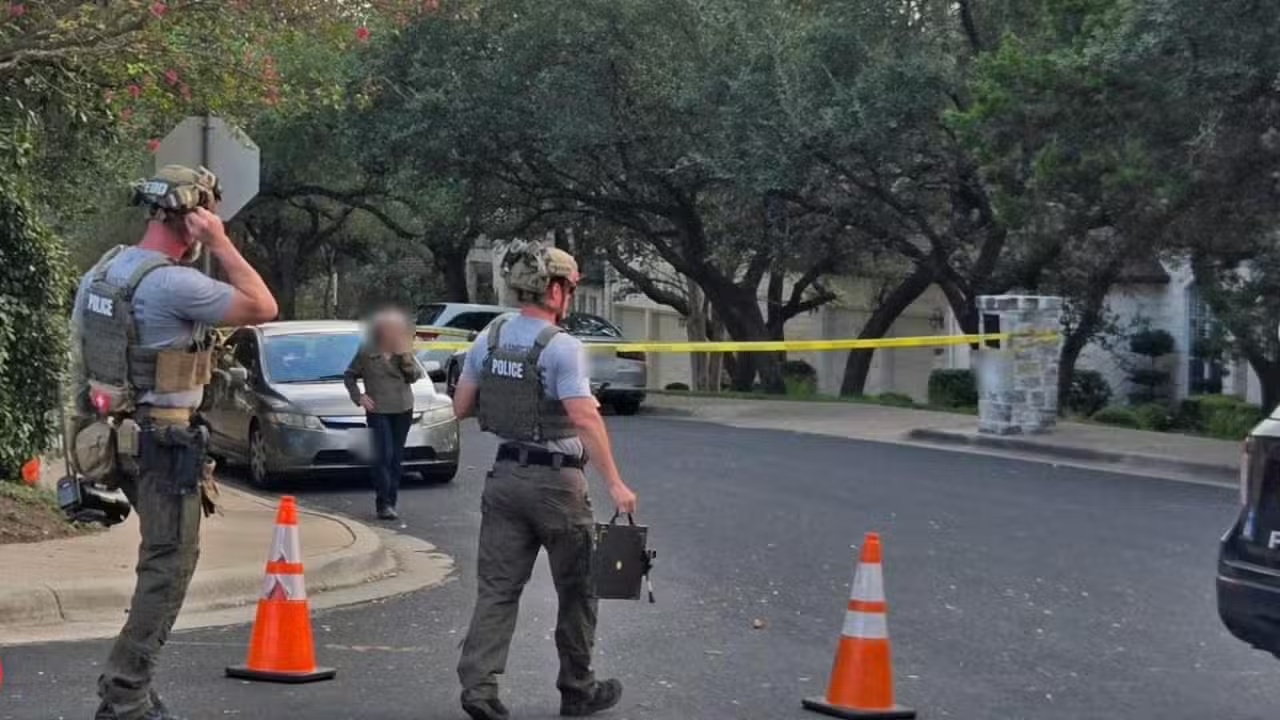
Investigations uncovered tangible evidence. In March 2024, raids on Combs’ Los Angeles and Miami mansions yielded over 1,000 bottles of lubricant, firearms, and electronics containing incriminating recordings. Prosecutors say these items support claims that the parties were orchestrated to enable abuse.
Celebrities who attended these events face speculation, though none have been charged. The documentary avoids naming unindicted figures, focusing on victim testimonies and collected evidence.
The fall of an icon
Combs’ arrest in September 2024 ended his freedom, at least for now. Held at Brooklyn’s Metropolitan Detention Center, he faces harsh conditions in a facility notorious for violence. His legal team offered up to $50 million for bail, but judges denied release, citing flight risk and witness tampering concerns.
The documentary details how Cassie’s lawsuit catalyzed the investigation. Her courage inspired other victims, including men and women alleging abuse dating back to the 1990s. A Texas attorney representing over 120 accusers claims some were minors during the incidents, with abuses occurring at recording studios and private parties.
Combs’ defense maintains his innocence. Attorneys argue the accusations are exaggerated, describing the events as consensual. They’ve criticized the documentary as sensationalist, claiming it biases the upcoming trial.
His reputation has taken a permanent hit. Brands once tied to him have severed connections, and his music industry influence has waned. The documentary suggests that, trial outcome aside, Diddy’s legacy is indelibly tarnished.
Impact on the music industry
Combs’ case raises questions about power in entertainment. The documentary highlights how wealth and connections shield influential figures, drawing parallels to cases like Harvey Weinstein and R. Kelly. It points to a pattern of impunity broken only when victims unite.
Victims’ attorneys stress the case extends beyond Combs. They point to a network of enablers—employees and associates—who allegedly facilitated crimes. Investigations continue to probe these links, though Combs remains the focus, facing potential life imprisonment.
For the industry, the scandal is a wake-up call. Young artists, often under powerful producers’ sway, are vulnerable to exploitation. The documentary features music journalists who covered Combs’ career, noting that rumors of his behavior persisted for years but lacked solid evidence until now.
Bad Boy Entertainment, once a hip-hop powerhouse, faces an uncertain future. With Combs sidelined, the label struggles to stay relevant, as former artists begin sharing stories of pressure and control.
- Artist vulnerability: Newcomers risk exploitation in deals with major labels.
- Industry silence: Rumors were ignored to protect powerful figures.
- Cultural shift: Recent scandals push for greater transparency.
- Bad Boy’s future: The label falters without Combs’ leadership.
Timeline of events
The P. Diddy case unfolded over decades, with pivotal moments marking his rise and fall. Below is a chronology of key events:
- 1970: Sean Combs born in Harlem, New York, on November 4.
- 1991: Organizes charity event ending in tragedy, with nine deaths.
- 1993: Founds Bad Boy Entertainment, launching Notorious B.I.G.
- 1999: Involved in nightclub shooting with Jennifer Lopez; acquitted.
- 2005: Begins relationship with Cassie Ventura, later tied to abuse claims.
- 2018: Kim Porter, mother of his children, dies of pneumonia.
- 2023: Cassie files lawsuit alleging abuse, sparking further accusations.
- 2024: Assault video surfaces; Combs arrested in September.
- 2025: Trial scheduled for May 5, with potential life sentence.
Victims’ voices
The documentary’s core lies in victims’ testimonies. One woman, speaking anonymously, describes being drawn into Combs’ circle with promises of a music career. She recounts being pressured into drug use and sexual acts, fearing lost opportunities if she refused. Her story echoes others, revealing a pattern of psychological manipulation.
Men also number among the accusers. A former personal assistant claims he was forced to organize “freak offs” and recruit participants. He describes Combs using authority to demean subordinates, fostering constant submission.
Cassie Ventura remains the case’s most prominent figure. Her November 2023 lawsuit details a decade-long relationship marked by violence and coercion. She alleges Combs controlled her appearance, social interactions, and more. The documentary includes accounts from her inner circle, confirming the relationship’s devastating toll.
Victim advocates hope the case drives change. They call for better protections for aspiring artists and stricter penalties for power abuses. The documentary closes on a hopeful note, emphasizing the bravery of those who spoke out despite fears of retaliation.
What to expect at trial
Combs’ trial, set for May 2025, is poised to be a high-profile legal battle. Prosecutors plan to present extensive evidence, including recordings, testimonies, and items seized in 2024 raids. The sex trafficking charge carries a minimum 15-year sentence, while racketeering conspiracy could mean life in prison.
The defense, led by attorney Marc Agnifilo, insists the accusations stem from misunderstandings, portraying Combs as a target of defamation. They plan to challenge witness credibility, suggesting financial motives. They’ve called the documentary prejudicial, arguing it taints the trial’s fairness.
Combs remains in a Brooklyn detention unit, struggling with the facility’s harsh conditions. His legal team continues pushing for release, but judges uphold his detention, citing public safety risks.
The case’s ripples extend beyond Combs. The music industry faces calls to address practices enabling abuse, while fans and artists reassess the legacy of a once-celebrated visionary. The documentary, with its unflinching detail, ensures these issues stay in the spotlight, whatever the trial’s outcome.