Brazilian works 8 months to buy iPhone 16 Pro Max; USA 21 days and Switzerland only 4 days

In 2025, the dream of owning an iPhone 16 Pro Max in Brazil reveals a challenging reality for millions of workers. The minimum wage, set at R$ 1,518 monthly, reflects a modest increase from the previous year but remains far from enabling easy access to high-value goods like Apple’s flagship. Even with the average salary, around R$ 3,187, purchasing a premium smartphone requires rigorous financial planning. This disparity becomes even clearer when compared to countries like the United States and Switzerland, where purchasing power is significantly higher.
The iPhone 16 Pro Max, launched in 2024, hit the Brazilian market with prices ranging from R$ 12,499 to R$ 15,499, depending on storage capacity. These prices, driven by high taxes and import costs, contrast sharply with those in other markets. In the United States, the same model starts at US$ 1,199, while in Switzerland, prices are even more affordable relative to local income. This difference raises questions about access to technology in emerging economies.
Brazil’s economic reality in 2025 imposes significant barriers to purchasing high-cost products. For a worker relying on the minimum wage, buying an iPhone 16 Pro Max could require nearly a year of work, excluding basic expenses like food, housing, and transportation. Comparisons with other countries highlight not only salary differences but also the impacts of tax systems and living costs.
- Brazil’s minimum wage: R$ 1,518 monthly, equivalent to about US$ 253.97 (February 2025 exchange rate).
- Brazil’s average salary: R$ 3,187 monthly, with regional and sectoral variations.
- iPhone 16 Pro Max price in Brazil: Starting at R$ 12,499 for 256 GB.
- International comparison: In the US, the model costs around US$ 1,199; in Switzerland, it’s proportionally more affordable.
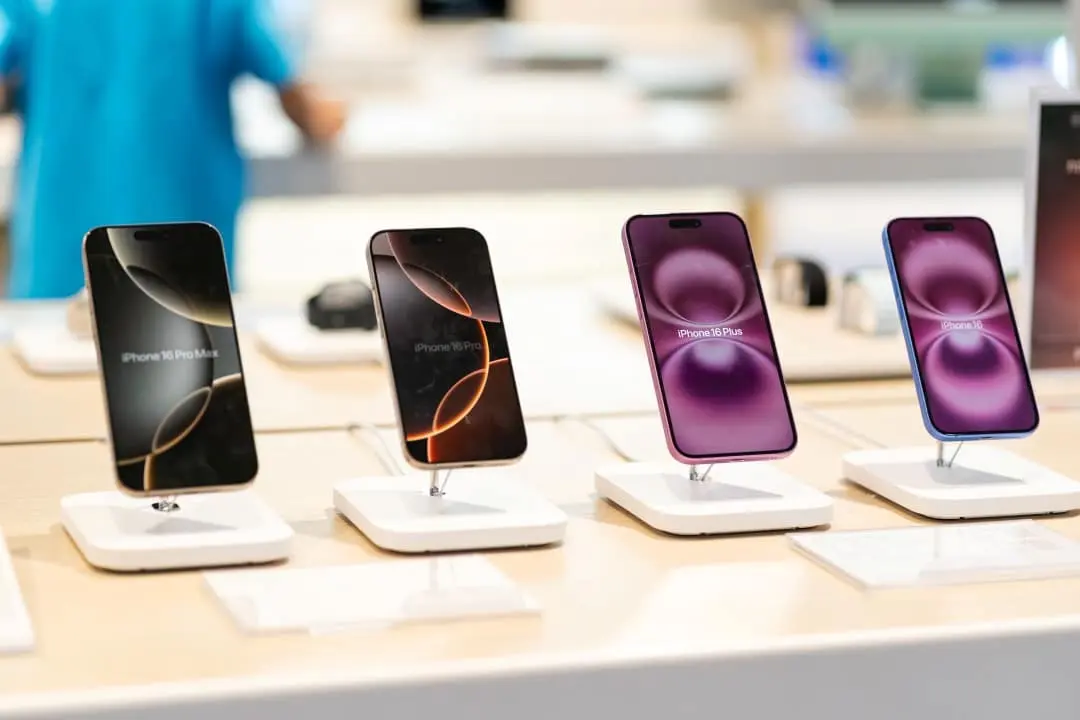
iPhone 16 Pro Max prices in Brazil
The iPhone 16 Pro Max, launched in September 2024, arrived in Brazil with prices reflecting the country’s high tax burden and logistical costs. The 256 GB model, the most affordable in the Pro Max line, starts at R$ 12,499 on Apple’s official store. Higher storage versions, such as 512 GB and 1 TB, reach R$ 13,999 and R$ 15,499, respectively. These prices place Brazil among the most expensive markets for the smartphone, worsened by import taxes that can reach 60% of the product’s value.
Apple’s pricing policy in Brazil accounts for production costs, customs duties, and ICMS, which varies by state. In São Paulo, for instance, the state tax adds about 18% to the final price. This tax structure makes the iPhone 16 Pro Max nearly double the price in the United States, where the 256 GB model is sold for US$ 1,199, equivalent to roughly R$ 6,834 at the September 2024 exchange rate.
Despite the high cost, demand for iPhones in Brazil remains strong, particularly among middle- and upper-class consumers. The pre-sale of the iPhone 16 Pro Max, starting on September 24, 2024, saw high demand, with queues at Apple stores in São Paulo and Rio de Janeiro. The device’s popularity reflects the status associated with the brand, even in a challenging economic context.
- 256 GB model: R$ 12,499, equivalent to 8.2 minimum wages.
- 512 GB model: R$ 13,999, about 9.2 minimum wages.
- 1 TB model: R$ 15,499, or 10.2 minimum wages.
- State taxes: Can add up to 18% to the final price, depending on the region.
Brazil’s minimum wage in 2025
Brazil’s minimum wage for 2025 was set at R$ 1,518, as announced by the federal government in late 2024. This represents a 7.37% increase from the R$ 1,412 of 2024, adjusted based on the projected INPC inflation rate and a gradual valorization policy. Despite the raise, the purchasing power of minimum-wage workers remains limited, especially for durable consumer goods like smartphones.
With a minimum wage of R$ 1,518, a worker dedicating their entire income to purchasing a 256 GB iPhone 16 Pro Max would need approximately 8.2 months of work, or about 240 days, assuming 21 working days per month. This calculation excludes essential expenses like housing, food, and transportation, which consume most of low-income workers’ budgets.
The situation is particularly dire in regions with higher living costs, such as São Paulo and Rio de Janeiro. In northeastern capitals like Recife and Salvador, the minimum wage covers even fewer basic needs, making an iPhone purchase nearly unattainable for most. While the minimum wage increase is welcome, it does not keep pace with the rising prices of imported goods, impacted by the real’s depreciation against the dollar.
Average salary and the iPhone’s weight
Brazil’s average salary, according to IBGE data from July 2024, is R$ 3,187 monthly, with significant variations by sector and region. Technology, healthcare, and executive professionals often earn above this, while service workers, like those in retail and food, earn closer to the minimum. For someone earning the average salary, the 256 GB iPhone 16 Pro Max requires about 3.9 months of work, or 82 working days, assuming all income goes toward the purchase.
This reality underscores Brazil’s economic inequality, where only a small portion of the population can afford high-value products without straining their budgets. In 2024, real average income fell 2.1% between April and July, signaling a slow economic recovery that impacts purchasing power. Even with the average salary, buying an iPhone demands significant financial sacrifices, such as cutting other expenses or opting for long-term financing with high interest rates.
The popularity of financing in Brazil facilitates access to the iPhone 16 Pro Max, with installments ranging from R$ 1,041 to R$ 1,291 monthly in 12 interest-free plans. However, this option increases the total cost for consumers unable to pay upfront, reinforcing the economic barrier for most.
- Average monthly salary: R$ 3,187, peaking at R$ 3,255 in April 2024.
- Workdays for iPhone: 82 working days with the average salary.
- Common financing: 12 installments of R$ 1,041 for the 256 GB model.
- Sectoral inequality: Low-skill jobs pay close to the minimum wage.
Scenario in the United States
In the United States, the federal minimum wage has remained at US$ 7.25 per hour since 2009, equivalent to about US$ 1,276 monthly for a 40-hour workweek. However, many states enforce higher minimum wages, such as Washington, D.C. (US$ 17 per hour) and New York (US$ 19.96 per hour in 2025 for delivery workers). With the federal minimum, a worker would need roughly 166 hours, or 21 working days, to buy a 256 GB iPhone 16 Pro Max, priced at US$ 1,199 before state taxes.
The average US salary, per the Bureau of Labor Statistics, is US$ 1,143 weekly, or about US$ 4,572 monthly. With this income, the iPhone 16 Pro Max requires just 5.1 workdays, based on the base price without taxes. State taxes, ranging from 6.8% in Florida to 8.87% in New York, raise the final price to about US$ 1,280, still affordable for most American workers.
The iPhone’s accessibility in the US is bolstered by discounts from telecom carriers, often tied to data plans, reducing upfront costs. Additionally, interest-free financing, like Apple’s US$ 50 monthly installments, makes the smartphone viable for a broad population segment.
Reality in Switzerland
Switzerland stands out as the country where the iPhone 16 Pro Max is most affordable relative to income. While no national minimum wage is set by law, collective agreements ensure high incomes, with average salaries around CHF 6,500 monthly (approximately US$ 7,600). The iPhone 16 Pro Max costs CHF 1,199, equivalent to US$ 1,400, but represents just 4 workdays for a worker with average income.
Switzerland’s economic structure, with low taxes on consumer goods and high productivity, facilitates access to tech products. In Zurich and Geneva, cities with high living costs, salaries match expenses, allowing even less-skilled workers to afford premium smartphones. The Swiss franc’s stability also ensures more predictable prices, unlike Brazil, where currency fluctuations raise costs.
- Swiss average salary: CHF 6,500 monthly, about US$ 7,600.
- iPhone 16 Pro Max price: CHF 1,199, equivalent to 4 workdays.
- Lower taxes: Consumer goods face lower taxes than in Brazil.
- Purchasing power: Collective agreements ensure high salaries.
Factors driving high prices in Brazil
Brazil’s tax burden is a key factor inflating the iPhone 16 Pro Max’s price. Beyond import taxes, which can reach 60%, ICMS and PIS/COFINS add significant costs. The real’s depreciation against the dollar, at about R$ 5.70 for tourism in September 2024, further widens the gap compared to the US and Switzerland.
Logistics and distribution in Brazil, with high transportation costs and limited infrastructure, also increase prices. Unlike the US, where Apple operates its own stores and partners with retailers, Brazil relies on distributors who pass costs to consumers. These structural factors make Brazil’s market less competitive for imported goods, especially electronics.
Apple’s global pricing strategy maintains consistent profit margins, but Brazil’s additional costs result in much higher final prices. In 2024, the company faced criticism in Brazil for using an exchange rate of nearly R$ 10 per dollar for its products, despite a lower official rate. This practice reflects the need to cover high operational costs in the Brazilian market.
Purchase strategies in Brazil
To navigate high prices, many Brazilians use alternative strategies to buy the iPhone 16 Pro Max. Purchasing abroad, especially in the US, is popular for those traveling or with contacts overseas. An iPhone bought in New York for US$ 1,280 (with taxes) costs about R$ 7,296, nearly half the Brazilian price. However, Brazil’s Federal Revenue Service imposes a US$ 1,000 tax exemption limit for imports, and devices above this value may face 50% taxation, reducing savings.
The resale market has also grown, with imported iPhones sold online at lower prices than official stores. This practice carries risks, such as lack of Apple’s official warranty and potential counterfeit products. In 2024, Brazil’s Federal Police intensified crackdowns on smuggled electronics sales, increasing consumer caution.
- Buying abroad: Up to 40% savings compared to Brazilian prices.
- Import risks: 50% taxation for values above US$ 1,000.
- Informal resale: Lower prices but no official warranty.
- Local financing: Plans of up to 12 installments facilitate access.
Work time comparison
Comparing the time needed to buy an iPhone 16 Pro Max highlights economic disparities between Brazil, the US, and Switzerland. In Brazil, a minimum-wage worker needs 240 working days, or about 8 months, to afford the 256 GB model. With the average salary, this drops to 82 days, still a significant period. In the US, the federal minimum wage requires 21 days, while the average salary reduces the effort to 5.1 days.
In Switzerland, the scenario is even more favorable, with just 4 workdays needed with the average salary. This reflects not only higher salaries but also lower iPhone prices relative to local income. The 2024 “iPhone Index” by Picodi ranked Brazil as the third country where workers toil longest to buy the iPhone 16 Pro, behind only Turkey (72.9 days) and the Philippines (68.8 days).
The index’s methodology considers the device’s price and average salary, divided by 21 monthly working days. In Brazil, the calculation for the 256 GB iPhone 16 Pro Max underscores the challenge of accessing cutting-edge technology, especially for low-income workers. Even with the 2025 minimum wage increase, the gap with developed nations remains wide.
Demand and consumer behavior
Despite high prices, the iPhone 16 Pro Max retains strong appeal in Brazil. Apple stores in São Paulo and Rio de Janeiro saw queues during pre-sales, with consumers willing to pay upfront or in installments to secure the device. The preference for the Pro Max model reflects demand for high-quality cameras, larger storage, and the brand’s status.
Among younger consumers, the iPhone is seen as a symbol of modernity, fueled by influencers and marketing campaigns. In 2024, Apple boosted its social media presence in Brazil, with ads highlighting artificial intelligence features and Apple Intelligence integration, available on the iPhone 16. This strategy reinforces the perception of exclusivity, even in a market where price is a barrier.
The choice of an iPhone often overshadows more affordable options, like Samsung or Xiaomi smartphones, which offer similar specs at lower prices. Brand loyalty to Apple, combined with financing options, sustains demand, even amid inflation and high interest rates.
- Competitive pre-sale: Queues at Apple stores in São Paulo and Rio.
- Youth appeal: iPhone tied to status and modernity.
- Effective marketing: Campaigns highlight AI and advanced cameras.
- Competition: Samsung and Xiaomi offer cheaper alternatives.
Economic barriers and inequality
The difficulty of buying an iPhone 16 Pro Max in Brazil extends beyond the device’s price. Economic inequality, with 70% of workers earning up to two minimum wages, limits access to high-value goods. In 2024, IBGE reported that 40% of the economically active population earned less than R$ 2,000 monthly, insufficient for basic expenses and tech investments.
Income concentration in the Southeast and South worsens the scenario, with workers in the North and Northeast facing greater challenges affording imported products. The reliance on smartphones for work and education makes digital exclusion a growing issue. Government programs like Wi-Fi Brasil have yet to meet the demand for affordable devices.
Comparisons with the US and Switzerland show how economic and wage policies shape tech access. While the US offers higher state minimum wages and Switzerland ensures high incomes through collective agreements, Brazil faces structural challenges like high taxation and slow real minimum wage growth.
Alternatives to the iPhone 16 Pro Max
Given high prices, many Brazilians seek alternatives to the iPhone 16 Pro Max. Smartphones from Samsung, Xiaomi, and Motorola offer comparable performance at more accessible prices. The Samsung Galaxy S24 Ultra, for instance, costs around R$ 9,999 in Brazil, while the Xiaomi 14 Ultra is priced at R$ 8,999, significantly less than the iPhone.
Older iPhone models, like the iPhone 15 and iPhone 14, also gained popularity post the iPhone 16 launch. In 2024, the 128 GB iPhone 15 dropped to R$ 4,599 at retailers like Casas Bahia, becoming a viable option for those seeking the Apple experience without the new model’s price. Price reductions on older models are a common Apple strategy to attract lower-income consumers.
The market for used or refurbished iPhones has also grown, with platforms like Mercado Livre and OLX offering previous-generation Pro Max models at up to 50% off. These devices, when certified, provide limited warranties and satisfactory performance, appealing to cost-conscious buyers.
- Samsung Galaxy S24 Ultra: R$ 9,999, with comparable cameras and performance.
- Xiaomi 14 Ultra: R$ 8,999, a more affordable premium alternative.
- Used iPhone 15: Starting at R$ 4,599 at retailers.
- Refurbished market: Used iPhones with up to 50% discounts.
Technology’s role in Brazil
Smartphones like the iPhone 16 Pro Max go beyond communication, playing vital roles in education, remote work, and entrepreneurship. In Brazil, where 80% of the population accesses the internet solely via mobile devices, owning a quality smartphone is increasingly essential. The Covid-19 pandemic accelerated this reliance, with online classes and delivery apps requiring capable devices.
Apple recognizes this demand and invests in services like Apple Pay and iCloud, encouraging device integration into Brazilian daily life. In 2024, Apple Pay expanded partnerships with local banks, easing digital payments in a country where Pix dominates transactions. These services boost the iPhone’s appeal, even for consumers facing financial barriers.
Digital exclusion, however, remains a hurdle. In rural areas and urban outskirts, lack of access to modern devices limits educational and professional opportunities. NGOs and private initiatives have sought to bridge this gap, distributing refurbished smartphones and offering digital training courses.
Consumption trends in 2025
Brazil’s smartphone market is expected to grow in 2025, driven by 5G expansion and device upgrades. Anatel predicts 70% of mobile connections will be 5G by year-end, increasing demand for compatible models like the iPhone 16 Pro Max. Apple plans to open new stores in Brazil, including a unit in Brasília, to serve its growing consumer base.
Competition among brands will also intensify, with Samsung and Xiaomi launching models with artificial intelligence and advanced cameras. Motorola, dominant in the entry-level segment, plans to expand its premium line, challenging Apple in the high-end market. These dynamics suggest Brazilian consumers will have more options, but high-end model prices will remain a challenge.
Long-term financing is likely to persist, with retailers offering plans of up to 24 months to attract buyers. Seasonal promotions, like Black Friday in November 2025, are anticipated as opportunities to buy the iPhone 16 Pro Max at discounts, though price cuts rarely exceed 10%.
- 5G expansion: 70% of mobile connections in Brazil by 2025.
- New Apple stores: Unit planned for Brasília.
- Fierce competition: Samsung and Xiaomi invest in AI.
- Black Friday 2025: Expected discounts of up to 10%.