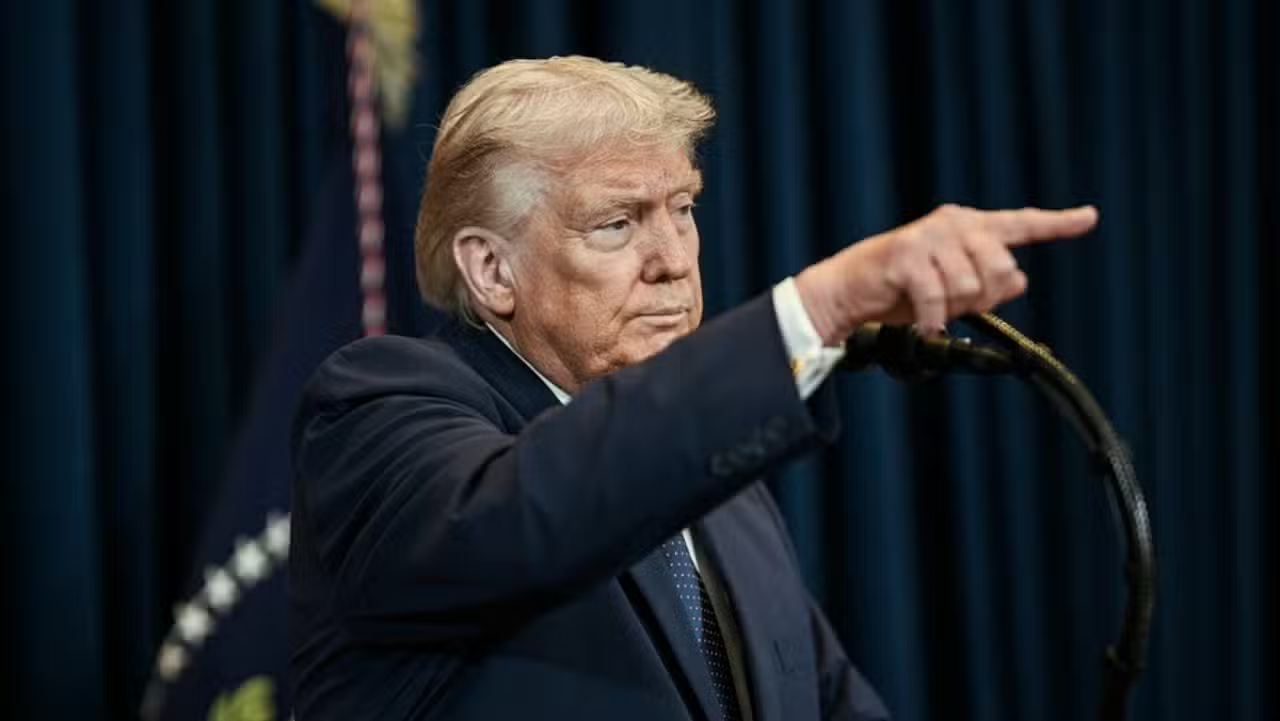
Sean “Diddy” Combs, one of the most influential figures in music and entertainment, stands at the center of a trial that has captivated global attention. On Monday, May 5, 2025, jury selection began in New York, marking the start of a legal process that could redefine the hip-hop mogul’s legacy. Combs faces severe charges, including sex trafficking, extortion, and a pattern of abusive behavior that prosecutors allege spanned two decades. The trial, expected to last at least eight weeks, is poised to unveil shocking details about the misuse of power and influence within Combs’ business empire.
The case gained widespread attention following Combs’ arrest on September 16, 2024, when he was detained on suspicions that have now culminated in a 17-page indictment. The allegations paint a disturbing picture, outlining a sophisticated scheme involving manipulation, violence, and sexual exploitation. Jury selection, which may take several days, is the first step in a process that will see opening statements and witness testimonies starting next week.
The charges against Combs are extensive and include:
- Leveraging his business network to facilitate abuse.
- Organizing drug-fueled sexual events dubbed “Freak Offs.”
- Using threats and violence to ensure victims’ compliance.
- Manipulating entertainment careers as leverage.
While prosecutors prepare a robust case, Combs’ defense team maintains his innocence, asserting that all interactions were consensual. The trial, held in a federal courthouse in Manhattan, has already drawn crowds of journalists and onlookers eager to follow every development.
A history of legal troubles
Sean Combs is no stranger to legal controversies, but the current case is by far the most serious of his career. Over the years, the rapper has faced incidents that have tarnished his reputation, though he has largely maintained his dominance in the entertainment industry. In 1999, Combs was accused of assaulting Interscope Records executive Steve Stoute in an attack involving a champagne bottle and a chair. The case ended with a guilty plea to a lesser charge, and Combs completed an anger management course.
Later that year, he was involved in a shooting at a New York nightclub that left three people injured. Although acquitted of all charges in a 2001 trial, a member of his entourage, rapper Jamal “Shyne” Barrow, was convicted and served nearly nine years in prison. In 2015, Combs faced accusations of assaulting someone with a kettlebell at the University of California, Los Angeles, where his son played football. Claiming self-defense, Combs avoided charges when prosecutors dropped the case.
These incidents, while significant, pale in comparison to the current allegations. Prosecutors are likely to use Combs’ history to establish a pattern of violent behavior, while the defense may argue that these cases were resolved without major convictions, suggesting Combs is being unfairly targeted.
Details of the indictment
The indictment against Combs is a cornerstone of the trial, outlining a scheme that prosecutors say lasted decades. The allegations claim Combs used his status as an entertainment mogul to lure vulnerable women, promising to advance their careers in music or film. These promises, however, came with a cost: participation in sexual events known as “Freak Offs,” described as drug-fueled performances involving sex workers.
The indictment details how these events were orchestrated with the help of Combs’ staff and associates, who ensured logistics and discretion. Women, often manipulated or coerced, faced threats if they refused to comply. Prosecutors allege violence was a recurring tool, with incidents including beatings, kidnappings, and even an episode where Combs reportedly dangled someone from a balcony to intimidate them.
Furthermore, the indictment points to a conspiracy of extortion, where Combs and his team used financial resources and influence to silence victims and witnesses. This network, according to prosecutors, included security personnel, personal assistants, and even executives from his companies, such as Bad Boy Entertainment. The complexity of the scheme is one reason the trial is expected to stretch over weeks, with dozens of witnesses set to testify.
Cassie’s case and the assault footage
One of the most damning aspects of the case involves Combs’ former girlfriend, singer Cassie Ventura. In 2016, security camera footage from a Los Angeles hotel captured Combs assaulting Cassie in a hallway. The video, which surfaced publicly in 2024, shows the rapper chasing the singer, throwing her to the ground, and kicking her. The footage is considered pivotal evidence by prosecutors, who plan to use it to demonstrate the pattern of violence outlined in the indictment.
Cassie filed a civil lawsuit against Combs in 2023, alleging years of physical and sexual abuse. According to the suit, their relationship, which spanned from 2007 to 2018, was marked by beatings, rapes, and coercion into sexual activities with others. Although the lawsuit was settled out of court, Cassie’s allegations bolster the current criminal charges, and she may be called as a witness in the trial.
Combs’ attorney, Marc Agnifilo, has acknowledged the violence in the video but argued it was an isolated incident and that Combs is not perfect. He also emphasized that the relationship with Cassie involved complex dynamics, including drug use and mutual behaviors that, he claims, cannot be reduced to one-sided abuse. The defense plans to explore these nuances to challenge the credibility of the accusations.
The defense’s strategy
Combs’ legal team, led by Agnifilo, is crafting a defense that seeks to dismantle the charges systematically. A core argument is that all sexual activities described in the indictment were consensual. The defense contends that the “Freak Offs” were private events among consenting adults, with no coercion or violence involved.
Another key tactic is portraying Combs as a victim of a judicial system that targets celebrities. The defense suggests the accusations are driven by opportunism, with alleged victims seeking financial gain or publicity. To support this narrative, the lawyers plan to scrutinize the consistency of witness testimonies and highlight the lack of physical evidence in many of the described incidents.
The defense will also address Combs’ past, admitting mistakes but emphasizing that he has never been convicted of serious crimes. They argue that prior incidents, like the 1999 assault on Steve Stoute, were resolved amicably, and Combs has always sought to make amends. This approach aims to humanize the rapper and counter the prosecution’s portrayal of him as a criminal mastermind.
What to expect from the trial
The trial of Combs is one of the most anticipated legal events of 2025, not only due to the defendant’s prominence but also because of its implications for the entertainment industry. Jury selection, which began on Monday, is a critical phase, as jurors will need to weigh complex evidence and emotional testimonies. The process could take days, as both sides seek impartial jurors in such a high-profile case.
Opening statements, scheduled for next week, will set the tone for the trial. Prosecutors are expected to present a detailed overview of the charges, while the defense will aim to cast doubt on the witnesses’ credibility. Testimonies, which will include victims, Combs’ associates, and possibly celebrities, promise to reveal new details about the inner workings of the rapper’s empire.
The trial will also test the American judicial system, which faces pressure to address abuse cases involving powerful figures. Media coverage will be relentless, with each day bringing fresh headlines and analyses. For Combs, the outcome could mean freedom or decades in prison, depending on the verdict.

Combs’ support network
Despite the allegations, Combs retains a significant base of supporters, including fans and entertainment industry figures. Many argue he is being unfairly targeted due to his wealth and influence. On social media, hashtags like #FreeDiddy have gained traction, with users sharing messages of support and questioning the validity of the charges.
Among his supporters are artists who have worked with Combs over the years, though few have spoken publicly since the trial began. Some industry insiders suggest that the silence from Combs’ peers reflects a fear of getting entangled in such a controversial case. Nevertheless, the presence of fans outside the courthouse indicates that the rapper continues to inspire loyalty, even amid such serious allegations.
Conversely, advocacy groups supporting victims are also gaining momentum. Women’s rights organizations are using the case to highlight the need to combat violence and exploitation in the entertainment industry. These voices are committed to ensuring justice is served, regardless of Combs’ status.
Ripple effects in the entertainment industry
The Combs case is shedding light on questionable practices within the music industry, where power and influence often shield prominent figures. Allegations of career manipulation and sexual exploitation raise concerns about how young artists, particularly women, are treated in an environment dominated by figures like Combs.
In recent years, the #MeToo movement has exposed numerous cases of abuse in Hollywood and music, and Combs’ trial is seen as part of this wave of accountability. Executives and artists are being urged to reassess their practices, while major labels are discussing new protective policies.
The case could also impact Bad Boy Entertainment, Combs’ record label, which is already facing financial and reputational challenges. Business partners are reevaluating their ties with the rapper, and the company’s future remains uncertain as the trial unfolds.
Timeline of key events
To grasp the scope of the case, it’s helpful to review the major milestones leading to the trial:
- 1999: Combs is accused of assaulting Steve Stoute and pleads guilty to a lesser charge.
- 2001: Acquitted in the nightclub shooting case, but Jamal “Shyne” Barrow is convicted.
- 2015: Accused of assault at UCLA, but the case is dropped.
- 2016: Video captures Combs assaulting Cassie in a hotel.
- 2023: Cassie files a civil lawsuit against Combs, settled out of court.
- September 16, 2024: Combs is arrested on charges of sex trafficking and extortion.
- May 5, 2025: Jury selection begins in New York.
This timeline underscores the recurrence of controversies in Combs’ life, now culminating in his most significant legal battle. Prosecutors will use these events to argue a pattern of violent behavior, while the defense will seek to downplay their relevance.
Media’s role in the case
The trial is receiving massive media coverage, with outlets worldwide tracking every detail. Television shows, podcasts, and social media platforms are dedicating hours to analyzing the case, with commentators debating the evidence and its broader implications. The media is also exploring the cultural impact of the trial, particularly within the hip-hop community.
Publications like Rolling Stone and Billboard have published in-depth articles on the case, while platforms like X are buzzing with discussions among fans and critics. The polarization is clear, with some defending Combs as a cultural icon and others demanding justice for the alleged victims. This media scrutiny heightens the pressure on the court to conduct a fair and transparent process.
Potential witnesses and evidence
While the full list of witnesses has not been disclosed, the trial is expected to feature testimony from several key figures. In addition to Cassie, other alleged victims named in the indictment are likely to take the stand. Their accounts will be critical in substantiating claims of abuse and coercion.
Prosecutors may also call former employees, including security guards and assistants, who could provide insight into the organization of the “Freak Offs” and the operations of Combs’ inner circle. Physical evidence, such as text messages, emails, and recordings, is also expected to play a significant role.
On the defense side, character witnesses may be called to vouch for Combs’ reputation. Friends, family, and colleagues could testify on his behalf, while experts may be used to challenge the validity of the prosecution’s evidence.
The severity of the charges
The charges against Combs are not only numerous but also exceptionally serious. If convicted, he could face decades in prison, a sentence that would effectively end his career and reshape his legacy. The sex trafficking charges, in particular, carry heavy penalties, with the possibility of life imprisonment in extreme cases.
The extortion conspiracy, another central element of the case, suggests Combs operated a criminal organization, further escalating the legal consequences. Even if some charges are dismissed, a single conviction on a major count could result in years of incarceration.
The trial also raises questions about the accountability of public figures who may have witnessed or ignored Combs’ behavior over the years. Prosecutors are investigating the extent to which the rapper’s associates were aware of or complicit in the activities described in the indictment.
Sean Combs’ uncertain future
As the trial progresses, Combs’ future hangs in the balance. His fortune, estimated in the hundreds of millions, may be strained by legal costs and lost endorsements. Brands like Diageo, which ended a partnership with Combs’ Cîroc Vodka, signal an immediate financial impact.
Moreover, the case is prompting a reassessment of Combs’ legacy. As the founder of Bad Boy Entertainment, he launched the careers of artists like The Notorious B.I.G. and Mary J. Blige, shaping the sound of 1990s hip-hop. Now, that legacy is being overshadowed by allegations that portray Combs as a predator.
Regardless of the outcome, the trial is already altering how the public views Sean Combs. For some, he remains an unjustly targeted icon; for others, he symbolizes a system that has long protected powerful men.