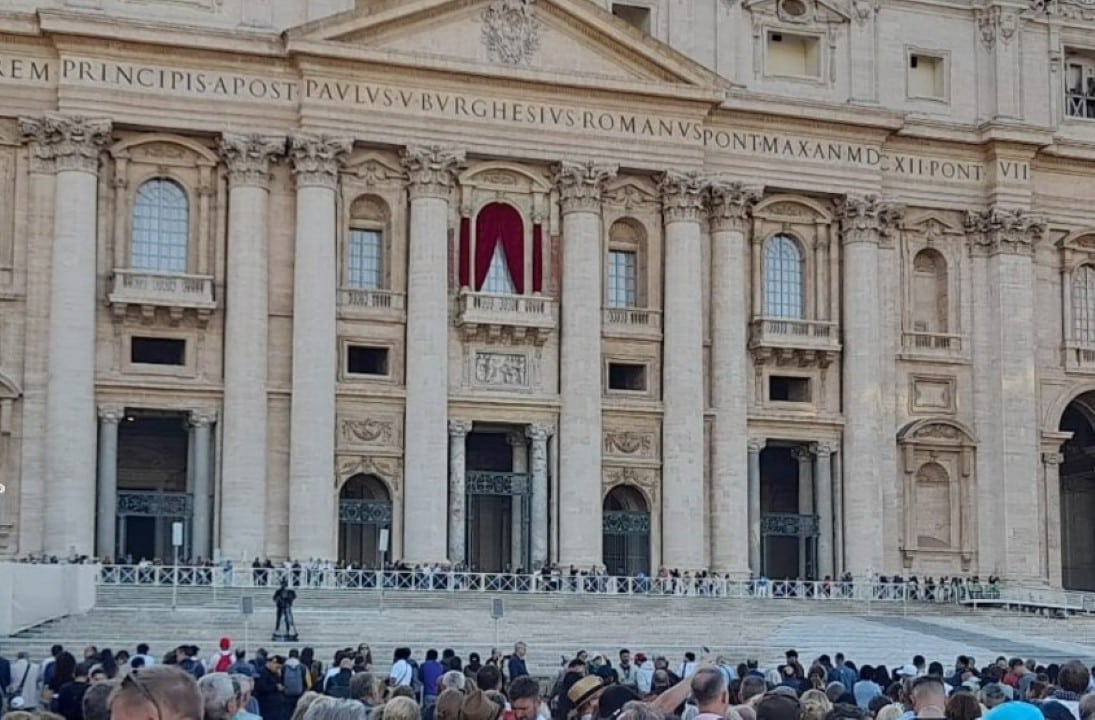
The ancient doors of the Sistine Chapel closed with a solemn thud, marking the start of the papal conclave on May 7, 2025. One hundred and thirty-three cardinals, draped in crimson robes, now face the monumental task of selecting the next leader for the world’s 1.4 billion Catholics. Sealed from the outside world, they will vote in secrecy until a new pope emerges, signaled by white smoke rising from the Apostolic Palace. The process, steeped in centuries-old tradition, blends ritual, faith, and modern security measures to ensure an uninterrupted election.
Crowds gathered in St. Peter’s Square, their anticipation palpable despite the spring heat. Visitors from across the globe, from Argentinian tourists to American students, mingled with locals, their eyes fixed on the chapel’s chimney. Some sipped Aperol spritzes, others prayed softly, all united by the historic moment unfolding within the Vatican’s walls. The atmosphere oscillated between festive and reverent, reflecting the global significance of the event.
- Global attention: News outlets from every continent broadcast live updates, with millions watching for the first smoke signal.
- Diverse crowd: Pilgrims, tourists, and students filled the square, representing the Catholic Church’s universal reach.
- High stakes: The next pope will shape the church’s stance on issues like climate change, migration, and social justice.
As the sun dipped behind St. Peter’s Basilica, the mood shifted to quiet reflection. The conclave’s outcome will not only guide the Catholic Church but also influence global discussions on faith, morality, and humanitarian issues.
Sistine Chapel’s sacred rituals
The conclave’s opening ceremonies unfolded with meticulous precision. Cardinals processed into the Sistine Chapel to the sound of a choir, their red robes a vivid contrast against the chapel’s frescoed walls. The “Extra omnes” proclamation, Latin for “everyone out,” signaled the exclusion of all but the cardinal-electors. The doors were sealed, and telecommunications signals were blocked to ensure total isolation. This centuries-old protocol underscores the gravity of the task: choosing a pope through prayer, discussion, and voting.
Inside, the cardinals swore an oath of secrecy, pledging to uphold the sanctity of the process. Voting began with the first ballot, a process that could take days or even weeks. Each cardinal writes a name on a ballot, which is later burned—producing black smoke if no candidate secures a two-thirds majority or white smoke if a new pope is chosen. The ritual, unchanged for centuries, remains a powerful symbol of continuity in an ever-changing world.
The Sistine Chapel itself, adorned with Michelangelo’s masterpieces, serves as both a spiritual and historical anchor. The cardinals, surrounded by images of creation and judgment, are reminded of their responsibility to act as instruments of divine will. For many, the setting is as humbling as the task itself.
Global diversity of electors
The 133 cardinal-electors hail from every corner of the globe, reflecting the Catholic Church’s universal reach. Europe, with the largest contingent, is joined by representatives from Africa, Asia, Latin America, and North America. This diversity shapes the conclave’s deliberations, as cardinals bring perspectives shaped by their regions’ unique challenges—poverty in Africa, secularism in Europe, or religious persecution in parts of Asia.
- Cardinal Luis Antonio Tagle (Philippines): Known for his charisma and progressive views, seen as a strong contender.
- Cardinal Péter Erdő (Hungary): A canon law expert, favored by those seeking a traditionalist pope.
- Cardinal Raymond Burke (United States): A polarizing figure, admired by conservatives for his strict adherence to doctrine.
- Cardinal João Braz de Aviz (Brazil): A champion of social justice, aligned with Pope Francis’ reformist agenda.
The electors’ ages, ranging from 53 to 79, add another layer of complexity. Younger cardinals may prioritize long-term strategies, while older ones might focus on immediate challenges. Their deliberations, conducted in Latin and Italian, are as much about theology as they are about global politics and cultural dynamics.
Security in a modern age
Protecting the conclave requires a blend of ancient tradition and cutting-edge technology. The Vatican’s security forces, including the Swiss Guard, patrol the perimeter, while signal-jamming devices block all telecommunications. The governorate confirmed that access to mobile and internet signals was severed at 9 a.m. ET, ensuring no external influence could reach the cardinals. This digital blackout is a modern adaptation of the conclave’s historical isolation.
Volunteers from Templars Today, a group claiming descent from the medieval Knights Templar, assist with crowd control during the Vatican’s Jubilee year. Their presence adds a layer of historical resonance to the event. Brother John Michael, a 60-year-old volunteer, described their role as one of service rather than enforcement, emphasizing the group’s commitment to helping pilgrims and visitors.
The Italian army and police also maintain a visible presence, particularly around St. Peter’s Square, where thousands gather daily. Their coordination ensures that the conclave proceeds without disruption, even as global media and curious onlookers descend on Vatican City.
Crowd’s anticipation grows
St. Peter’s Square buzzes with a mix of reverence and excitement. Pilgrims clutch rosaries, while tourists snap photos of the Sistine Chapel’s chimney. False alarms—such as a bird mistaken for smoke—spark brief bursts of excitement, quickly followed by laughter. The square’s energy shifts with the time of day, from the chaotic bustle of morning to the reflective calm of evening.
Among the crowd are Gabriela, Milagro, and Maria Luz, three Argentinian colleagues who stumbled upon the conclave during their vacation. Their Aperol spritzes drew curious glances, but their presence reflects the universal draw of the event. “It’s a moment for humanity,” Maria Luz said, despite not being religious herself. Their sentiments echo those of many in the square, where faith and curiosity intertwine.
American students Katherine, Delenie, Claire, and Eva, studying in Rome, expressed hope for a progressive pope. “We want someone who moves the church forward,” Katherine said, citing Cardinal Tagle as a favorite. Their presence underscores the conclave’s appeal to younger generations, who see the election as a chance to address contemporary issues like gender equality and environmental stewardship.
Historical weight of the moment
The conclave carries the weight of over a millennium of tradition. The process, formalized in the 13th century, has evolved little since, preserving rituals like the burning of ballots and the use of Latin oaths. Yet each conclave is unique, shaped by the era’s challenges and the outgoing pope’s legacy. Pope Francis, known for his advocacy for migrants and environmental causes, leaves a complex legacy that the next pontiff must navigate.
The election’s outcome will hinge on whether the cardinals seek continuity or change. Francis’ reforms, including his emphasis on inclusivity and dialogue with other faiths, have sparked both admiration and criticism. Some cardinals may push for a return to traditional doctrines, while others advocate for a leader who builds on Francis’ progressive vision.
The conclave’s secrecy ensures that the world will only learn the result when white smoke appears. Until then, speculation abounds, with names like Tagle, Erdő, and Burke dominating discussions among Vatican observers. The next pope’s identity will shape not only the church but also its role in addressing global crises.
Voices from the faithful
Pilgrims and visitors bring diverse perspectives to St. Peter’s Square. Lucy and Pepito, a Filipino couple now living in the UK, described the conclave as a deeply moving experience. “When the doors closed, I felt it was in God’s hands,” Lucy said. Their excitement about potential Filipino candidates, like Cardinal Tagle, reflects national pride and hope for representation.
Grant Baccala, a Protestant friar from Maryland, offers a different perspective. Drawn to Rome by what he calls a divine calling, he has spent hours in the square, barefoot and dressed in a white robe. His presence highlights the conclave’s ability to attract even those outside the Catholic faith, drawn by its spiritual and historical significance.
- Emotional resonance: For many, the conclave is a moment of personal and communal reflection.
- Global representation: Pilgrims from the Philippines, Mexico, and the U.S. underscore the church’s universal appeal.
- Unexpected visitors: Tourists and non-Catholics join the faithful, curious about the historic event.
Role of the new pontiff
The next pope will inherit a church at a crossroads. Issues like climate change, migration, and the role of women in the church demand urgent attention. Francis’ emphasis on social justice and interfaith dialogue set a precedent that his successor may choose to follow or redefine. The new pontiff’s stance on these issues will reverberate beyond the Vatican, influencing global debates.
Cardinals face pressure to select a leader who can unify a divided church. Progressive factions advocate for reforms, such as greater inclusion of marginalized groups, while conservatives emphasize doctrinal purity. The conclave’s deliberations, though secret, are shaped by these tensions, with each vote reflecting broader ideological currents.
The new pope will also navigate the church’s role in a secularizing world. Declining attendance in Europe contrasts with growing congregations in Africa and Asia, a dynamic that may favor candidates from these regions. The pontiff’s ability to bridge these divides will define his tenure.
Vatican’s logistical challenges
Organizing the conclave is a logistical feat. The Vatican’s staff, from cooks to cleaners, ensure the cardinals’ needs are met without compromising their isolation. Meals are simple—pasta, vegetables, and fish—reflecting the austerity of the process. The cardinals sleep in the Domus Sanctae Marthae, a guesthouse within Vatican City, where they are shielded from external influences.
The Vatican’s communication blackout extends to staff, who are sworn to secrecy. Even the chimney’s smoke, produced by a chemical mix added to the burned ballots, is carefully managed to avoid ambiguity. These measures, while rooted in tradition, require modern precision to function smoothly.
The Jubilee year, a quad-centennial celebration, adds complexity. Pilgrims flocking to Rome for the Jubilee overlap with conclave spectators, straining the Vatican’s resources. Security teams and volunteers work tirelessly to manage the crowds, ensuring safety without detracting from the event’s solemnity.
Public’s role in the spectacle
St. Peter’s Square serves as both a stage and a gathering place. The crowd’s diversity—nuns singing hymns, students debating theology, tourists snapping selfies—creates a vibrant tapestry. Mexican nuns singing “Salve Regina” draw a small crowd, their voices a reminder of the faith that underpins the event. Meanwhile, vendors sell gelato and rosaries, capitalizing on the influx of visitors.
The square’s atmosphere shifts with each smoke signal. Black smoke, signaling no decision, elicits groans, while the anticipation of white smoke keeps the crowd on edge. For many, the wait is as much a part of the experience as the outcome, a chance to connect with strangers over shared hope or curiosity.
- Communal spirit: Strangers bond over their shared interest in the conclave’s outcome.
- Economic boost: Local businesses, from cafes to souvenir shops, thrive during the event.
- Media frenzy: Hundreds of journalists report from the square, amplifying the event’s global reach.
Legacy of Pope Francis
Pope Francis’ tenure, marked by calls for compassion and reform, looms large over the conclave. His focus on the poor, migrants, and the environment resonated with millions but alienated some traditionalists. The next pope will inherit this duality, tasked with balancing Francis’ legacy with the church’s future direction.
Francis’ health challenges in his final years prompted discussions about papal succession, making this conclave particularly significant. His appointment of over 60% of the current cardinal-electors ensures his influence lingers, as many share his vision of a more inclusive church. Yet opposition from conservative factions remains strong, setting the stage for a contentious election.
The conclave’s outcome will reveal whether Francis’ reforms take root or face pushback. The new pope’s first address from the balcony of St. Peter’s Basilica will offer clues about his priorities, watched closely by both the faithful and the world at large.
