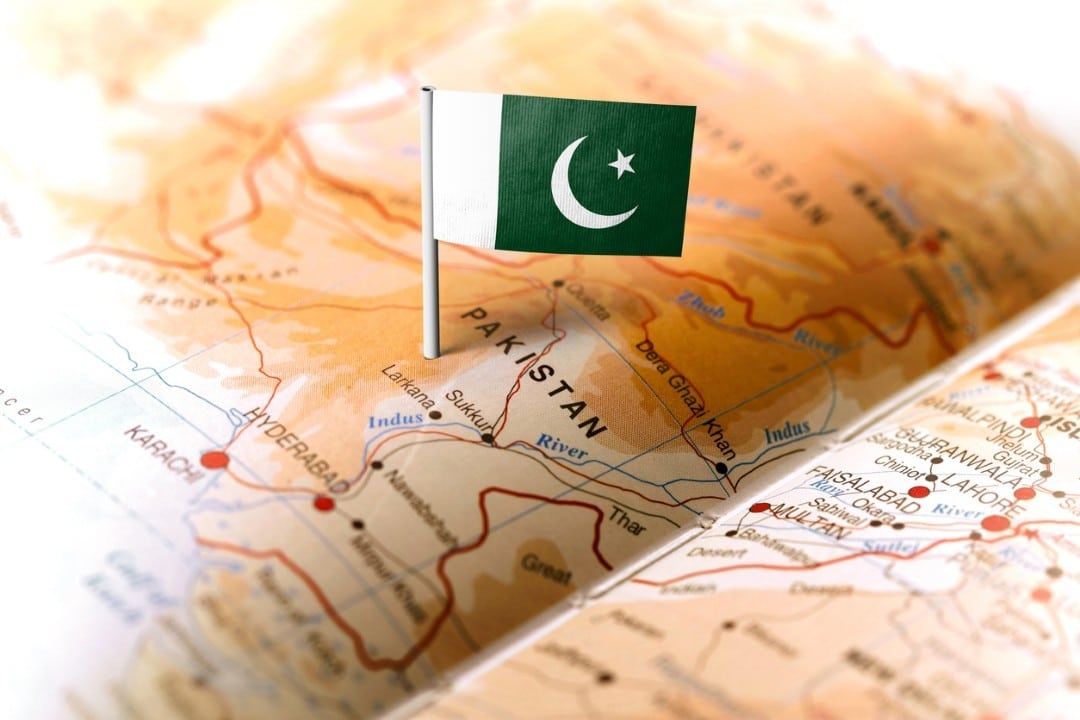
Pakistan’s military sounded alarms early Saturday, accusing India of launching missile strikes on three critical air bases, including one near the capital, Islamabad. The claims, broadcast on state television, marked a sharp escalation in the ongoing conflict between the two nuclear-armed neighbors. Hours later, Pakistan announced a retaliatory operation, dubbed “Operation Bunyan Ul Marsoos,” targeting Indian military sites. Despite a US-mediated ceasefire agreement, reports of explosions and drone activity in Indian-administered Kashmir underscored the fragility of the truce.
The accusations followed days of intense cross-border skirmishes, rooted in a deadly attack on Hindu tourists in Indian-administered Kashmir in April. India’s government has repeatedly linked the attack to Pakistan-based militant groups, a charge Islamabad denies. The cycle of violence has displaced families, disrupted air travel, and drawn global calls for de-escalation. Key developments include:
- Pakistan’s claim that India targeted Nur Khan, Murid, and Shorkot air bases.
- India’s assertion that Pakistan violated the ceasefire with drone and missile attacks.
- International diplomacy involving the US, Saudi Arabia, and Turkey to broker peace.
Both nations, equipped with nuclear arsenals, have a history of conflict over Kashmir, a disputed region since their partition in 1947. The latest hostilities have reignited fears of a broader confrontation, with residents on both sides bracing for further violence.
This article delves into the unfolding crisis, exploring military actions, diplomatic efforts, and the human toll of the conflict, drawing on recent reports from global news outlets.
Military strikes intensify
Pakistan’s military spokesperson, Lt. Gen. Ahmed Sharif Chaudhry, addressed the nation in a televised broadcast, detailing India’s alleged missile strikes on Nur Khan, Murid, and Shorkot air bases. He claimed most missiles were intercepted, with no significant damage to Pakistan Air Force assets. Nur Khan, located in Rawalpindi, is a strategic hub just 10 kilometers from Islamabad, amplifying the gravity of the accusation. Chaudhry described the strikes as a deliberate provocation, pushing the region toward a “dangerous war.”
India, in response, accused Pakistan of initiating attacks on 26 sites, including air bases in Pathankot, Srinagar, and Udhampur. Indian Army spokesperson Col. Sofiya Qureshi reported that air defense systems neutralized the threats, though some equipment and personnel sustained damage. The Indian Ministry of Defense emphasized that its retaliatory strikes targeted only military infrastructure, dismissing Pakistan’s claims of civilian casualties as “propaganda.”
The exchange of accusations reflects a pattern of tit-for-tat military actions. Pakistan’s Operation Bunyan Ul Marsoos, meaning “wall of lead” in Arabic, reportedly involved short-range surface-to-surface missiles aimed at Indian air bases and a missile storage facility. Witnesses in Jammu and Srinagar reported explosions and streaks of light in the sky, suggesting active engagement of air defense systems.
Ceasefire agreement falters
A glimmer of hope emerged Saturday afternoon when both nations agreed to an immediate ceasefire, facilitated by US Secretary of State Marco Rubio and Vice President JD Vance. The agreement followed intense negotiations with Indian Prime Minister Narendra Modi and Pakistani Prime Minister Shehbaz Sharif. Rubio announced on X that both sides would begin talks on broader issues at a neutral site, a move echoed by Pakistan’s Foreign Minister Ishaq Dar, who credited three dozen countries for their diplomatic efforts.
However, the ceasefire unraveled within hours. Residents in Jammu reported drone incursions and explosions, while blasts echoed in Srinagar, the largest city in Indian-administered Kashmir. Indian Foreign Secretary Vikram Misri accused Pakistan of violating the truce, stating that the armed forces were instructed to respond decisively. Neither side’s military spokespersons immediately commented on the renewed hostilities, leaving observers uncertain about the ceasefire’s viability.
The rapid breakdown highlights the deep mistrust between India and Pakistan. Saudi Arabia and Turkey, which played key roles in facilitating the agreement, urged both nations to honor the truce. Saudi Foreign Minister Faisal bin Farhan offered further mediation, emphasizing the kingdom’s commitment to regional stability.
Roots of the conflict
The current crisis traces back to a militant attack on April 22 in Pahalgam, Indian-administered Kashmir, where 25 Hindu tourists and a guide were killed. India accused the Pakistan-based Lashkar-e-Taiba group of orchestrating the massacre, alleging Islamabad’s complicity. Pakistan denied involvement, pointing to underlying issues like India’s 2019 revocation of Kashmir’s autonomous status and ongoing repression in the region.
Kashmir, divided between India and Pakistan since 1947, remains a flashpoint. Both nations claim the region in full, having fought two wars and numerous skirmishes over it. Pakistan’s military has long been accused of supporting Islamist militant groups to destabilize Indian-administered Kashmir, a charge it rejects. India, in turn, has faced criticism for heavy-handed tactics in the region, fueling local discontent.
The April attack triggered a cascade of retaliatory actions. On May 7, India launched Operation Sindoor, striking nine alleged “terrorist infrastructure” sites in Pakistan and Pakistan-administered Kashmir. Pakistan reported 26 deaths, including civilians, and labeled the strikes an “act of war.” The ensuing days saw drone attacks, missile exchanges, and artillery fire along the Line of Control, the de facto border in Kashmir.
So apparently Pakistan immediately broke the ceasefire. pic.twitter.com/d8BSYihbaa
— 𝗡𝗶𝗼𝗵 𝗕𝗲𝗿𝗴 ♛ ✡︎ (@NiohBerg) May 10, 2025
Human toll mounts
The conflict has exacted a heavy toll on civilians. In Pakistan-administered Kashmir, Muzaffarabad resident Safeer Ahmad Awan recounted a missile strike near his home that injured his 15-year-old daughter. The attack, which targeted a mosque, left shrapnel embedded in her chest, requiring two days of hospitalization. Across the border, in Indian-administered Kashmir, the death of district development commissioner Raj Kumar Thappa in Rajouri underscored the violence’s reach.
Disaster authorities in Pakistani Kashmir reported 13 civilian deaths in the last 12 hours of fighting. In India, at least 16 civilians, including women and children, were killed by Pakistani shelling, according to the Indian Army. Families on both sides have fled their homes, seeking refuge in bunkers or evacuating border areas. Schools in India’s Punjab state closed for three days, and commercial airlines rerouted flights to avoid Pakistan’s airspace.
- Casualties: Pakistan reports 31 deaths from Indian strikes since May 7; India cites 16 civilian deaths from Pakistani shelling.
- Displacement: Thousands of families evacuated from border regions in Kashmir and Punjab.
- Infrastructure: Damage to military equipment and civilian property reported on both sides.
The human cost has galvanized public sentiment. In Lahore, young Pakistani Mohammad Fateh celebrated the military’s response, while in Muzaffarabad, resident Zulfikar Ali expressed hope that the ceasefire would bring relief. In India, public outrage over the tourist attack has fueled calls for decisive action, with political leaders across parties praising the armed forces.
Global response grows
The international community has scrambled to contain the crisis. The G7 issued a statement calling for immediate de-escalation and direct dialogue. China, Russia, and the UK urged restraint, with British Foreign Secretary David Lammy offering mediation due to the UK’s historical ties to both nations. The UN Secretary-General’s spokesman, Stéphane Dujarric, welcomed the ceasefire as a step toward easing tensions.
US President Donald Trump claimed credit for the ceasefire on Truth Social, though Indian sources downplayed American involvement. The US Consulate in Lahore ordered staff to shelter in place, reflecting heightened security concerns. Iran and Saudi Arabia dispatched foreign ministers to Delhi to explore de-escalation options, while Turkey advocated for a neutral platform for talks.
The Indus Waters Treaty, a 1960 agreement regulating water sharing between India and Pakistan, remains suspended, complicating bilateral relations. India’s withdrawal from the treaty last month, following the Pahalgam attack, signaled a broader diplomatic rupture.
Military capabilities in focus
The conflict has spotlighted the military arsenals of both nations. India’s 1.2 million-strong army boasts 3,750 main battle tanks and two aircraft carriers, giving it a numerical edge over Pakistan’s smaller forces. Pakistan, however, has bolstered its air force with Chinese-made J-10 and JF-17 jets, complementing its US-supplied F-16s. Both nations rely on aging Soviet-era aircraft, but India’s 36 French-made Rafale jets have drawn attention, with Pakistan claiming to have downed at least one.
Nuclear capabilities add a sobering dimension. Both countries possess around five dozen surface-to-surface missile launchers, though India’s ballistic missiles have longer ranges. The specter of nuclear escalation has loomed large, prompting urgent diplomatic intervention.
- India’s strengths: Larger army, naval dominance with aircraft carriers, advanced Rafale jets.
- Pakistan’s assets: Agile air force with Chinese and US jets, robust air defense systems.
- Nuclear arsenals: Comparable launcher numbers, with India holding a range advantage.
The use of drones and tactical missiles marks a new phase in the conflict, with both sides deploying loitering munitions. India’s S-400 missile defense system, considered among the world’s most advanced, has been credited with intercepting Pakistani attacks, though some damage was reported.
Public sentiment shifts
In Pakistan, the crisis has sparked hyper-nationalist fervor. Crowds in Islamabad waved flags to support the army, while in Peshawar, celebratory gunfire marked the ceasefire announcement. Residents like Zubaida Bibi in Islamabad likened the truce to a festive occasion, expressing relief at the prospect of peace.
In India, the public remains polarized. The Pahalgam attack, which targeted Hindu tourists, stoked anger and demands for retribution. Political leaders, including opposition Congress President Mallikarjun Kharge, rallied behind the armed forces, with Operation Sindoor hailed as a testament to India’s resolve. However, voices in Kashmir, like those in Srinagar, called for an end to the violence, citing decades of suffering.
Social media platforms, particularly X, have amplified these sentiments. Posts from Pakistani users celebrated alleged strikes on Indian air bases, while Indian users highlighted the interception of a missile near Delhi. The information war has added complexity, with both sides accusing each other of spreading misinformation.
Economic disruptions emerge
The conflict has rippled through the region’s economy. Pakistan shut its airspace until noon Saturday, forcing a Pakistan International Airlines flight to hover over Quetta. India’s aviation sector faced similar challenges, with IndiGo issuing advisories about heightened security at airports. The suspension of the Indus Waters Treaty threatens agricultural livelihoods dependent on shared river systems.
Trade between India and Pakistan, already limited, has ground to a halt. India’s Ministry of Information and Broadcasting banned Pakistani content on OTT platforms, citing national security. The Indian Premier League, a major economic driver, saw a match in Dharamshala canceled due to a power outage linked to security measures.
- Air travel: Pakistan’s airspace closure disrupted regional flights; India heightened airport security.
- Trade: Bilateral trade suspended, with India imposing media bans.
- Agriculture: Indus Waters Treaty suspension jeopardizes water access for farmers.
The economic strain compounds the humanitarian crisis, with border communities bearing the brunt of displacement and loss.
Diplomatic challenges persist
The ceasefire’s collapse has exposed the limits of international mediation. Pakistan’s Foreign Minister Ishaq Dar signaled openness to de-escalation but insisted India must halt its aggression. India’s Foreign Secretary Vikram Misri countered that Pakistan’s troop movements indicated offensive intent, undermining trust.
The involvement of multiple nations underscores the conflict’s global stakes. Saudi Arabia’s offer to host talks reflects its growing role as a regional mediator. The UK’s historical ties to both nations position it as a potential bridge, though its influence remains limited. The US, despite its diplomatic push, faces skepticism from India, which views the ceasefire as a multilateral effort.
The path to lasting peace remains uncertain, with both sides entrenched in their positions. The Kashmir dispute, at the heart of the conflict, continues to defy resolution, fueling cycles of violence.
Local voices demand relief
In Muzaffarabad, residents like Zulfikar Ali voiced exhaustion with the recurring conflict. The city, a frequent target of cross-border shelling, has seen schools close and markets empty. In Jammu, Indian residents reported blackouts and the constant hum of air defense systems, disrupting daily life.
Community leaders on both sides have called for unity and restraint. In Pakistan’s tribal areas, elders urged young men to avoid celebratory gunfire, citing the need for calm. In India, Kashmiri Muslims in Srinagar held protests, decrying the violence and demanding a return to normalcy.
The conflict’s toll on civilians has sparked grassroots calls for dialogue, though political and military dynamics overshadow these efforts. The ceasefire, however brief, offered a fleeting glimpse of hope, but its failure has deepened despair in border regions.