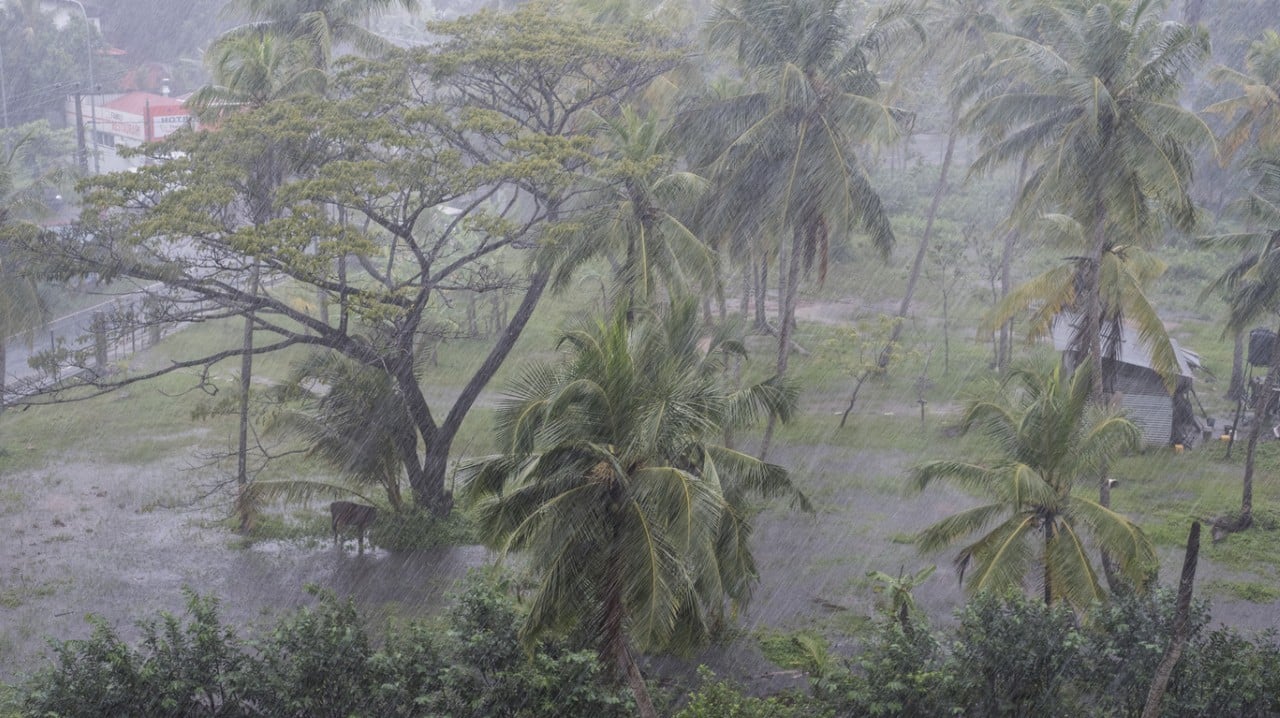
A broad area of low pressure off Mexico’s southwestern coast is showing signs of organizing into the first tropical storm of the 2025 Eastern Pacific hurricane season. The National Hurricane Center (NHC) has flagged this disturbance, known as Invest 90-E, as having a high likelihood of developing into a tropical depression or storm within the next 48 hours. If it strengthens into a named storm, it will be called Tropical Storm Alvin, marking the earliest such system in the Northern Hemisphere this year. The disturbance, located several hundred miles south of Mexico’s Pacific Coast, is moving west-northwest and could bring significant weather impacts to coastal regions.
The system’s development is fueled by warmer-than-average ocean temperatures near Mexico, which provide ample energy for storm formation. Atmospheric conditions, including low wind shear, further support the potential for intensification. The NHC has indicated a 90% chance of tropical cyclone formation within the next seven days, prompting heightened vigilance along Mexico’s Pacific Coast. Coastal communities are preparing for possible heavy rainfall, high surf, and dangerous rip currents.
- Key aspects of the disturbance:
- Located several hundred miles south of Mexico’s Pacific Coast.
- Moving west-northwest at approximately 10 mph.
- 90% chance of becoming a tropical storm within seven days.
- Potential to bring heavy rain and high surf to coastal areas.
This early activity, occurring just two weeks after the May 15 start of the Eastern Pacific hurricane season, underscores the region’s vulnerability to tropical systems, especially given the above-average sea surface temperatures observed this year.
Conditions favoring storm development
Warmer ocean waters near Mexico’s Pacific Coast are a primary driver of the potential for Tropical Storm Alvin. Sea surface temperatures in the region are currently above 85°F, providing sufficient energy for tropical cyclone formation. The absence of strong wind shear, which can disrupt storm development, further enhances the likelihood of intensification. Meteorologists note that these conditions align with forecasts for an active early season in the Eastern Pacific.
The NHC has been monitoring the disturbance since May 20, 2025, when it was first identified as an area of interest. By May 26, the system had developed more organized thunderstorm activity, prompting the designation of Invest 90-E. Forecasters expect the disturbance to continue organizing as it moves northwest, potentially reaching tropical depression status by midweek.
- Factors supporting storm formation:
- Sea surface temperatures exceeding 85°F near Mexico.
- Low wind shear allowing for storm organization.
- A broad low-pressure system producing sustained thunderstorm activity.
The system’s early development is notable, as the average date for the first tropical storm in the Eastern Pacific is June 10, according to historical data. If Alvin forms by May 30, it would mark a significantly early start to the season.
Potential coastal impacts in Mexico
The disturbance’s current trajectory suggests it will remain offshore but could still bring significant weather impacts to Mexico’s Pacific Coast. Forecast models indicate the system may parallel the coastline, potentially dragging heavy rainfall into coastal states such as Oaxaca, Guerrero, and Michoacán. These areas are bracing for possible flooding and landslides, particularly in regions with steep terrain.
High surf and dangerous rip currents are also expected along the coast, posing risks to swimmers and coastal infrastructure. Local authorities have issued advisories urging residents to avoid beaches and secure outdoor objects. The potential for localized heavy rainfall could exacerbate existing vulnerabilities in areas still recovering from previous storms, such as Hurricane Otis in 2023, which caused widespread damage in Acapulco.
Historical significance of early storms
The potential formation of Tropical Storm Alvin would mark the first named tropical cyclone in the Northern Hemisphere for 2025, a milestone that highlights the Eastern Pacific’s early-season activity. In contrast, last year’s Eastern Pacific season saw its first storm, Aletta, form on July 4, the latest start in the satellite era. The early development of Alvin would place 2025 ahead of historical averages, raising concerns about the potential for an active season.
The Eastern Pacific hurricane season, which runs from May 15 to November 30, typically sees 15 named storms and four hurricanes annually. AccuWeather’s forecast for 2025 predicts 14 to 18 named storms and seven to 10 hurricanes, suggesting a slightly above-average season. The early emergence of Invest 90-E aligns with these projections, driven by favorable oceanic and atmospheric conditions.
- Notable Eastern Pacific storm milestones:
- Average first tropical storm forms around June 10.
- 2024’s first storm, Aletta, formed on July 4.
- 2023 saw Category 5 Hurricane Otis strike Acapulco.
- AccuWeather predicts 14-18 named storms for 2025.
The region’s history of impactful storms, such as Hurricane Hilary in 2023, which brought heavy rainfall to Southern California, underscores the need for preparedness even for systems that remain offshore.
Mexico’s preparations for potential impacts
Coastal communities in Mexico are taking proactive measures as the disturbance approaches. Emergency management agencies have begun disseminating warnings about potential heavy rainfall and flooding risks. In Guerrero, officials are inspecting drainage systems and reinforcing vulnerable infrastructure to mitigate flood risks. Fishermen along the coast have been advised to secure their vessels and avoid sailing until the system passes.
Local governments are also coordinating with the Mexican Navy and National Guard to ensure rapid response capabilities in case of severe weather. Residents in low-lying areas are being urged to stock up on supplies and review evacuation routes. These preparations reflect lessons learned from past storms, including the devastating impact of Hurricane Otis, which caused significant loss of life and property in Acapulco.
- Preparedness measures in Mexico:
- Advisories issued for high surf and rip currents.
- Inspection of drainage systems in coastal states.
- Coordination with Mexican Navy for emergency response.
- Public urged to secure supplies and review evacuation plans.
The Mexican government has emphasized the importance of early preparation, given the potential for rapid intensification in storms forming close to warm coastal waters.
NOAA’s forecast for the Eastern Pacific
The National Oceanic and Atmospheric Administration (NOAA) released its 2025 Eastern Pacific hurricane season outlook on May 22, predicting a below-average season with one to four named storms in the central Pacific basin. However, the eastern Pacific, particularly near Mexico, is expected to see slightly higher activity due to warmer sea surface temperatures. The NHC’s monitoring of Invest 90-E aligns with these forecasts, as conditions near Mexico are more conducive to storm development than areas farther west, such as near Baja California, where cooler waters prevail.
NOAA’s forecast also highlights advancements in forecasting technology, including a 5% improvement in the Hurricane Analysis and Forecast System. This upgrade allows for more accurate tracking and intensity predictions, providing communities with up to 72 hours of advance warning for storm surge and tropical-storm-force winds. These improvements are critical for regions like Mexico’s Pacific Coast, where rapid intensification can occur close to land.
Interesting, we need to watch Gulf in 10-days, or so, as a weakness in the subtropical ridge finally allows a tropical disturbance to lift north. The Gulf is now plenty warm for a tropical storm, and will be even warming in 10-12 days. ~10% of EPS ensembles w/dev at Day 12.5. pic.twitter.com/TLnK5CnXgA
— Ryan Maue (@RyanMaue) May 26, 2025
Role of ocean temperatures in storm formation
Above-average sea surface temperatures near Mexico are a key factor in the potential development of Tropical Storm Alvin. Waters warmer than 85°F provide the energy needed for tropical cyclones to form and intensify. In contrast, cooler waters farther west and north, near Baja California and Hawaii, reduce the likelihood of storm development in those areas. This temperature gradient explains why the current disturbance is forming closer to Mexico’s coast.
The neutral phase of the El Niño-Southern Oscillation (ENSO) also contributes to favorable conditions for storm formation. Unlike El Niño, which can increase wind shear and suppress tropical activity, or La Niña, which can enhance it, the neutral phase allows for stable atmospheric conditions that support cyclone development. These conditions are expected to persist through the early part of the season, increasing the risk of storms near Mexico.
Potential for rapid intensification
The warm waters near Mexico raise concerns about the potential for rapid intensification, a phenomenon where a storm’s wind speeds increase by at least 35 mph within 24 hours. This was seen in 2023 with Hurricane Otis, which rapidly strengthened into a Category 5 storm before striking Acapulco, causing widespread destruction. The NHC is closely monitoring Invest 90-E for signs of similar behavior, as rapid intensification can significantly increase a storm’s destructive potential.
Forecasters note that the system’s proximity to land could limit its time to intensify but also increases the risk of heavy rainfall and flash flooding in coastal areas. The NHC’s ability to issue advisories up to 72 hours in advance provides critical lead time for preparations, but residents are urged to remain vigilant given the unpredictability of rapidly intensifying storms.
- Risks associated with rapid intensification:
- Increased wind speeds within a short period.
- Higher potential for destructive storm surge and flooding.
- Historical example: Hurricane Otis in 2023.
- Limited time for coastal preparations if intensification occurs.
Impacts on coastal communities
The potential for heavy rainfall and high surf poses significant risks to Mexico’s Pacific Coast. Low-lying areas in states like Oaxaca and Guerrero are particularly vulnerable to flash flooding and landslides, especially in regions with poor infrastructure. The NHC has warned that even if the system remains offshore, its outer bands could bring drenching rains to coastal communities, potentially overwhelming drainage systems.
Tourism, a major economic driver in the region, could also be affected. Popular destinations like Puerto Vallarta and Acapulco may see disruptions to beach activities and water sports due to high surf and rip current warnings. Local businesses are preparing for potential declines in visitors, while hotels are reinforcing safety protocols for guests.
Regional weather patterns and storm tracks
The disturbance’s west-northwest trajectory is typical for Eastern Pacific storms, which often move away from land and dissipate over cooler waters. However, forecast models suggest a possible northwest turn, which could bring the system closer to Mexico’s coast. This trajectory increases the likelihood of coastal impacts, even if the storm does not make landfall.
The NHC’s tropical weather outlooks indicate that the system is unlikely to affect the United States directly, as most Eastern Pacific storms remain offshore or weaken before reaching the U.S. However, remnant moisture from these systems can occasionally bring rainfall to the Desert Southwest, as seen with Hurricane Hilary in 2023. For now, the primary focus remains on Mexico’s Pacific Coast.
Advances in forecasting technology
NOAA’s upgrades to its forecasting systems are playing a critical role in monitoring Invest 90-E. The Hurricane Analysis and Forecast System, which will see a 5% improvement in accuracy this season, allows forecasters to better predict storm tracks and intensities. Additionally, the NHC’s ability to issue advisories 72 hours in advance provides communities with more time to prepare for potential impacts.
The use of satellite data, ocean buoys, and weather balloons is also enhancing the NHC’s monitoring capabilities. These tools provide real-time measurements of ocean temperatures and wind speeds, which are critical for predicting storm development. The introduction of a new satellite-based tool for predicting tropical cyclone formation further improves the NHC’s ability to provide timely warnings.
- Technological advancements in 2025:
- 5% improvement in the Hurricane Analysis and Forecast System.
- 72-hour advance warnings for storm surge and winds.
- New satellite tool for predicting cyclone formation.
- Enhanced use of ocean buoys and weather balloons for real-time data.
Community preparedness and response
Local authorities in Mexico are urging residents to take the potential threat seriously, even though the system has not yet reached tropical storm status. Emergency management agencies are distributing preparedness guides, emphasizing the importance of securing supplies and reviewing evacuation routes. Schools in coastal areas are preparing contingency plans, including potential closures if heavy rainfall occurs.
The Mexican Red Cross has mobilized volunteers to assist with emergency response efforts, particularly in areas prone to flooding. Community leaders are also working to ensure that vulnerable populations, such as the elderly and low-income families, have access to resources and information. These efforts reflect a broader commitment to improving resilience in the face of tropical storms.
Economic implications for the region
The potential impacts of Tropical Storm Alvin could have economic repercussions for Mexico’s Pacific Coast, particularly in tourism-dependent areas. Heavy rainfall and high surf could disrupt fishing, shipping, and coastal businesses, leading to temporary economic losses. The agricultural sector, which relies on stable weather conditions, may also face challenges if flooding affects crops or infrastructure.
In Acapulco, still recovering from the devastation of Hurricane Otis, local officials are particularly concerned about the economic toll of another storm. The city’s tourism industry, a key driver of revenue, has been working to rebuild its reputation as a safe destination. Any disruptions caused by Invest 90-E could set back these efforts, prompting calls for federal assistance to support affected businesses.
Broader implications for the hurricane season
The early development of Invest 90-E raises questions about the overall activity of the 2025 Eastern Pacific hurricane season. While NOAA predicts a below-average season in the central Pacific, the eastern Pacific’s warmer waters suggest the potential for increased activity near Mexico. Forecasters are closely monitoring global climate patterns, including the neutral ENSO phase, which could influence storm frequency and intensity.
The NHC’s tropical weather outlooks will continue to provide updates on Invest 90-E and other potential systems as the season progresses. For now, the focus remains on preparing coastal communities for the immediate threat posed by this disturbance. The early start to the season serves as a reminder of the importance of vigilance, even in regions where storms are less frequent.
