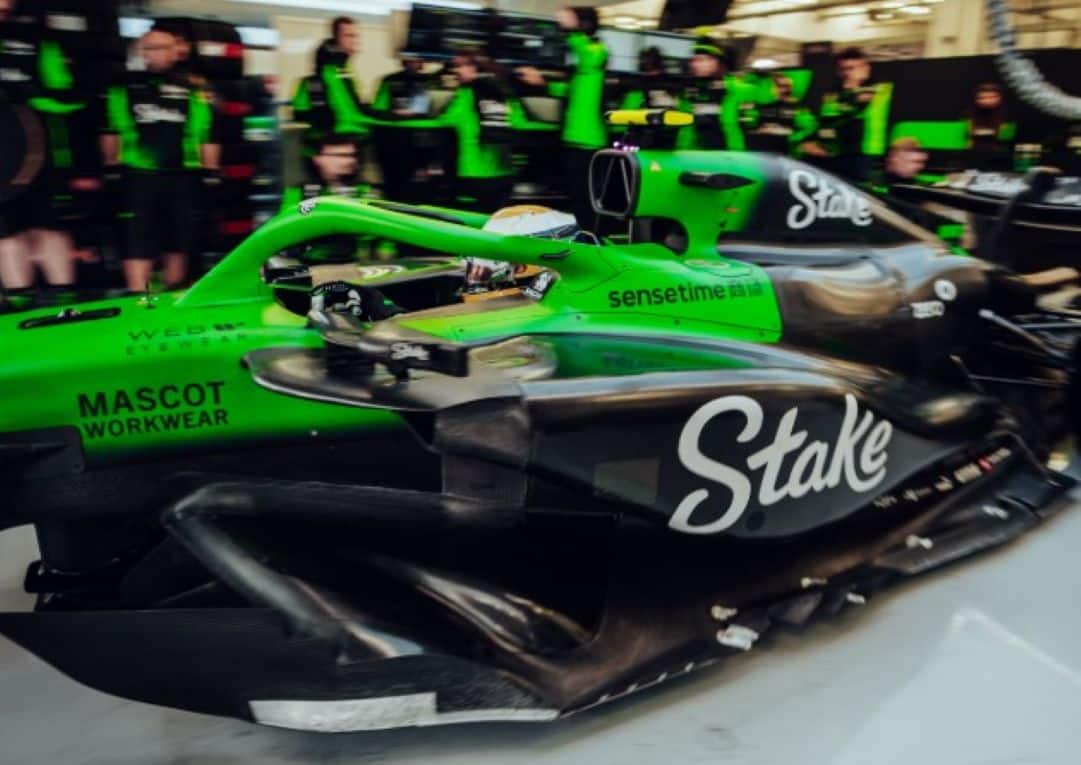
Sauber introduced significant upgrades at the Spanish Grand Prix in Barcelona on May 30, 2025, featuring a redesigned engine cover and floor, aligned with the FIA’s new technical directive. Brazilian driver Gabriel Bortoleto expressed optimism about the changes, even though he did not use them during the first day of free practice, where he posted the 17th fastest time. His teammate, Nico Hülkenberg, tested the new parts and finished Friday in 12th. The demanding Barcelona-Catalunya circuit, known for its challenging layout, provided the stage for Sauber to assess the upgrades in real-world conditions. The tightly packed midfield, with times separated by fractions of a second, underscored the importance of the new components for competitiveness. Bortoleto noted the trouble-free sessions, marking a strong start to the weekend. Attention now shifts to fine-tuning ahead of Saturday’s qualifying.
Running the same aerodynamic package as in recent races, Bortoleto clocked 1min13s959 in the second free practice, trailing leader Oscar Piastri of McLaren by 1.199 seconds. Sauber, aiming to climb the constructors’ championship, is banking on the upgrades to shave crucial tenths off their lap times. Friday’s sessions ran smoothly, allowing the team to gather valuable data.
- Key points from day one:
- Bortoleto used the older package, while Hülkenberg tested the upgrades.
- Sauber complied with the FIA’s new technical directive.
- The Brazilian reported no mechanical issues during practice.
Smiles for Saturday in Spain ☀️🇪🇸#SpanishGP pic.twitter.com/2nTeuibNXj
— Stake F1 Team KICK Sauber (@stakef1team_ks) May 31, 2025
Technical upgrades in focus
Sauber’s upgrades for the Spanish GP aim to enhance aerodynamic efficiency and car handling in high-speed corners, critical for the Barcelona circuit. The new engine cover optimizes airflow, while the redesigned floor boosts downforce without sacrificing straight-line speed. Hülkenberg, who ran the new parts, posted a competitive 12th-place time in the second practice session.
Testing upgrades on only one car is a common Formula 1 strategy, allowing teams to compare data across different setups. Bortoleto, despite using the older package, praised the car’s reliability, which experienced no mechanical failures. Friday’s data collection will guide the team’s setup choices for qualifying.
Bortoleto’s performance in Barcelona
Gabriel Bortoleto faced the challenge of running an older aerodynamic package but maintained a steady pace. His 1min13s959 in the second practice placed him ahead of some direct rivals, though still behind the frontrunners. He emphasized the need for a clean lap to maximize performance in a midfield where milliseconds can shift grid positions.
The 4.675-km, 16-corner Barcelona circuit tests car balance, demanding a setup that balances speed on straights with grip in corners. Bortoleto completed the practice program without issues, enabling Sauber to analyze tire performance and suspension settings.
- Bortoleto’s performance details:
- Time: 1min13s959 in second free practice.
- Position: 17th, 1.199 seconds off Piastri’s pace.
- Focus: Car stability and data collection.
- Challenge: Competing with an older aerodynamic package.
Sauber’s strategy for the weekend
Sauber plans to equip both cars with the upgrades for qualifying, pending analysis of Friday’s data. Positioned in the midfield of the constructors’ standings, the team views the Spanish GP as a chance to close the gap to rivals. The FIA’s new technical directive, imposing aerodynamic restrictions for safety, also shaped the development of the new parts.
Hülkenberg’s positive feedback on the upgrades suggests improved car behavior in specific track sectors. Sauber is now focused on refining setups, particularly tire management, which is critical on Barcelona’s abrasive surface.
Track conditions and challenges
The Barcelona-Catalunya circuit presented typical May conditions, with high temperatures and moderate winds affecting tire performance and aerodynamics. The track’s mix of high- and low-speed corners demands a well-balanced car. Teams faced the challenge of managing tire wear, especially in the final sector, where traction is key.
Bortoleto stressed the importance of a setup that delivers consistent laps, particularly for qualifying, where a single fast lap determines grid position. Sauber tested various tire compounds, focusing on medium and soft tires, to identify the optimal race strategy.
- Factors impacting practice:
- Track temperature: High, increasing tire degradation.
- Wind: Affected stability in high-speed corners.
- Tire strategy: Tests with medium and soft compounds.
Midfield competitiveness
The second free practice highlighted a fiercely competitive midfield, with teams separated by mere hundredths of a second. Oscar Piastri led with 1min12s760, while drivers like Hülkenberg and Bortoleto posted times in the 1min13s range. Sauber, battling teams like Alpine and Williams, relies on the upgrades to gain grid positions.
The close lap times emphasize the value of incremental performance gains, whether through car tweaks or a perfectly executed lap. Bortoleto expressed confidence that the new parts, once fitted to his car, could boost his competitiveness.
Weekend schedule
The Spanish GP continues with a packed Saturday, May 31. The third free practice, set for 7:30 AM (Brasília time), offers the final chance to fine-tune setups before qualifying at 11:00 AM. Sunday’s race promises intense competition, with Sauber aiming for valuable championship points.
- Saturday schedule:
- Free Practice 3: 7:30 AM, broadcast on Bandsports and F1TV.
- Qualifying: 11:00 AM, covered by Band, Bandsports, and F1TV.
Sauber’s history at the circuit
Sauber has a storied history at the Spanish GP, competing since the 1990s. While recent victories in Barcelona are absent, the team has scored points in past editions, particularly when its car suited the circuit. The 2025 upgrades aim to restore competitiveness on technical tracks like this one.
Barcelona’s frequent use for pre-season testing gives teams detailed track knowledge. Sauber leveraged this familiarity to tailor the new parts, focusing on performance in long-radius corners.
Qualifying expectations
Qualifying will be pivotal for Sauber, which aims to place both cars as high as possible on the grid. Bortoleto, yet to run the upgrades, anticipates a significant performance boost once they are fitted. The team is also working to optimize speed in key sectors, such as Turn 3 and the final sector, where traction is critical.
Hülkenberg’s Friday times suggest the new package could secure a top-12 spot, a strong result for the team. Sauber is analyzing data to ensure both drivers are ready for Saturday’s session.
- Qualifying factors:
- Fitting upgrades to both cars.
- Fine-tuning aerodynamics and suspension.
- Tire management for a fast lap.
- Midfield competitiveness.
Significance of the Spanish GP
The Spanish Grand Prix, a staple since 1951, is one of Formula 1’s most iconic races. The Barcelona-Catalunya circuit, its home since 1991, is renowned for its technical demands, making it a key test for teams. For Sauber, the race offers a chance to solidify 2025 improvements and gain ground in the constructors’ championship.
With new upgrades, a challenging track, and a tight midfield, the weekend is critical for the team. Bortoleto and Hülkenberg’s complementary approaches in practice provide Sauber with a solid foundation for a strong result.