

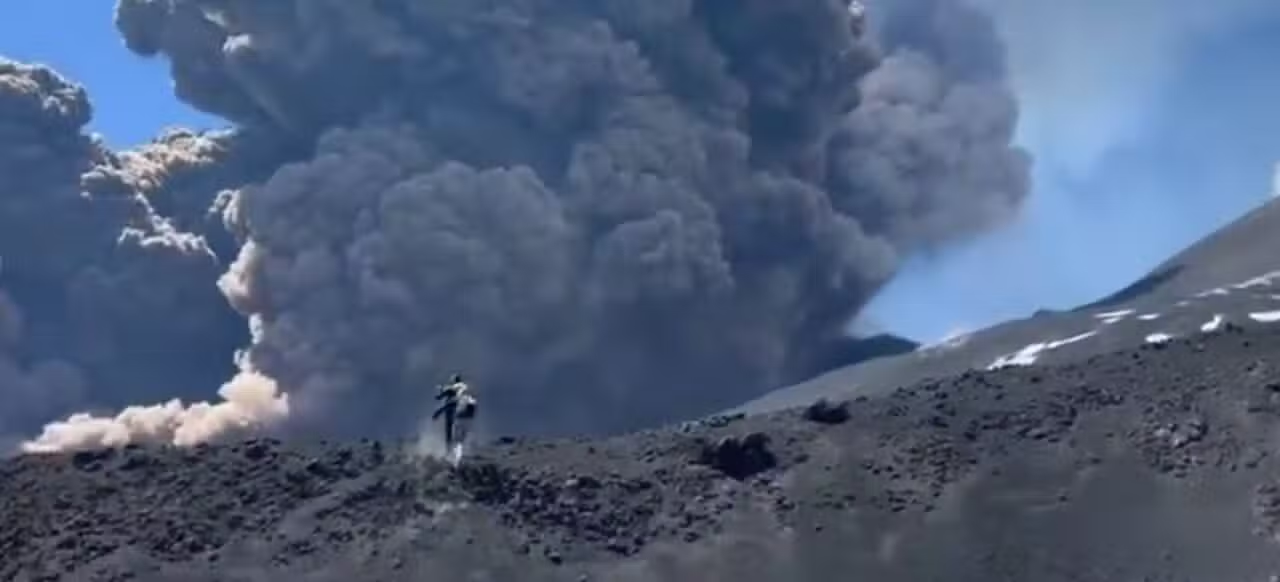
In Sicily, Italy, Mount Etna erupted on the night of June 1, 2025, producing massive clouds of smoke and ash that prompted the National Institute of Geophysics and Volcanology to issue a red aviation alert. Intense, near-continuous explosions in the southern crater, accompanied by a small lava overflow, escalated on the morning of June 2, forcing tourists to evacuate the area near the summit. Despite seismic activity reaching high levels, tremors remain confined to the summit region at 2,900 meters above sea level, posing no threat to populated areas. The Vincenzo Bellini International Airport in Catania continues to operate, though the situation is closely monitored. The event, visible from miles away, garnered global attention, with videos shared by visitors showing their escape from the site.
The volcanic activity, centered in the southern crater known as Bocca Nuova, occurs in one of Europe’s most active volcanoes, with a history of frequent eruptions. A partial collapse of the crater intensified ash emissions, creating challenges for safety in the region.
- Continuous monitoring: The Etna Observatory tracks seismic activity in real time.
- Aviation impact: The red alert signals risks to flights due to ash clouds.
- Tourist safety: Local guides coordinate evacuations to prevent accidents.
Rising seismic activity
Tremors recorded at Etna reached significant levels but remain concentrated around the summit, approximately 2,900 meters above sea level. Data from the National Institute of Geophysics and Volcanology indicate that seismic activity began increasing in the weeks prior, with minor quakes detected since mid-May. On the night of June 1, tremor intensity surged, culminating in the eruption. Experts note that the partial collapse of the southern crater contributed to the release of large amounts of ash and smoke.
Ongoing monitoring revealed that explosions in the southern crater occur at short intervals, with forecasts of further escalation in the coming hours. The lava, though limited to a small overflow, flows slowly down the slope, without reaching populated areas.
- Quake frequency: Dozens of tremors have been recorded since the eruption began.
- Affected area: The summit concentrates most of the activity.
- Forecast: Experts monitor for potential escalation in volcanic activity.
Red aviation alert
The National Institute of Geophysics and Volcanology raised the aviation alert to red due to dense ash clouds expelled by Etna. These particles, which can damage aircraft engines, reached altitudes exceeding 8,000 meters, posing risks to air traffic in the region. The Vincenzo Bellini International Airport in Catania remains operational, but authorities are monitoring the situation to assess the need for flight suspensions.
In previous eruptions, such as in July 2024, the airport was temporarily closed due to ash fallout on runways. The decision to maintain operations reflects the absence of significant ash deposits in the airport area so far.
Tourist evacuation
The eruption caught hundreds of tourists visiting Etna by surprise, drawn by the chance to see one of the world’s most active volcanoes up close. Videos shared on social media show groups running to leave the area near the southern crater, where explosions intensified. Local guides, mandatory for hikes in the region, coordinated the evacuation, ensuring no one remained in danger zones.
A French tourist, Aurelien Pouzin, posted footage capturing the escape, with dark clouds dominating the sky. Despite the scare, no injuries have been reported. Sicily’s Civil Protection reinforced the ban on unguided hikes, warning of the dangers of approaching the summit during periods of volcanic activity.
- Visitor risks: Ash and gases can cause respiratory issues.
- Safety measures: Hikes are only permitted with qualified guides.
- Tourist attraction: Etna draws thousands of visitors annually.
Eruption history
Etna, standing at 3,403 meters, is Europe’s tallest and most active volcano, with eruption records dating back 500,000 years. Located on Sicily’s eastern coast between Messina and Catania, the volcano is monitored 24/7 by the Etna Observatory. Its near-constant activity has shaped the region’s landscape, with over 200 craters formed over time.
In 2024, the volcano erupted at least three times, with significant events in July and August that led to the temporary closure of Catania’s airport. The February 2025 eruption, the first of the year, attracted thousands of visitors but also disrupted air traffic due to ash.
Stunning visual phenomena
The current eruption produced striking imagery, with smoke clouds visible from miles away. At night, the glow of lava illuminated the sky, creating a spectacle that drew photographers and locals. The southern crater, Bocca Nuova, is the epicenter of activity, with explosions launching rock fragments and ash to great heights.
In April 2024, Etna gained attention for producing near-perfect vapor rings, dubbed “smoke rings.” The phenomenon, caused by pressurized gas release, was observed again during the current eruption, though on a smaller scale.
- Smoke rings: A rare phenomenon seen in prior eruptions.
- Nighttime glow: Lava creates a shine visible from afar.
- Visual impact: Eruption images go viral on social media.
Monitoring and safety
The Etna Observatory uses cameras, seismic sensors, and drones to track volcanic activity. Collected data is shared with Civil Protection and local authorities to ensure the safety of residents and visitors. While the current eruption poses no immediate risk to populated areas, the potential for escalation keeps teams on high alert.
Sicily, home to about 5 million people, coexists with Etna, whose activity influences the economy and tourism. UNESCO recognized the volcano as a World Heritage Site in 2013, highlighting its geological and cultural significance.
Regional impact
Ash from Etna blanketed nearby areas, including villages like Zafferana Etnea and Milo at the mountain’s base. Cars and streets were covered in volcanic dust, but no significant damage has been reported. Residents are accustomed to cleaning ash, a recurring task during eruption periods.
Volcanic activity also affects local agriculture, with vineyards and orchards on Etna’s slopes facing challenges to protect crops. Nevertheless, the fertility of volcanic soil remains a draw for regional producers.
- Agriculture impact: Ash can harm sensitive crops.
- Urban cleanup: Residents organize efforts to clear dust.
- Local economy: Tourism boosts the region even during eruptions.
Prevention and guidance
Sicily’s Civil Protection issued warnings for residents to avoid outdoor activities during peak ash emissions. Face masks are recommended to protect against particle inhalation. Authorities also emphasized the importance of following guide instructions during volcano visits.
For tourists, the advice is to check with the Etna Observatory before planning hikes, especially during high-activity periods. Safe trails, when open, offer stunning views but require professional accompaniment.
Future eruptions
Etna is known for its near-constant activity, with eruptions varying in intensity and duration. Experts predict the volcano will remain active in the coming weeks, with potential for new lava overflows. Continuous monitoring allows for anticipating changes in the volcano’s behavior, ensuring population safety.
The last major eruption, in 1992, caused significant damage, but advances in monitoring technology have reduced risks associated with current eruptions. Sicily remains prepared to coexist with Etna, balancing the challenges and opportunities its activity brings.