On June 11, 2025, Nintendo announced that the Nintendo Switch 2 achieved a historic milestone, selling 3.5 million units in just four days following its global launch on June 5. Released simultaneously across multiple countries, the console exceeded all expectations, setting an internal company record and becoming the best-selling home console at launch, surpassing the PlayStation 5 and the original Switch. The achievement, recorded in markets like Japan, the United States, Europe, and Brazil, reflects the excitement of fans who formed lines at physical stores and depleted online stocks. The surge in demand was fueled by hardware upgrades, including a larger screen and enhanced processing power, alongside exclusive new games. The early success sparks discussions about Nintendo’s ability to sustain momentum amid global logistical and economic challenges.
The Switch 2 launch created a wave of enthusiasm in the gaming industry. In Japan, Nintendo implemented a lottery system to manage demand, with 2.2 million applications in the local market alone. In other countries, such as the United States and France, stores opened at midnight to accommodate eager crowds. In Brazil, the console sold out within hours on online retail platforms, with prices starting at R$ 4,499.90.
- Key launch highlights:
- Global sales of 3.5 million units in four days.
- Simultaneous release in markets like Japan, USA, Europe, and Brazil.
- Lottery system in Japan to handle overwhelming demand.
- Stocks depleted in Brazil on the first day of sales.
This milestone solidifies Nintendo’s dominance in the console market but also puts pressure on the company to maintain its success in a competitive landscape and amid potential challenges, such as trade tariffs in the United States.
Historic milestone in console sales
The Switch 2’s performance not only exceeded Nintendo’s internal projections but also set a new benchmark for home console launches. Compared to the original Switch, which sold 2.7 million units in its first month in 2017, the new console achieved staggering numbers in just four days. The PlayStation 5, Sony’s flagship, recorded 3.4 million units sold in its first month in 2020, while the PlayStation 2, the best-selling console of all time, did not exceed 2 million in its first two weeks.
Industry analysts attribute the success to the loyal fanbase of the original Switch, which has surpassed 152 million units sold since 2017. The continuation of the hybrid format, allowing both portable and TV-connected play, combined with technical improvements, attracted both long-time fans and new buyers. In Brazil, the simultaneous global launch was a significant factor, though the high price sparked debates among gamers.
What’s new in the Switch 2
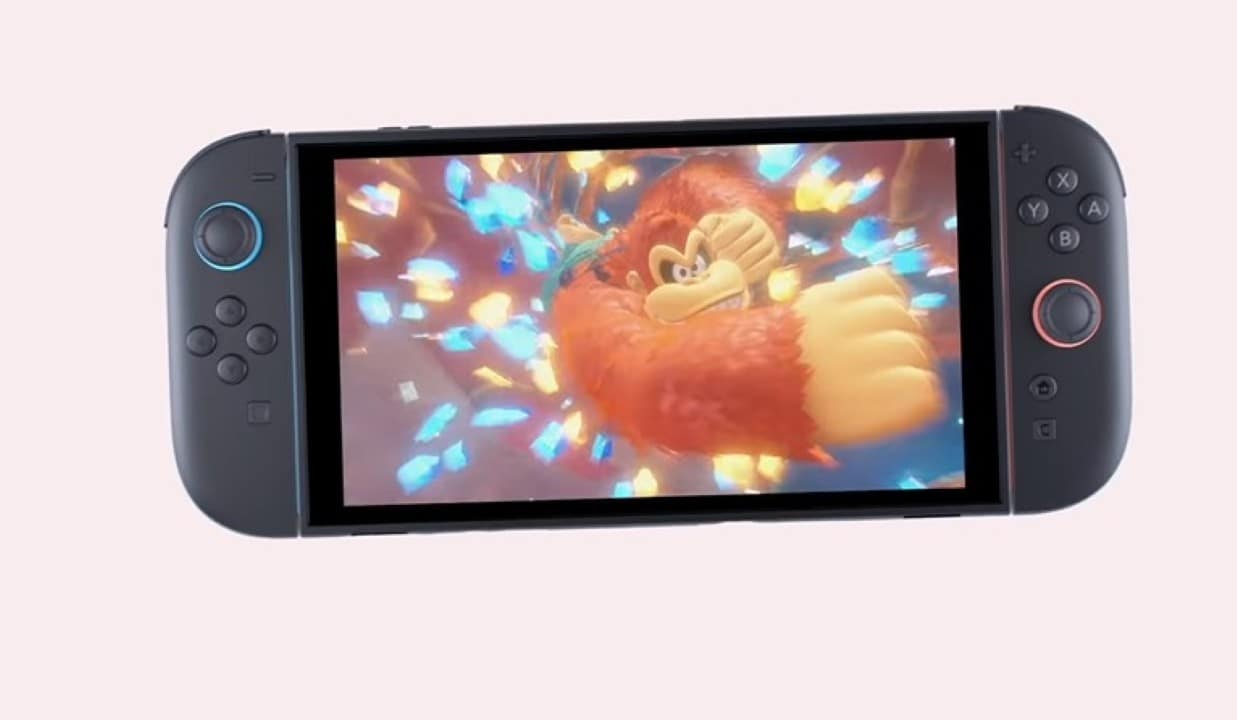
The Nintendo Switch 2 builds on the original’s hybrid concept, which reshaped the market in 2017. Its nearly 8-inch screen, larger than its predecessor’s, delivers enhanced visual immersion. Storage capacity has been significantly increased, and improved graphical processing supports more demanding games, such as “Cyberpunk 2077” and “Street Fighter 6,” previously incompatible with the Switch.
- Switch 2 technical innovations:
- 7.9-inch screen with higher resolution.
- Eight times the internal storage of the original Switch.
- Joy-Con controllers with magnetic attachment, usable as a mouse on computers.
- Social features like GameChat and game-sharing among friends.
New social functionalities, such as GameChat for online match conversations and Game Share for sharing digital games with friends, have been well-received. However, the price of US$ 499.99 in the United States (approximately R$ 2,780 at current exchange rates) and R$ 4,499.90 in Brazil drew criticism, particularly when compared to the original Switch’s US$ 299.99 launch price.
Frenzy in stores and online
The Switch 2 launch sparked widespread excitement worldwide. In Tokyo’s Ikebukuro commercial district, dozens of consumers lined up at the Bic Camera store, many of them lottery winners from the pre-sale. In New York, Nintendo’s flagship store saw queues stretching across blocks, while retailers like Walmart and Target reported sold-out stocks within hours. In France, Fnac stores recorded similar crowds.
In Brazil, sales were primarily online, with platforms like Amazon, Kabum, and Mercado Livre facing instability due to high demand. A Mercado Livre seller reported over a thousand units sold of the bundle with “Mario Kart World” in a single day. Nintendo stated that a new batch is expected in Brazil within ten days, but the initial shortage frustrated some consumers.
Games driving the sales surge
The Switch 2’s launch lineup played a pivotal role in its early success. Titles like “Mario Kart World,” priced at US$ 79.99, and “Donkey Kong Bananza” appealed to casual players and long-time fans alike. Additionally, the remastered “Bravely Default Flying Fairy HD” and third-party titles like “Split Fiction” and “Yakuza 0 Director’s Cut” broadened the console’s appeal.
For Nintendo Switch Online subscribers, classics from the GameCube, such as “The Legend of Zelda: The Wind Waker” and “F-Zero GX,” were made available on launch day. Upcoming titles like “Metroid Prime 4” and “Pokémon Legends Z-A” further fueled anticipation.
- Standout launch games:
- “Mario Kart World”: A new chapter in the racing series with enhanced graphics.
- “Donkey Kong Bananza”: A fresh adventure set for July release.
- “Bravely Default Flying Fairy HD Remaster”: A revamped classic RPG.
- “Cyberpunk 2077”: Optimized for the Switch 2.
Logistical and economic hurdles
Despite the triumph, Nintendo faces challenges in sustaining the sales pace. The company delayed pre-orders in the United States and Canada due to tariffs imposed by the U.S. government, which could increase the console’s final price. In Brazil, the high cost of the Switch 2 and its games, coupled with economic instability, may restrict access for some consumers.
Nintendo projects sales of 15 million Switch 2 units by the end of the fiscal year in March 2026, alongside 4.5 million units of the original Switch. To meet this goal, the company is expanding production capacity in factories in Vietnam and China. President Shuntaro Furukawa emphasized readiness to meet demand, but analysts warn that initial shortages may persist for weeks.
Consumer reactions
The Switch 2 received overwhelmingly positive feedback, though not without critiques. In Japan, consumers like Shinichi Sekiguchi, a 30-year-old receptionist, celebrated their launch-day purchases, while others, like 24-year-old Chinese gamer Lei Wang, expressed thrill at winning the pre-sale lottery. In the United States, 22-year-old Angel Cáceres shared excitement about playing at midnight.
However, the price of games, such as “Mario Kart World” at US$ 79.99, sparked debates. Akitomo Takahashi, a 40-year-old Japanese retailer, defended the costs, comparing them to Super Nintendo-era games. In Brazil, gamers took to social media to criticize the console’s price and the lack of installment payment options at some retailers.
Brazil’s role in the market
Brazil emerged as a key market for the Switch 2, with the simultaneous global launch marking a milestone for Nintendo in the country. High demand led to sold-out stocks on the first day, though limited availability frustrated some buyers. Retailers like Magazine Luiza and Mercado Livre promised quick restocking, but delays could affect public perception.
The inclusion of third-party games and backward compatibility with the original Switch’s catalog were well-received, but the console’s price, reaching R$ 4,799.90 in the “Mario Kart World” bundle, drew criticism. Nintendo has not yet announced plans for local production or price reductions, which could expand access in Brazil.
Future expectations
Nintendo aims to keep the Switch 2 at the core of its strategy, with global events starting in July to promote the console in cities like Paris, New York, and Tokyo. The company is also banking on new games, such as “Kirby Air Riders” and “Metroid Prime 4,” to sustain interest. Backward compatibility with the original Switch’s catalog ensures a robust library from day one, but long-term success hinges on attracting casual gamers and emerging markets like the Middle East and non-Japan Asian countries.
The company also faces pressure to diversify revenue streams, with projects like theme parks and a “The Legend of Zelda” film slated for 2027. Nonetheless, video games remain Nintendo’s primary revenue driver, making the Switch 2’s performance critical for the coming years.