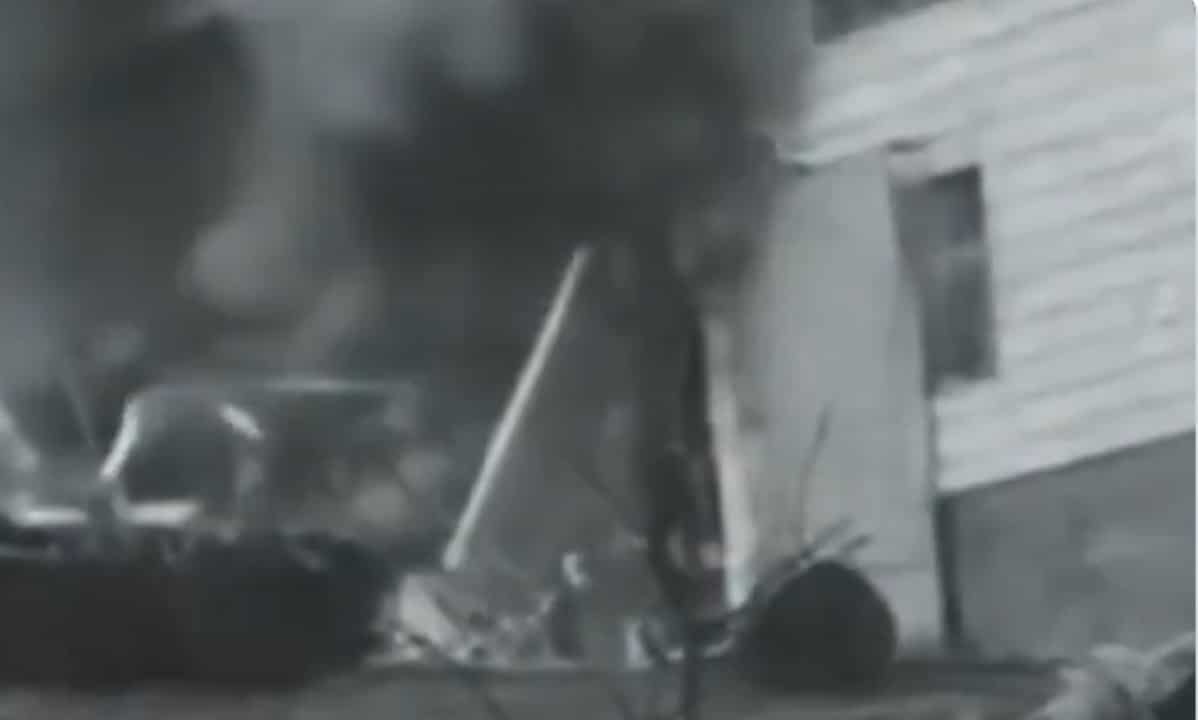
On the morning of Monday, June 23, 2025, Israel carried out a series of airstrikes in Tehran, Iran’s capital, targeting the entrance of the notorious Evin prison, known for housing political prisoners and reports of human rights abuses. Israeli Defense Minister Yoav Gallant confirmed the offensive, which also hit Revolutionary Guard and Basij militia facilities, marking an escalation in the conflict between the two nations. Images released by Iranian media showed thick smoke at the attack site, as officials from both sides exchanged accusations. The action took place a day after the United States joined the conflict, heightening regional tensions. According to Israel, the goal was to dismantle centers of repression under the Iranian regime.
The attack on Evin prison, located in northern Tehran, was described as a symbolic blow. The facility, partially operated by the Revolutionary Guard, is infamous for detaining dissidents, journalists, and dual nationals, often used as bargaining chips in international negotiations. The offensive also targeted strategic sites, including the Basij militia headquarters and a Tehran clock counting down to the “destruction of Israel.”
Un ataque aéreo israelí golpeó la tristemente célebre prisión de Evin, en Teherán.
— Noticias de Israel (@estadoisrael) June 23, 2025
La prisión de Evin es un complejo grande y fuertemente fortificado donde Irán ha encarcelado a presos políticos, periodistas, académicos, activistas de derechos humanos y otros. pic.twitter.com/3tQiH66yjH
- Targets hit: Evin prison entrance, Revolutionary Guard bases, and Basij militia.
- Context: 11th day of declared war between Israel and Iran, with recent U.S. involvement.
- Immediate impact: Power outages in parts of Tehran and civilian mobilization near the prison.
The military escalation reflects months of tensions, worsened by Iranian attacks on Israeli civilians, according to Tel Aviv’s government. Meanwhile, Iran responded with missile launches, all intercepted by Israeli defenses.
Evin prison: a symbol of repression
Built in 1971 under Shah Mohammad Reza Pahlavi’s regime, Evin prison gained notoriety after the 1979 Islamic Revolution. Today, it is partly managed by the Revolutionary Guard, which answers directly to Supreme Leader Ayatollah Ali Khamenei. The facility houses special units for political prisoners, where torture, solitary confinement, and other human rights violations have been widely documented by international organizations.
Accounts from former detainees, such as Iranian-American journalist Jason Rezaian, who spent 18 months in Evin on espionage charges, highlight the inhumane conditions. The facility is also used to hold Western citizens, often as diplomatic leverage. The Israeli attack, which damaged the main gate and administrative buildings, was seen as a direct message to the Iranian regime.
Strategic strikes in Tehran
Beyond Evin, Israel targeted sites linked to Iran’s internal repression. The Basij militia headquarters, a paramilitary force responsible for enforcing Islamic codes and suppressing protests, was among the targets. The Basij, under the Revolutionary Guard, plays a key role in maintaining internal order, often accused of violence against demonstrators.
Another target was the “Destruction of Israel” clock in Tehran’s Palestine Square. Installed to count down to 2040, when Iran’s Supreme Leader predicted Israel’s demise, the clock is a propaganda symbol. Its destruction reinforces Israel’s narrative that the offensive aims to dismantle Iran’s ideological influence.
- Basij: Paramilitary militia tasked with repressing dissidents.
- Revolutionary Guard: Elite force overseeing internal and external security.
- Palestine Square clock: Anti-Israel propaganda symbol, destroyed in the attack.
- Other targets: Command centers and military bases in Tehran and surrounding areas.
Iranian response and regional tensions
Iran retaliated with missile launches against Israel on the same morning. According to the Israeli military, all projectiles were intercepted, with no reported casualties. However, an Iranian missile hit a power station in southern Israel, causing temporary blackouts. In retaliation, Israel bombed a power plant in northern Tehran, leaving parts of the capital without electricity.
The exchange of attacks comes amid growing international involvement. On Sunday, June 22, the United States conducted airstrikes on Iranian nuclear facilities, described as a one-off operation to neutralize Iran’s nuclear program. U.S. President Donald Trump warned of further actions if Tehran retaliated. The U.S. entry into the conflict has raised fears of a broader regional war.
Official statements and reactions
Israeli Defense Minister Yoav Gallant stated that the attacks were planned with “unprecedented force” to target “organs of repression” in the Iranian regime. In a statement, he emphasized that the offensive aims to protect Israeli civilians from Iranian attacks. Meanwhile, Foreign Minister Gideon Saar posted a video of the Evin strike, captioned “Viva la libertad,” in a clear provocation to the Iranian government.
On the Iranian side, state media confirmed the prison attack, broadcasting images of debris and rescue teams. Iranian officials accused Israel of violating national sovereignty and vowed a “devastating” response. Iran’s Foreign Minister, Abbas Araghchi, was in Moscow during the attacks, seeking support from Russia, a longtime ally of Tehran.
Evin’s history and human rights violations
Evin prison is under sanctions by the United States and the European Union due to its human rights abuses. Reports from organizations like Amnesty International document cases of torture, extrajudicial executions, and arbitrary detentions. The facility is divided into sections, some directly controlled by the Revolutionary Guard, where political prisoners face particularly harsh conditions.
Notable detainees include activists, academics, and journalists, many charged with “endangering national security” without clear evidence. Evin’s selection as a target reflects its symbolic role as a pillar of the Iranian regime’s repression.
Activity in Tehran post-attack
Witnesses in Tehran reported a tense atmosphere after the bombings. Residents near Evin prison, including families of detainees, rushed to the site for information. Power outages, caused by the strike on a nearby plant, hampered communication and access to news.
Iranian media reported that Shahid Beheshti University, one of Tehran’s leading institutions, was also hit, though details on the damage remain unclear. The Iranian government deployed security forces to prevent potential protests, as the population grapples with uncertainty amid the escalating conflict.
Additional targets and Israel’s objectives
The Israeli strikes extended beyond Tehran. The Israeli Air Force hit military bases in Kermanshah and other regions, including the Parchin complex, linked to nuclear experiments. Six Iranian military airports were also targeted, according to Israeli Defense Forces spokesperson Effie Defrin.
Israel’s strategy, as outlined by officials, is to weaken Iran’s military and repressive infrastructure while sending a political message. The destruction of symbols like the Palestine Square clock and the Evin attack reinforce the narrative of destabilizing the Iranian regime.
Risks of global escalation
The involvement of the United States and Iran’s talks with Russia suggest the conflict could draw in other powers. Araghchi’s Moscow visit, hours before the attacks, indicates Tehran’s efforts to strengthen alliances against Israel and the U.S. Meanwhile, power outages and damage in Tehran fuel public discontent, which could be exploited by regime opponents.
The international community is closely monitoring developments. Human rights organizations have called for investigations into the attacks’ impact on civilians, while global leaders warn of the risk of a prolonged Middle East war.
Operational details of the strikes
The bombings were carried out by Israeli Air Force jets and attack helicopters, including AH-64 Apache models. The precision of the strikes, such as the one on Evin’s gate, suggests detailed planning, likely supported by advanced intelligence. Security camera footage released by Iranian sources shows the explosion at the moment of impact.
Targeting only the prison’s entrance, rather than its inner complex, indicates Israel aimed to avoid harming detainees, focusing on symbolic impact. Still, the destruction of administrative buildings and regional power disruptions affected the facility’s operations.
Impact on Iran’s population
Tehran’s residents face practical challenges post-attack. Beyond power outages, security blockades have disrupted traffic. Schools and universities suspended classes, and the Iranian government tightened internet censorship to control information flow.
Families of political prisoners, long advocating for transparency about Evin’s conditions, voiced concerns for detainees’ safety. No confirmed reports of injuries or deaths in the prison have emerged, but the lack of official communication fuels rumors and uncertainty.