Apple announced a subtle yet significant change for the iPhone 17 Pro and 17 Pro Max, set for release in September 2025: the brand’s logo, traditionally centered on the back, will shift to the lower part. This adjustment, driven by a new camera module design occupying the top of the back, was revealed by sources close to the company and confirmed by leakers like Majin Bu. The change, aimed at harmonizing the visual with hardware innovations, is raising concerns among case and MagSafe accessory manufacturers, who face the need to redesign their products. The announcement comes amid high anticipation for Apple’s annual event in Cupertino, California, where the new smartphones will be unveiled. Though minor for users, this decision is set to impact the accessory supply chain, sparking debates about compatibility and production costs.
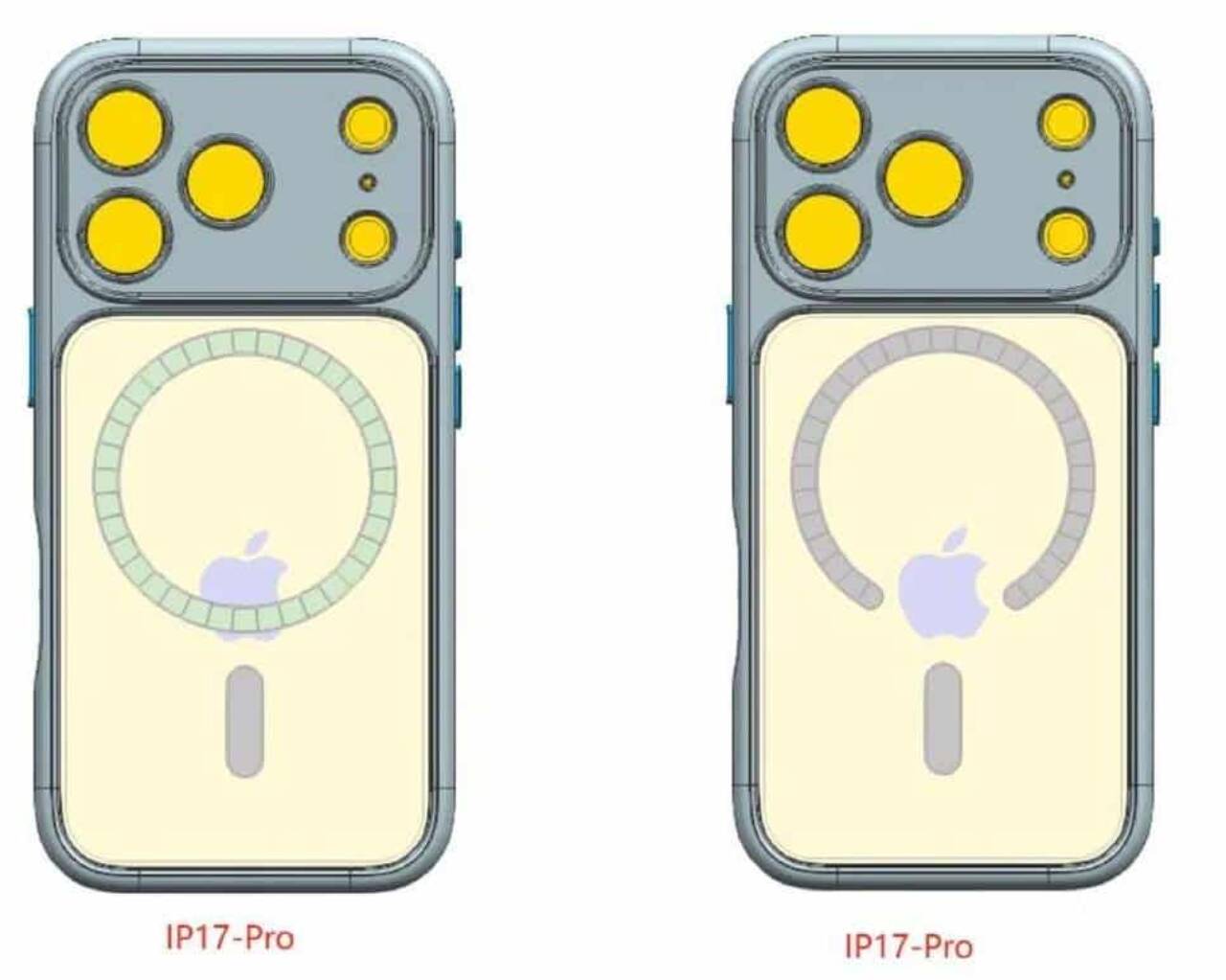
This design shift in the iPhone 17 Pro and 17 Pro Max reflects Apple’s ongoing pursuit of aesthetic and functional innovation. Repositioning the logo, while seemingly a detail, is part of a strategy to differentiate the 2025 premium models. The new camera module, occupying a larger back area, includes advancements like periscopic lenses and enhanced sensors, according to Asian supply chain information.
For consumers, the change may go unnoticed, but its backstage impact is substantial. Accessory manufacturers, reliant on precise alignment for cases and MagSafe supports, are already facing logistical challenges. Apple, known for its strict design standards, has not shared official details, but the news is already stirring the industry.
- Key iPhone 17 Pro changes: New expanded camera module design.
- Immediate impact: Adjustments in case and accessory production.
- Market expectation: Official confirmation at the September 2025 event.
Impact on the accessory market
The logo repositioning has triggered a ripple effect in the accessory industry. Many case manufacturers design products with cutouts to highlight the iconic centered Apple logo. With the logo moving lower, these designs become obsolete, requiring new molds and prototypes. Smaller companies, operating on tight margins, may struggle to absorb the added costs.
Moreover, the MagSafe system, reliant on perfect back alignment, will also be affected. Introduced in 2020, this technology enables magnetic connections for chargers, wallets, and other accessories. Any back component shift demands adjustments to the magnetic rings in compatible cases. Industry sources report some manufacturers have paused production lines until Apple confirms final specifications.
The impact extends beyond cases. Car mounts, charging docks, and other MagSafe-compatible accessories will also need revisions. This situation underscores Apple’s influence over the accessory ecosystem, which generates billions annually.
History of Apple’s design changes
Apple has a track record of aesthetic tweaks that shake up the market. In 2012, the Lightning connector replaced the 30-pin connector, forcing manufacturers to redesign cables and docks. More recently, the removal of the headphone jack in the iPhone 7 in 2016 boosted the Bluetooth earbud market, including AirPods.
For the iPhone 17 Pro, the logo shift isn’t the first change to challenge case makers. In 2020, the iPhone 12’s flat edges required new protective molds. Each tweak, however small, reflects Apple’s strategy of constant product evolution, even if it means added costs for partners.
- Notable Apple changes:
- 2012: Lightning connector introduction.
- 2016: Headphone jack removal.
- 2020: Flat edges on iPhone 12.
- 2025: Logo repositioning on iPhone 17 Pro.
The logo shift also raises questions about brand identity. The centered Apple logo is globally recognizable, and its relocation may alter consumer perceptions of iPhone design. Still, Apple seems confident that camera module innovations justify the change.
Manufacturer reactions and adaptation strategies
Accessory manufacturers have been on alert since iPhone 17 Pro rumors surfaced. Major brands like Spigen and OtterBox are investing in modular designs that can adapt quickly to changes. Smaller firms, however, face greater pressure, relying on large-scale production to stay competitive.
Some manufacturers have halted iPhone 17 Pro case production until Apple reveals the final design. Others are developing prototypes with adjustable cutouts to accommodate varying logo positions. While challenging, this uncertainty also creates opportunities for innovation, such as more flexible or customizable cases.
The relationship between Apple and accessory makers is complex. The iPhone’s popularity ensures steady demand for cases and accessories, but frequent design changes force companies to adapt swiftly or risk losing market share.
Expected iPhone 17 Pro innovations
Beyond the logo shift, the iPhone 17 Pro promises other advancements justifying the back redesign. The camera module, driving the change, is expected to feature significant upgrades. Supplier information suggests Apple is working on a 48 MP main sensor with variable aperture technology and a periscopic lens for up to 10x optical zoom.
Other anticipated improvements include:
- A19 Pro processor: Built on 2 nm technology for better energy efficiency.
- 120 Hz ProMotion display: With even thinner bezels.
- Enhanced battery: Larger capacity and 40W fast charging support.
- New material: Reinforced titanium frame.
These innovations reinforce Apple’s leadership in smartphone technology but add complexity for accessory manufacturers. Balancing design, functionality, and compatibility will be key to the iPhone 17 Pro’s success.
Competitive landscape and market expectations
The smartphone market is fiercely competitive, with Samsung and Xiaomi launching devices with advanced cameras and innovative designs. The iPhone 17 Pro change reflects Apple’s strategy to stay ahead, even if it requires significant ecosystem adjustments.
For consumers, the logo shift may be a minor aesthetic detail, but its industry impact highlights Apple’s market influence. The September 2025 launch event is expected to provide more design and innovation details, addressing manufacturers’ uncertainties.
Meanwhile, the accessory sector braces for a new wave of adaptations. The ability to respond swiftly to Apple’s changes will determine companies’ success in this dynamic market.