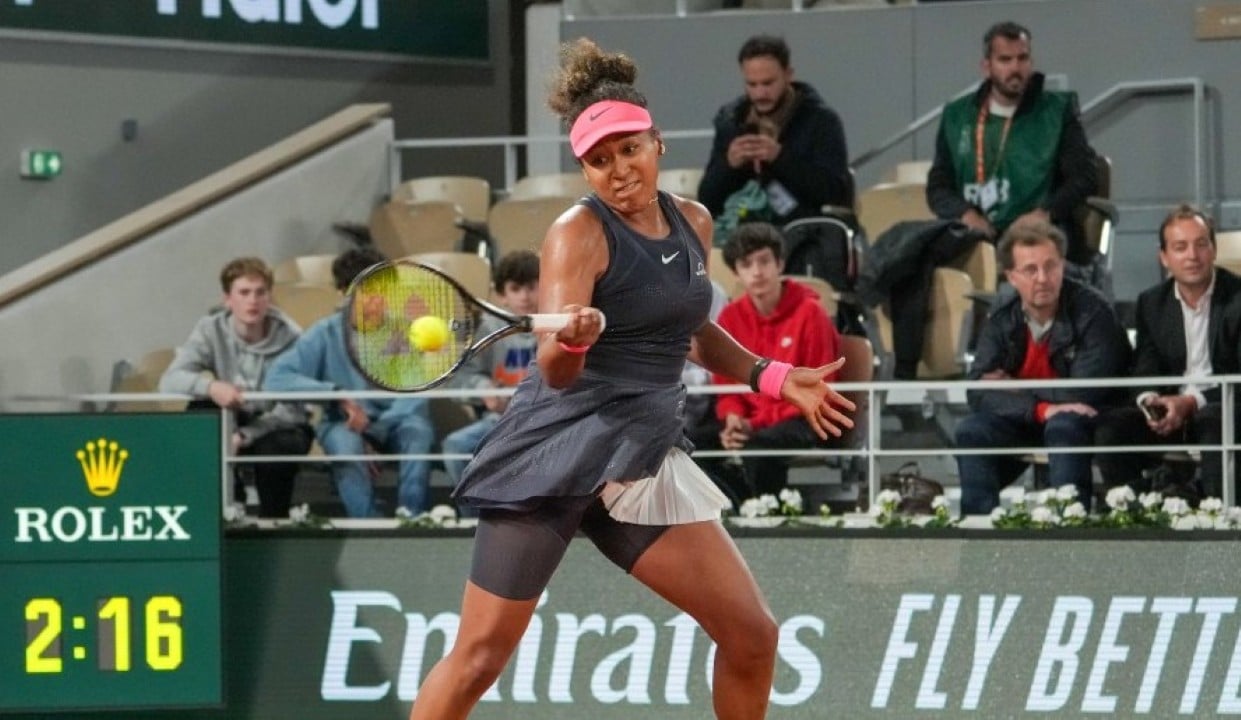
Naomi Osaka, former world number one, reached the third round of Wimbledon 2025 by defeating Czech player Katerina Siniakova 6-3, 6-2 on July 2 in London. The Japanese star, known for her four Grand Slam titles on hard courts, revealed she overcame the fear that “paralyzed” her when playing on grass, a surface where she has never advanced past the third round. This victory marks her best campaign in the tournament in seven years, reigniting hopes of a historic performance. The authoritative win reflects a new mindset for the tennis player, who aims to establish herself on grass after a 2023 hiatus for maternity. Now, Osaka faces Anastasia Pavlyuchenkova in the next round, with real chances of reaching the round of 16 for the first time.
Osaka’s journey at Wimbledon has been marked by challenges. With only four prior appearances in ten years of her career, she had won just five matches in the tournament before 2025. Her best performances, in 2017 and 2018, were limited to the third round, far from the brilliance that made her a champion in Melbourne and New York.
- Key moments of the match: Osaka dominated Siniakova with aggressive play, winning 78% of points on her first serve.
- Context of the victory: The Czech, a three-time Wimbledon doubles champion, was considered an experienced opponent on grass.
- Next challenge: Pavlyuchenkova, ranked 50th, hasn’t beaten Osaka since 2017, boosting the Japanese player’s favoritism.
The newfound confidence on grass is a milestone in Osaka’s career. After years of apprehension, the 27-year-old appears ready for greater achievements at the All England Club.

Overcoming the weight of the past
Naomi Osaka’s challenges at Wimbledon go beyond technique. The tennis player admitted that, over the years, her fear of playing on grass grew, limiting her performance. As a young player, her lack of fear led to early successes, like the US Open title at age 20. However, the pressure to maintain her elite level and personal challenges, including her maternity break in 2023, brought doubts. In 2025, Osaka shows a renewed approach, focusing on mobility and adapting to the slippery surface.
Her victory over Siniakova, who had eliminated China’s Qinwen Zheng in the first round, underscores the Japanese player’s evolution. During the match, Osaka displayed precision in her shots and confidence in critical moments, which she highlighted in a post-match interview. She stated she is “moving well” and believes in her ability to go further in the tournament.
A favorable path in the tournament
The 2025 Wimbledon edition has been unpredictable, with several top seeds eliminated early. This scenario opens opportunities for Osaka, who won’t face high-ranked players until a potential semifinal against world number one Aryna Sabalenka or Australian Open champion Madison Keys. In the third round, Osaka takes on Pavlyuchenkova, an opponent she has defeated in every encounter since 2017.
Osaka’s next steps could include matches against Amanda Anisimova (13th seed) or Linda Noskova (30th), neither of whom have a strong grass-court pedigree. This situation favors the Japanese player, who is chasing her first round of 16 appearance at the tournament.
Adapting to grass: a game-changer
Playing on grass demands specific skills, such as quick movement and precise serving, which Osaka is refining. She revealed that her past fear stemmed from the surface’s unpredictability, requiring constant adjustments. In 2025, she worked intensely to improve her mobility, evident in her match against Siniakova.
Osaka also benefited from solid preparation before Wimbledon. At the WTA 500 in Bad Homburg, she secured her first grass-court win of 2025, defeating Olga Danilovic in two tiebreaks. This result signaled her readiness to tackle the challenges of the All England Club.
- Factors for success on grass:
- Improved mobility to handle the slippery surface.
- Powerful serves, with 78% first-serve point efficiency.
- Aggressive mindset, with 24 winners against Siniakova.
- Pre-tournament preparation in events like Bad Homburg.
The impact of motherhood on her career
Osaka’s 2023 break for the birth of her daughter, Shai, brought a fresh perspective. In interviews, she said motherhood reignited her drive to win more titles, especially to inspire her daughter. Now ranked 53rd, the Japanese player is rebuilding her career, but her Wimbledon results show she remains a force to be reckoned with.
Motherhood also seems to have helped Osaka handle pressure. Unlike previous years when fear held her back, she now displays a calmness that translates to her game. Her 2025 Wimbledon campaign is her first third-round appearance in a Grand Slam outside hard courts in six years.
Osaka’s tactical evolution
Beyond mental growth, Osaka showed technical progress in 2025. Her ability to vary shots and exploit angles was key against Siniakova. She also improved her defensive consistency, an area less emphasized in her naturally aggressive style.
Coaches and analysts note that Osaka is more adapted to grass nuances, like the low ball bounce and need for anticipation. This tactical evolution could be a differentiator in upcoming rounds, especially against less grass-savvy opponents.
Wimbledon history: a barrier to break
Osaka’s relationship with Wimbledon has always been complex. In her four previous appearances (2017, 2018, 2019, and 2021), she never advanced beyond the third round. Her best campaign, in 2018, ended with a loss to eventual champion Angelique Kerber. Since then, Osaka struggled to make her mark, including a first-round exit in 2019.
The 2025 edition, however, presents a different scenario. With a more open draw and renewed confidence, Osaka has a chance to surpass her own record. Her win over Siniakova already matches her best performance, and a victory against Pavlyuchenkova would take her to uncharted territory at the All England Club.
Mental strength as a differentiator
Osaka’s 2025 journey is also defined by her mental resilience. After facing challenges like media pressure and mental health struggles, she appears more balanced. At Wimbledon, she emphasized the importance of “leaving fear behind” and focusing on the present. This approach has yielded consistent results, with straight-set wins in the first two rounds.
Osaka also drew inspiration from players like Serena Williams, who balanced motherhood with tennis success. For Osaka, the prospect of achieving a similar feat is a powerful motivator.
- Pillars of Osaka’s mental strength:
- Focus on the present, avoiding past pressures.
- Motivation tied to her daughter, Shai.
- Psychological work to overcome grass-court insecurities.
What to expect in the next round
The matchup against Anastasia Pavlyuchenkova, set for July 4, will be a crucial test for Osaka. The Russian, despite her experience, lacks a strong grass-court record and faces an opponent who has beaten her in recent encounters. A win would place Osaka in the round of 16, a milestone that could boost her confidence for the rest of the tournament.
Japanese fans, closely following Osaka’s campaign, hope she continues her ascent. With a solid game and renewed mindset, the former world number one has everything to make history at Wimbledon 2025.
Innovations at Wimbledon 2025
This year’s tournament introduced significant changes, such as replacing line judges with artificial intelligence, a first in 147 years. This technology, implemented for greater accuracy, was well-received by players like Osaka, who praised the event’s modernization. Additionally, the tournament retains its demanding tradition, with grass posing a unique challenge for competitors.