
Madureira, in Rio de Janeiro’s North Zone, faced a chaotic day on the afternoon of July 15, 2025, when criminals hijacked 18 buses, including BRT vehicles, and used them as barricades on Avenida Ministro Edgard Romero, one of the neighborhood’s main roads. The action was a response to a police operation by the Special Operations Command (COE) in the Serrinha community, which began on Monday (14), aimed at curbing drug trafficking led by Wallace Brito Trindade, known as Lacoste. The complete closure of the avenue caused disruptions, with 15 bus lines rerouted, temporary suspension of BRT services, and the closure of schools and health units. Residents report fear and insecurity, while local commerce was heavily impacted. The situation exposes the fragility of public safety in areas dominated by criminal factions.
The tense situation began in the morning, following clashes between Special Operations Battalion (Bope) police and criminals in a wooded area of Serrinha. One suspect was shot and did not survive, escalating the traffickers’ response. Criminals descended to the streets, overpowered drivers, stole keys, and positioned the buses to block traffic. The violence extended beyond buses: garbage bins were set on fire, and gunshots rang out, forcing residents to take shelter in shops and stations.
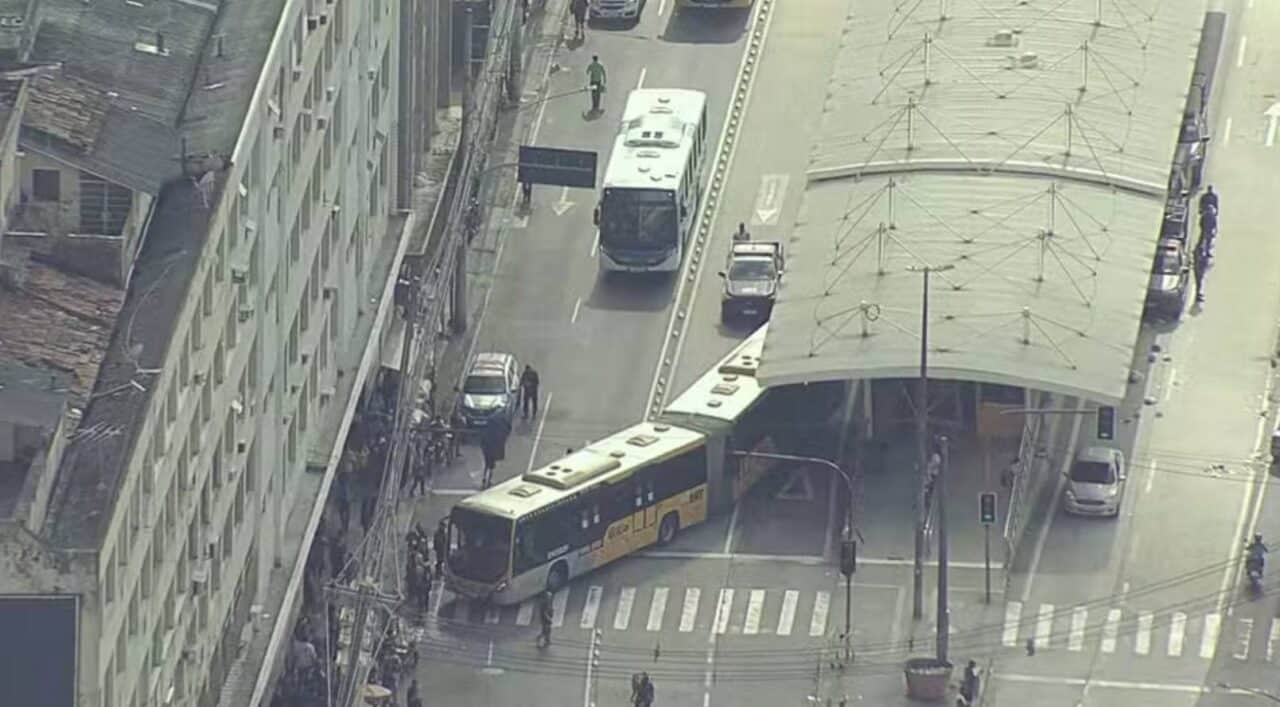
- Immediate impacts: 18 buses hijacked, including 4 articulated BRT vehicles.
- Traffic: Avenida Edgard Romero closed in both directions until early afternoon.
- Affected services: Four schools suspended classes, and two health units halted external activities.
The police operation, involving Bope, the Shock Battalion, and tactical units, remains ongoing, with reinforcements sent to the area. The Military Police stated that the action aims to dismantle the trafficking network, but the violent response from criminals highlights the challenges faced by security forces.
Reaction of traffickers and cowardly tactics
Lieutenant Colonel Claudia Moraes, PM spokesperson, described the barricades as a cowardly tactic to divert attention from the operation. According to her, criminals use residents and trafficking associates to create obstacles, hindering police progress. The operation in Serrinha, initiated based on intelligence, targeted leaders of the Third Pure Command (TCP), the faction controlling the area. A rifle was seized, but armed resistance heightened the tense atmosphere.
The use of buses as barricades is not new in Rio. In 2025, 81 buses have already been hijacked, according to Rio Ônibus, a significant increase from the 95 cases recorded in 2024. The recurrence of such actions reflects the vulnerability of public transportation in conflict zones.
- Alarming numbers: 81 buses hijacked in Rio in 2025, averaging 11 per month.
- Dominant faction: Third Pure Command (TCP) has controlled Serrinha since 2012.
- Main target: Trafficker Lacoste, a fugitive since 2007, leads local trafficking.
- Recurring tactic: Barricades with vehicles and fires to obstruct police.
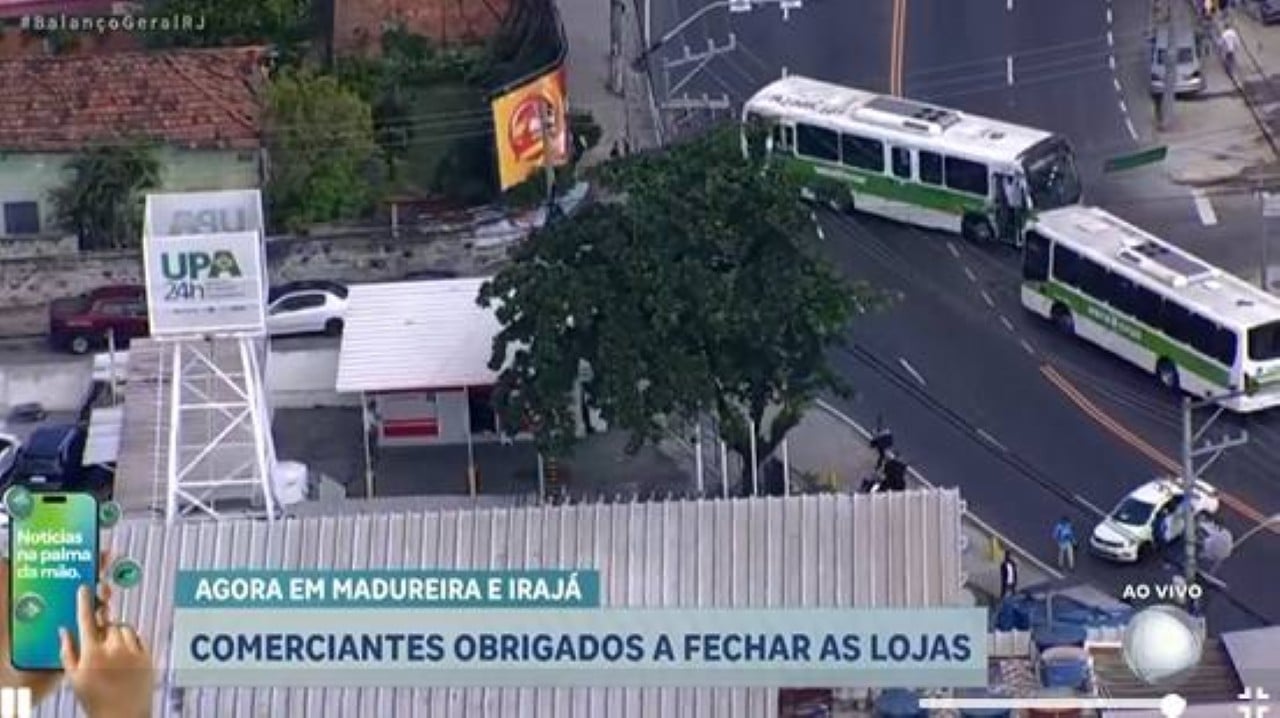
Avenida Edgard Romero, Madureira’s main road, remained fully blocked until early afternoon, when mechanics began using direct connections to remove the vehicles. BRT circulation in the Transcarioca corridor resumed at 1:20 PM, but disruptions persisted.
Impacts on transportation and residents’ routines
The paralysis of public transportation caused a domino effect in Madureira and surrounding areas. Fifteen bus lines, including routes like 298 (Acari x Castelo) and 775 (Madureira x Jardim América), were rerouted, affecting thousands of workers and students. The BRT, crucial for mobility in the North Zone, had services like line 42 (Madureira x Galeão) temporarily suspended.
Residents report constant fear. Many ducked inside buses or sought shelter in stores during the shootings. Local commerce, known for the vibrancy of the Mercadão de Madureira, closed its doors, and insecurity drove customers away.
- Affected lines: 15 bus lines rerouted, including 355 and 918.
- BRT impacted: Transcarioca corridor halted between 11 AM and 1:20 PM.
- Commerce affected: Shops in the Mercadão suspended activities.
- Alternative routes: Drivers directed to use Av. Pastor Martin Luther King Jr.
The Municipal Education Secretariat confirmed that four schools in Serrinha suspended classes, while two health units limited services, with one halting external activities. Traffic normalization occurred in the early afternoon, but the sense of insecurity lingered.
Madureira’s culture under threat
Madureira, immortalized in songs by Arlindo Cruz and Zeca Pagodinho, is more than a commercial hub. The neighborhood carries the history of samba, with schools like Portela and Império Serrano, and a cultural identity that attracts locals and tourists. However, rising violence threatens this essence. The image of hijacked buses and blocked streets contrasts with the memory of a vibrant neighborhood where pagode music once prevailed.
Residents lament the loss of cultural spaces and the difficulty of maintaining daily routines amid clashes. The operation in Serrinha, though necessary, exposes the fragility of public safety in densely populated areas, where the population bears the direct consequences of the war between factions and police.
- Cultural heritage: Portela and Império Serrano symbolize samba’s history.
- Iconic commerce: Mercadão de Madureira is a North Zone landmark.
- Social impact: Residents report fear and disruption of daily life.
The PM reported that the operation continues with sweeps in the area, but no new arrests or seizures have been disclosed so far. The community hopes for measures to restore tranquility.
Escalation of violence in Rio
The situation in Madureira reflects a broader issue in Rio de Janeiro. Data from the Fogo Cruzado Institute indicate that, in 2024, the Avenida Brasil region recorded 61 shootings, many linked to disputes between the TCP and the Red Command. Over the past eight years, more than 1,500 armed clashes have been documented in nearby areas like Irajá and Vaz Lobo.
The use of buses as barricades is a recurring tactic to hinder police progress. In April 2025, seven buses were hijacked in the Complexo do Chapadão, and in September, three were used in the Complexo da Pedreira. Rio Ônibus calls for urgent action from authorities to protect public transportation and ensure citizens’ right to mobility.
- Shootings in 2024: 61 recorded in the Avenida Brasil region.
- Historical clashes: Over 1,500 in eight years in the North Zone.
- Other cases: Bus hijackings in Chapadão and Pedreira in 2025.
- Union appeal: Rio Ônibus demands public safety measures.
History of trafficking in Serrinha
The Serrinha community, part of the Complexo da Serrinha, has been controlled by trafficker Lacoste since 2012. A fugitive since 2007, he oversees criminal activities in the Serrinha, Fazenda, Patolinha, São José, and Dendezinho communities. The Civil Police report that Lacoste seeks to expand his control into Red Command-dominated favelas, fueling conflicts in the region.
The COE operation, launched on Sunday (13), was planned based on intelligence. The clash in the wooded area, where a suspect was shot, marked the start of the violence escalation. The PM reinforced its presence with tactical battalions and motorcyclists, but the traffickers’ resistance remains a challenge.
- Criminal leadership: Lacoste has controlled Serrinha since 2012.
- Territorial expansion: Attempts to control Red Command favelas.
- Police operation: Launched on Sunday, with reinforcements on Tuesday.
- Fatal clash: Suspect shot was carrying a rifle, per the PM.
Madureira’s population remains hostage to the violence, while authorities seek strategies to curb organized crime. The normalization of traffic and services is a temporary relief, but a lasting solution requires coordinated, long-term actions.
