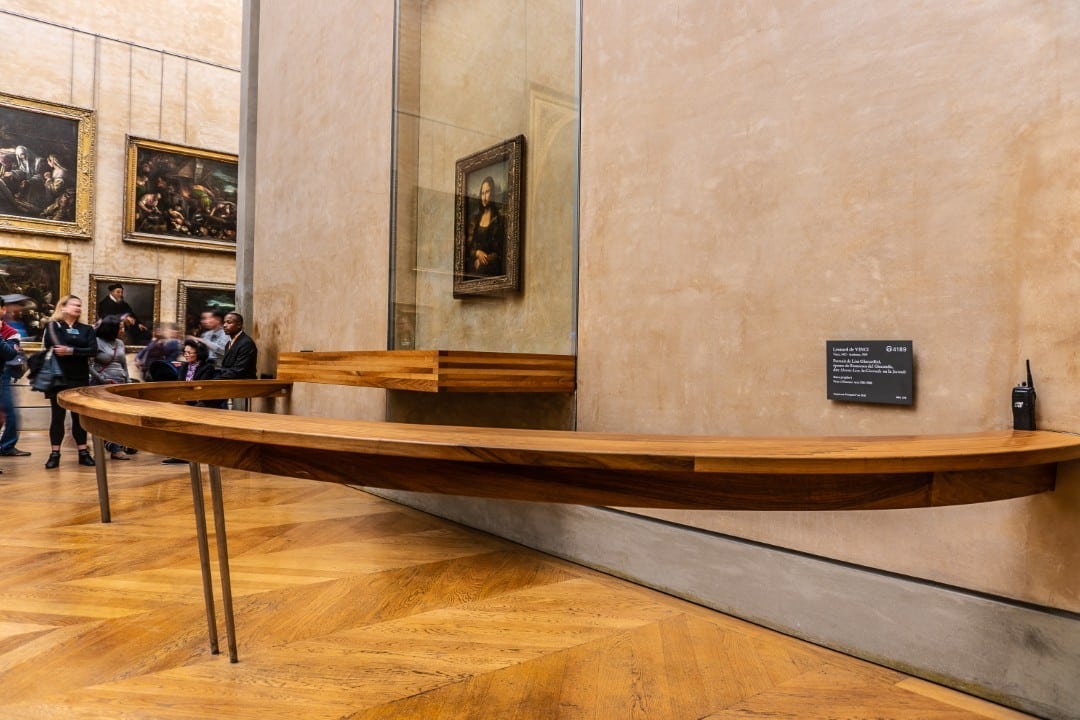
On August 21, 1911, the Mona Lisa, Leonardo da Vinci’s masterpiece, was stolen from the Louvre Museum in Paris by Vincenzo Peruggia, an Italian former employee. The theft, executed on a Monday when the museum was closed, stunned the world and propelled the painting to global fame. Noticed only the next day, the incident triggered a police investigation and a week-long museum closure. The artwork was recovered on December 10, 1913, in Florence, Italy, after Peruggia attempted to sell it. Exploiting lax security, the theft gained international attention and turned the Mona Lisa into a cultural icon. Extensive media coverage fueled public fascination, drawing crowds to the Louvre.
The crime revealed the Louvre’s security flaws. Peruggia, with insider knowledge, removed the painting with ease. The theft’s story, more than the artwork itself, shaped its global reputation. Crowds flocked to the museum to see the empty space where the painting once hung, creating a cultural phenomenon.
Below, details of the case that continue to captivate art enthusiasts.
- The theft occurred during a low-security moment at the Louvre.
- Peruggia hid the painting under his work uniform.
- Recovery involved a Florence art dealer.
A bold yet simple heist
The Mona Lisa theft in 1911 required little sophistication. Vincenzo Peruggia, a former Louvre worker, leveraged his familiarity with the museum. In 1910, he had installed the painting’s protective glass, gaining insight into its mounting. On the day of the crime, he wore his old work uniform, removed the artwork, and concealed it under his clothing. The lack of guards and alarms allowed him to leave unnoticed.
The heist’s simplicity is striking. The Louvre’s security was minimal, with no cameras or sensors. Measuring 53 by 77 centimeters, the painting was easy to carry. The police, lacking leads, briefly suspected figures like poet Guillaume Apollinaire and painter Pablo Picasso, both later cleared.
The incident exposed the vulnerability of early 20th-century museums. Post-theft, the Louvre overhauled its security, influencing global museum practices.
Media frenzy and iconic status
Before 1911, the Mona Lisa was not the Louvre’s most famous work. Pieces like the Venus de Milo and The Raft of the Medusa drew more attention. The theft changed that. Newspapers worldwide covered the story relentlessly, turning the painting into a sensation. Its image appeared on postcards, advertisements, and even chocolate boxes, cementing its celebrity status.
- Media coverage transformed the Mona Lisa into a cultural phenomenon.
- Crowds visited the Louvre to see the empty wall.
- Fictional tales, like Da Vinci’s alleged love for the model, emerged.
- The painting became a symbol of mystery and allure.
The media frenzy made the Mona Lisa a household name. Previously overlooked, it became a singular icon. Historians note the theft was pivotal to its global fame.
Peruggia’s motives
Vincenzo Peruggia’s reasons for the theft remain unclear. He claimed patriotic motives, believing Napoleon had stolen the Mona Lisa from Italy. In reality, King Francis I purchased it in the 16th century. As an Italian immigrant in France, Peruggia also cited discrimination as a factor.
Evidence suggests financial motives. He kept a list of American art collectors, hinting at plans to sell the painting. The Mona Lisa’s small size likely made it an easy target. In 1913, his attempt to sell it to Alfredo Geri, a Florence art dealer, led to his arrest.
- Peruggia claimed he wanted to return the painting to Italy.
- Discrimination may have influenced his actions.
- His attempt to sell revealed financial intentions.
- He served one year in prison in Italy.
On this day in 1911, the Mona Lisa was stolen from the Louvre. Guillaume Apollinaire came under suspicion and was arrested. His friend Pablo Picasso was brought in for questioning. Both were exonerated. Vincenzo Peruggia, a former Louvre employee, was later jailed for the theft. pic.twitter.com/vlXoz3LAyg
— EdwardMO 🌻 (@EdwardHMO) August 21, 2025
Return to the Louvre
The Mona Lisa’s recovery in December 1913 ended a dramatic saga. Peruggia was apprehended in Florence, and the painting, unharmed, returned to the Louvre in January 1914. The outbreak of World War I soon overshadowed the case, but the artwork’s fame endured.
The return drew massive crowds. Today, the Mona Lisa remains the Louvre’s top attraction, though many visitors, experts say, rush past without appreciating its details. The painting has become a cultural symbol, valued as much for its story as its artistry.
- The Mona Lisa returned to the Louvre in 1914.
- World War I diminished the theft’s public focus.
- The painting draws millions of visitors yearly.
- Its fame shapes global popular culture.
Lasting impact on art
The 114th anniversary of the Mona Lisa theft in 2025 underscores its historical significance. The heist revolutionized museum security, prompting the Louvre to adopt stricter measures. The theft also inspired books, films, and documentaries, keeping the story alive.
In 2023, the Louvre welcomed about 8.9 million visitors, with the Mona Lisa as its centerpiece. Its image graces merchandise from t-shirts to ads, solidifying its iconic status. The 1911 theft remains one of art’s most compelling tales.
- The theft spurred advancements in museum security.
- The Mona Lisa is the Louvre’s most visited work.
- Its image permeates popular culture.
- The heist continues to inspire modern narratives.