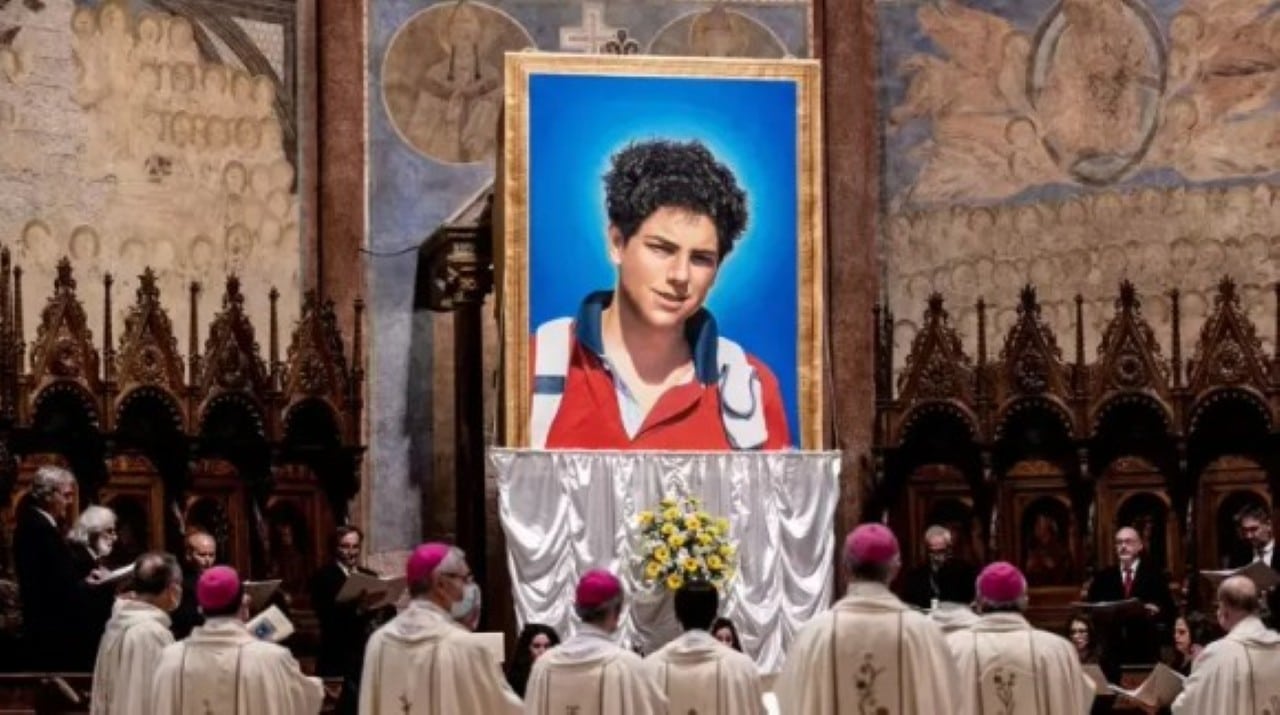
On Sunday, September 7, 2025, the Catholic Church marked a historic moment by canonizing Carlo Acutis, a London-born teenager who became the first millennial saint. Born in 1991, Acutis died at 15 but left a profound legacy by creating websites to document miracles, earning him the nickname “God’s influencer.” The ceremony, led by Pope Leo in Assisi, Italy, drew thousands of faithful and highlighted Carlo’s blend of faith and technology. Originally scheduled for April, his canonization was postponed after Pope Francis’ death. Carlo’s story, merging youth, spirituality, and digital innovation, inspires a new generation of Catholics. His relic—a single strand of hair in London—and his tomb in Assisi have become pilgrimage sites. This event underscores the Vatican’s effort to connect with young people through a saint who played video games and surfed the internet.
Carlo Acutis’ journey is remarkable. Despite his short life, he touched millions with his devotion and creative use of technology. Key aspects of his story include:
- Humble origins: Born in London, he was baptized at Our Lady of Dolours in Chelsea.
- Tech passion: He built websites to share miracles, now preserved as relics.
- Unwavering faith: Even as a teen, he helped the needy and spread Catholic teachings.
- Lasting legacy: His canonization draws pilgrims worldwide, especially young people.
The path to sainthood
Carlo Acutis was born in 1991 in London to Italian parents working in finance. His family, not particularly religious, chose to baptize him at Our Lady of Dolours in Chelsea, a site now visited by pilgrims. At six months old, Carlo moved to Milan, where he spent the rest of his life. He showed an early interest in technology, creating websites and enjoying video games like Super Mario on Nintendo consoles. His mother, Antonia Salzano, notes he didn’t seem especially devout as a child, but his faith deepened in his teens. Diagnosed with leukemia at 15, Carlo passed away in 2006, leaving a legacy that grew over time.
The canonization process began years after his death, driven by his mother’s global efforts to promote his cause. The Catholic Church requires verified miracles for sainthood, and two were attributed to Carlo. The first involved a woman cured of breast cancer after praying at his funeral. The second, recognized by Pope Francis, sealed his path to sainthood. Scheduled for April 27, 2025, the canonization was delayed by Francis’ death but was completed by Pope Leo.
- London baptism: The Chelsea baptismal font is now a pilgrimage site.
- Life in Milan: Carlo stood out for his generosity and faith despite illness.
- Miracles attributed: Two inexplicable events paved the way for sainthood.
- Vatican support: The Church saw Carlo as a figure to inspire youth.
A saint of the digital era
Carlo Acutis stood out for using technology to spread Catholic faith. As a teenager, he created a website cataloging Eucharistic miracles, now a reference for believers and displayed in Chelsea’s church. Unlike traditional saints, Carlo was a relatable teen who wore jeans, played video games, and used the internet. This modern appeal led the Vatican to fast-track his canonization, aiming to engage younger generations. His story resonates with Catholics like Diego Sarkissian, a Londoner who connects with Carlo’s love for video games.
Carlo’s tech-savvy approach reflected his era. Born as the internet gained traction, he used digital tools to reach a global audience. His miracle website, translated into multiple languages, remains accessible and inspires Catholics worldwide. His canonization highlights how faith can thrive in a digital age, making him a unique figure in Church history.
- Miracle website: Carlo’s project detailed Eucharistic events with historical accuracy.
- Relatable approach: His simple language made faith accessible to youth.
- Modern inspiration: He used contemporary tools for a spiritual mission.
Pilgrimages and relics
After Carlo’s death, Assisi became a major pilgrimage destination. Over a million people have visited his tomb, preserved in wax, in the city tied to St. Francis of Assisi. In London, Our Lady of Dolours has seen a surge in visitors since the canonization announcement. A reliquary holding a strand of Carlo’s hair, kept in a converted confessional, draws devotees. The site symbolizes his lasting impact, blending tradition with modernity.
Brother Paul Addison, from the Chelsea parish, describes Carlo as a “bright spark” in the community. Despite his brief time in London, his influence endures. Pilgrims, especially young ones, visit to pray and learn about his life. The relic and framed website pages bridge traditional faith with the digital world.
- Assisi tomb: The site attracts global pilgrims.
- London relic: The hair strand is a focal point for devotion.
- Visitor surge: Canonization boosted religious tourism in Chelsea.
- Youthful symbolism: Carlo embodies faith in a modern context.
Impact on young Catholics
Carlo Acutis’ canonization is a Vatican strategy to revitalize faith among youth. In a world where religion competes with technology and pop culture, Carlo shows these can coexist. His story resonates with people like Diego Sarkissian, who feel a connection to a saint who shared their hobbies. The Church hopes his canonization inspires young Catholics to engage authentically with spirituality.
The accelerated canonization process, completed in under two decades, reflects the Vatican’s urgency to present modern role models. Unlike saints whose approval took centuries, Carlo’s swift recognition signals his relevance to today’s challenges. His story underscores the power of figures who bridge religious tradition and the digital world.
- Youth role model: Carlo proves holiness is achievable in everyday life.
- Church strategy: The Vatican leverages his image to engage young people.
- Digital connection: Technology was central to his mission.
- Global reach: His story inspires Catholics worldwide.
Carlo Acutis’ legacy
Carlo Acutis’ canonization is more than a religious event—it’s a cultural milestone blending faith, youth, and technology. His life, marked by simple acts like helping the poor and notable achievements like his miracle website, shows holiness can take unexpected forms. By canonizing him, the Catholic Church acknowledges the need to adapt its message to modern times, using figures like Carlo to reach diverse audiences.
His impact continues to grow through pilgrimages, relics, and stories shared globally. His short but vibrant life reminds believers that faith can thrive amid modern challenges. For many, Carlo Acutis is more than a saint—he’s a symbol of hope and renewal for the Church in the 21st century.
- Ongoing inspiration: His story motivates charity and evangelization.
- Faith and tech: Carlo shows modern tools can serve spirituality.
- Church renewal: His canonization aims to attract young believers.
