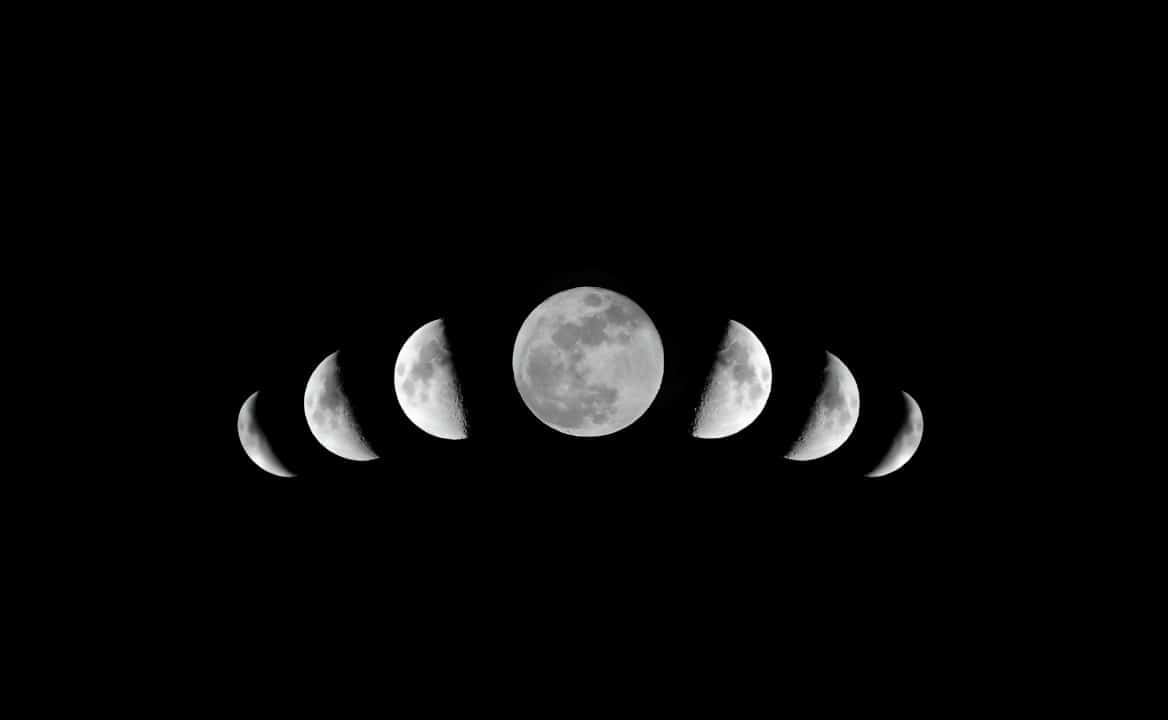
The lunar cycle of November 2025 begins with the full moon on the 5th, at 10:19 am, Brasília time. This phase marks the point of greatest visible illumination of the moon from Earth. The month features regular transitions between stages, ending with the crescent moon on the 28th. Observers throughout Brazil can follow the changes without special equipment.
- Full moon: November 5th, 10:19am
- Last Quarter: November 12th, 2:28am
- New moon: November 20, 3:47 am
- Crescent quarter: November 28, 3:58 am
These dates follow the official Brazilian time zone. Visibility varies depending on geographic location in the country.
Understand the complete lunar cycle
The synodic month lasts an average of 29.5 days. It covers the four main phases of the moon.
A new moon occurs when the satellite is between the Earth and the Sun. Its illuminated face remains invisible from Earth’s perspective.
Phases explained step by step
The crescent moon appears after the new one. An illuminated patch gradually grows in the night sky.
In the first quarter, half of the moon appears illuminated. This configuration forms a right angle with the Sun and the Earth.
The full moon represents the complete opposite of the Sun. The entire visible side receives direct sunlight.
The last quarter begins the reduction of lighting. The visible portion decreases until the next new moon.

Gravitational influence on tides
Spring tides occur during new and full moons. The combined attraction of the moon and the Sun raises the level of the oceans.
High tides register greater amplitudes during these periods. Brazilian coasts face noticeable variations.
In quadrature phases, such as waxing and waning quarters, the tides go down. The reduced gravitational force explains the phenomenon.
Practical observation in Brazil
Seaside cities offer ideal spots for viewing the stages. Beaches and hills make it easy to record without obstructions.
Astronomy apps provide real-time alerts. They indicate exact times adjusted to the local zone.
Groups of amateur observers organize monthly sessions. Participants share photos and data collected in the field.
Simple telescopes reveal details of the lunar surface. Craters and seas appear clear on a full moon.
Regional visibility variations
Northern regions of Brazil record clearer skies in November. Rain reduces interference compared to the south.
Morning times favor the waning moon. Observers wake up early to catch the transition.
The new moon remains invisible throughout the night. Its daytime presence demands attention to the western horizon.
Average cycle length
The synodic period varies slightly each month. Orbital factors influence the exact count of days.
November 2025 has a standard cycle of 29.5 days. The sequence restarts in December with a new phase.
Astronomers monitor these variations continuously. Accumulated data refines future predictions for annual calendars.
