


Cloudflare, an American digital infrastructure company, recorded a widespread failure on its network on the morning of November 18, 2025, affecting more than 500 online services around the world. Plataformas like X, ChatGPT and Spotify became unavailable to millions of users from 9am Brasília time. The interruption occurred due to an internal error in the content distribution system, according to an official update from the company.
The problem extended to monitoring tools, such as DownDetector, which also uses the Cloudflare network and has accumulated more than 11,000 reports of failures. Especialistas highlight that dependence on a single provider exposes vulnerabilities in the modern web.
Affected services in detail
Several essential applications stopped working during the peak of the instability.
- X (formerly Twitter) displayed loading errors for global users.
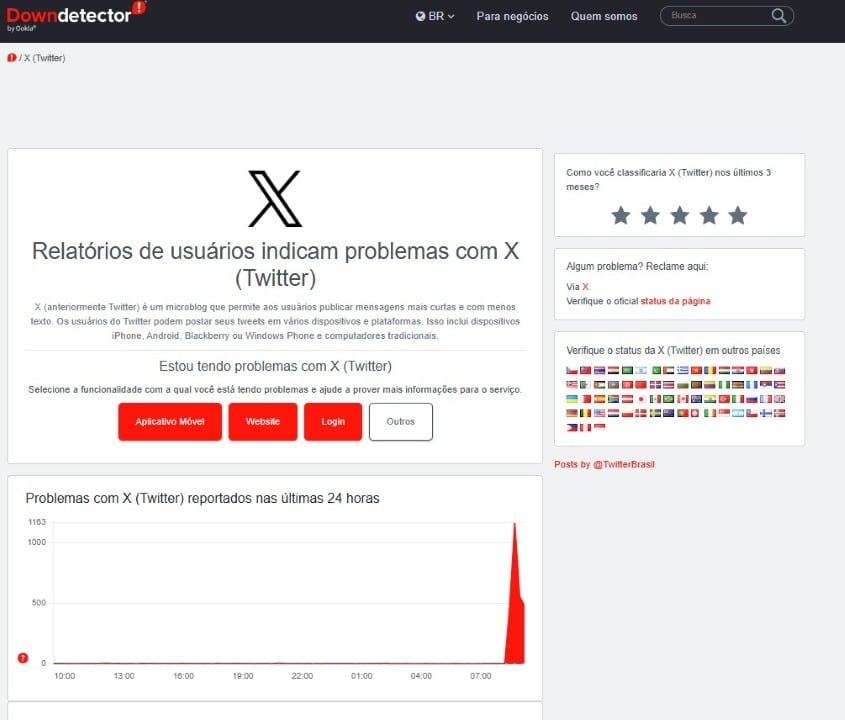
- OpenAI’s ChatGPT blocked access to AI queries.
- Canva has discontinued online design edits.
- Discord affected communications on gaming and work servers.
The list also includes Grindr, PayPal, Amazon Web Services and Uber, with impacts on transactions and urban mobility.
Technical causes of failure
Cloudflare engineers identified a bug in the anti-bot service as the source of the problem.
Routine updates triggered a cascade of 500 errors, propagating across the global network. The company’s control panel and API also failed, making initial responses difficult.
Investigations point to internal degradation starting in data centers such as Santiago, in Chile.
The company prioritized restoring network traffic, resolving the core of the issue around 2:30 pm UTC.
Economic impact for companies
Outages like this generate immediate costs for cloud-dependent businesses.
Companies face estimated losses of up to US$9,000 per minute of downtime, according to industry analyses. E-commerce and streaming Plataformas reported declines in revenue during the period.
At Brasil, the episode affected remote work routines and online sales operations.
Shares of Cloudflare fell about 3% on the stock market of Nova York following the announcement, reflecting investor concerns.
Real-time recovery and updates
Cloudflare restored access in regions like Londres and parts of Europa in the early hours.
Engineering teams implemented fixes for the control plane, including dashboard and APIs.
- Error levels have returned to pre-incident standards on services such as Access and WARP.
- Continuous monitoring occurs to prevent recurrences.
The company plans to release a detailed report on the failure in the coming hours. Usuários reported gradual normalization in affected applications.
Dependence on digital infrastructure
Cloudflare serves around 20% of the world’s websites, processing trillions of requests daily. Fundada in 2009, the company offers cybersecurity and performance optimization for networks.
Similar failures occurred at providers like AWS and Azure recently, highlighting risks of concentration in a few links. No Brasil, the government discusses digital sovereignty with state clouds to mitigate these events.
Experts recommend provider diversification to reduce future exposures.
Full list of impacted platforms
- Spotify: Interrompeu streams music and podcasts.
- Uber: Afetou calls for rides in multiple cities.
- PayPal: Bloqueou payment processing.
- AWS: Gerou errors in data hosting.
- Letterboxd: Paralisou hits movie reviews.
Other services, such as cryptocurrency websites and Portuguese newspapers, faced partial slowdowns. DownDetector recorded spikes in searches for “internet crashed” during the incident.
Preventive measures adopted
The Cloudflare activated contingency protocols shortly after detecting the degradation.
Changes in network configurations prioritized critical traffic, such as e-commerce services.
- Temporary disabling of anti-bot modules prevented further spread.
- Testing in isolated data centers accelerated bug identification.
The company notified customers via dashboard and integrations like PagerDuty.
Reactions from users and experts
Reports on X and forums indicated frustrations with outages at peak times.
Thiago Muniz, professor at FGV, explained that failures at Cloudflare simulate “widespread collapses on the web”.
Northeastern University’s David Choffnes compared the event to recent outages at competitors.
The outage reinforced debates about resilience in critical infrastructure.



