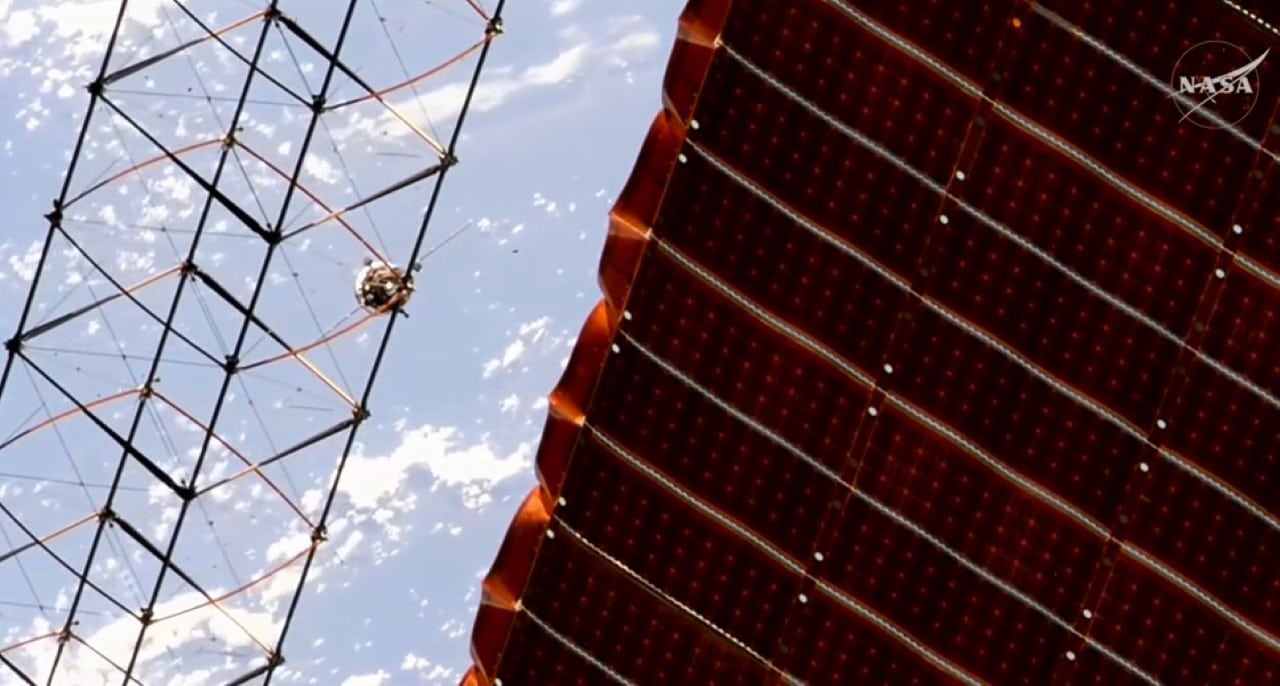
The Soyuz spacecraft MS-28, with the Nasa Chris Williams astronaut and Russian cosmonauts Sergey Kud-Sverchkov and Sergei Mikaev on board, successfully docked with the (12:38 pm in Brasília), in module Rassvet. The launch departed from Cosmódromo of Baikonur, at Cazaquistão, at 4:27 am (Eastern Time), and the docking maneuver was automatic.
The arrival of the three crew members reinforces Expedição 73, ongoing since April, and guarantees the continuity of human presence on Iss, which completes 25 years of uninterrupted habitation. Williams, on his first mission, will act as a flight engineer, while Kud-Sverchkov and Mikaev, both experienced, take on specialist roles.
The new crew members will spend about eight months on the orbital station, participating in scientific experiments and maintenance. The transition includes a brief overlap with the current team to transfer operational knowledge.
- Main objectives of the mission: studies on the effects of microgravity on the human body and testing technologies for future exploration.
- Russian contributions: advances in life support systems and environmental monitoring.
- Nasa-Roscosmos Partnership: collaboration maintained despite geopolitical tensions, with a focus on orbital security.
Joint preparation overcomes language barriers
The crew of the Soyuz MS-28 trained for months at Moscou, at Centro of Treinamento of Cosmonautas Yuri Gagarin. Sergey Kud-Sverchkov, ship commander, highlighted coordination between space agencies.
The exercises included coupling and emergency simulations, adapted for the integration of diverse cultural profiles. Sergei Mikaev, flight engineer, emphasized the importance of unified protocols.
Chris Williams, selected by Nasa in 2013, adapted quickly to Russian procedures. The team shared experiences to optimize communication during the flight.
Previous experiences of Russian cosmonauts
Sergey Kud-Sverchkov participated in his second space mission, focusing on rendezvous operations. Ele has accumulated more than 200 days in orbit in previous flights.
Sergei Mikaev, in his debut, contributed expertise in aerospace engineering developed at Roscosmos. Sua preparation involved rigorous testing of propulsion systems.
Both cosmonauts carried out joint training with Williams, ensuring fluid maneuvers. The Soyuz, a vehicle that has been tested for decades, has a success rate of over 97% in couplings.
Technical collaboration between Nasa and Roscosmos allowed fine adjustments to the ship for compatibility with the Iss. Engenheiros monitored real-time telemetry from the ground.
Launch of Baikonur begins orbital phase
The Soyuz-2.1a rocket lifted off on time from Cosmódromo of Baikonur at 9:27 UTC. The separation of the stages occurred without incident, positioning the capsule on an elliptical trajectory.
Flight controllers at Korolev, on Rússia, confirmed stability after the first orbit. The ship performed correction burns to align with Iss.
Williams reported normal conditions on board during a live broadcast. The initial altitude of 200 kilometers was adjusted for accurate rendezvous.
The event attracted global coverage, with feeds from Nasa+ and partner platforms. Equipes of recovery remained on alert for contingencies.
Scientific contributions of the new crew
Williams will lead experiments on crystal growth in microgravity, useful to pharmacists. Kud-Sverchkov will supervise studies of spherical combustion in an orbital environment.
Mikaev will test body mass measuring devices, based on the second law of Newton. The results support missions to Lua and Marte.
Iss has hosted more than 4,000 investigations since 2000, focusing on human health. The crew will use the Harmony module for installations.
During the eight months, they will perform more than 3 thousand orbits, covering 130 million kilometers. Manutenção of solar panels integrates the daily routine.
Coupling maneuvers in detail
The Soyuz approached the Iss at 28 thousand kilometers per relative hour. Sensores laser guided the ship to the Rassvet module.
Mechanical engagements activated automatically at 12:38 UTC. Pressurização of the tunnel occurred within minutes, confirming sealing.
The current Expedição 73 team greeted the newcomers via video. Abertura from the hatch is scheduled for 10:10 am Eastern Time.
Soyuz’s life support systems integrate with those of the station. Continuous Monitoramento checks structural integrity.
Experiments highlighted at Iss
The mission advances research on fire in zero gravity, analyzing flame propagation. Dados collected improves space fire suppression.
Studies of bodily fluids reveal changes in astronauts’ taste. Imagens of Terra total 4.7 million, mapping climate change.
Deployment of CubeSats via Nanoracks occurs in April. The crew manages the release of 27 satellites for remote observation.
Transition and routine on board
The overlap lasts five days, with a focus on safety protocols. Williams assumes functions in Centro of Controle of Missão.
Maintenance includes inspections of the Cupola, Iss panoramic window. The station orbits at 400 kilometers of average altitude.
Daily routine covers 16 hours of work, with breaks for exercise. Nutrição adapted prevents bone loss in microgravity.
The presence of 11 crew members temporarily increases operational capacity. Colaboração international supports scientific advances.
