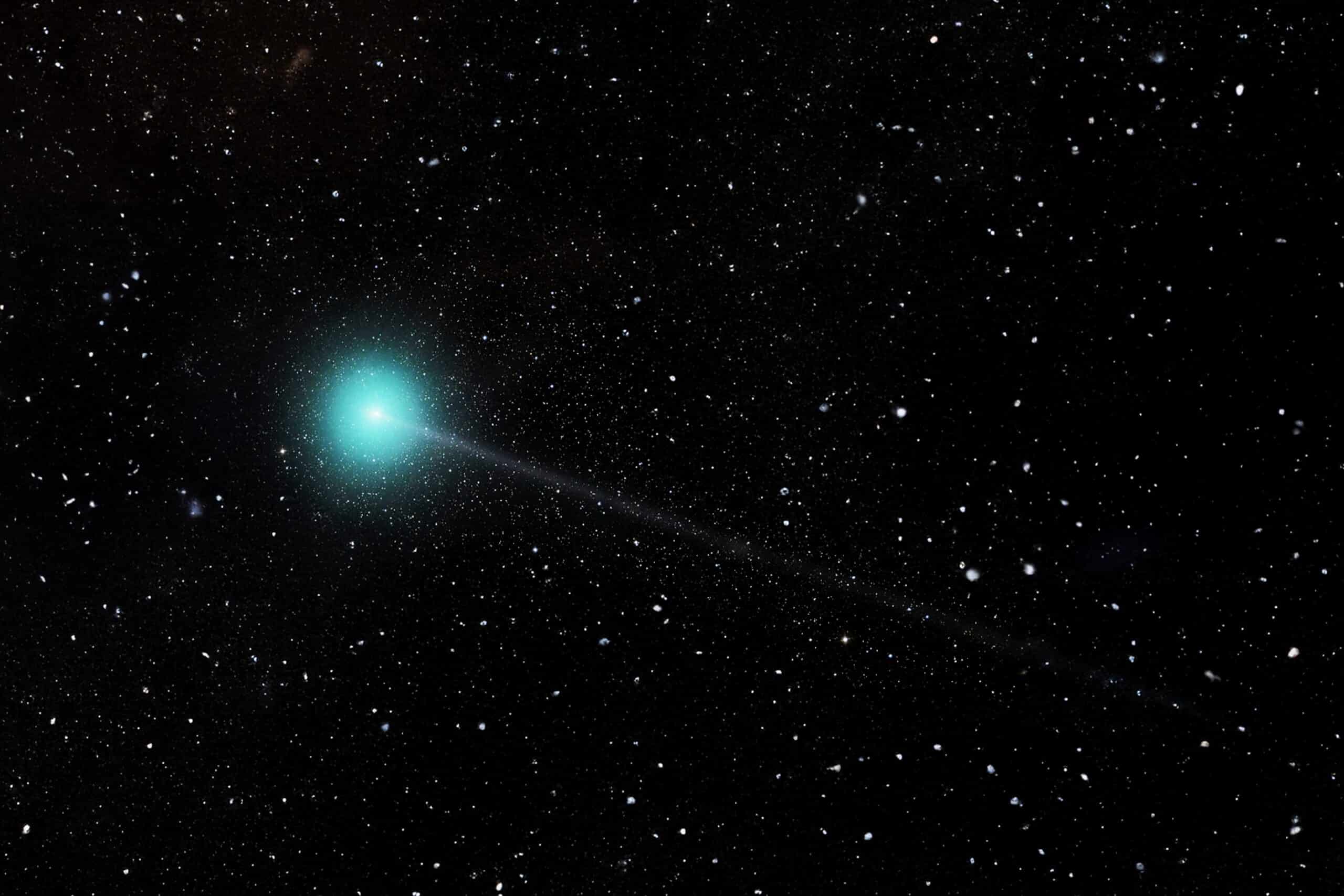
Anomaly detected in the interstellar comet 3I/ATLAS by Nasa on November 5, 2025 generated debates among astronomers about its chemical composition. The object, discovered in July by the ATLAS telescope at Chile, presented a reverse tail pointing towards Sol, a phenomenon unprecedented in known comets. Essa structure, called the antitail, abruptly disappeared, replaced by a conventional tail of more than 56,000 kilometers.
Nasa confirmed that the comet will pass 270 million kilometers from Terra, with no risk of impact. Observações from the James Webb telescope revealed bluish tones in the emission of gases, linked to ionized carbon monoxide. Cientistas have been monitoring the event since perihelion on October 29, when the comet reached its closest point to Sol.
Experts highlight the opportunity for studies on materials from other stellar systems. 3I/ATLAS is the third interstellar visitor, after ‘Oumuamua in 2017 and 2I/Borisov in 2019.
Initial discovery and hyperbolic trajectory
The ATLAS telescope identified the comet on July 1, 2025, at Río Hurtado, Chile. Sua hyperbolic orbit confirms origin outside of Sistema Solar, with a speed of 58 km/s.
Astronomers calculated that the object traveled millions of years through interstellar space. In March 2026, it will approach Júpiter at 50 million kilometers, which could alter its exit from the system.
Chemical composition reveals mysteries
Analysis of James Webb detected dominant carbon dioxide, water, traces of cyanide and an unusual nickel alloy. Essa mixture differs from local comets and suggests formation in a distant environment.
Radio emission at 1.665 GHz and 1.667 GHz, captured in November, marks the first record of an interstellar comet in this range. Esses signals indicate volatiles preserved from the object’s origin.
Loss of 13% of post-perihelion mass accelerates the comet beyond that expected by the solar wind. Observações and Hubble show a core between 320 meters and 5.6 km in diameter.
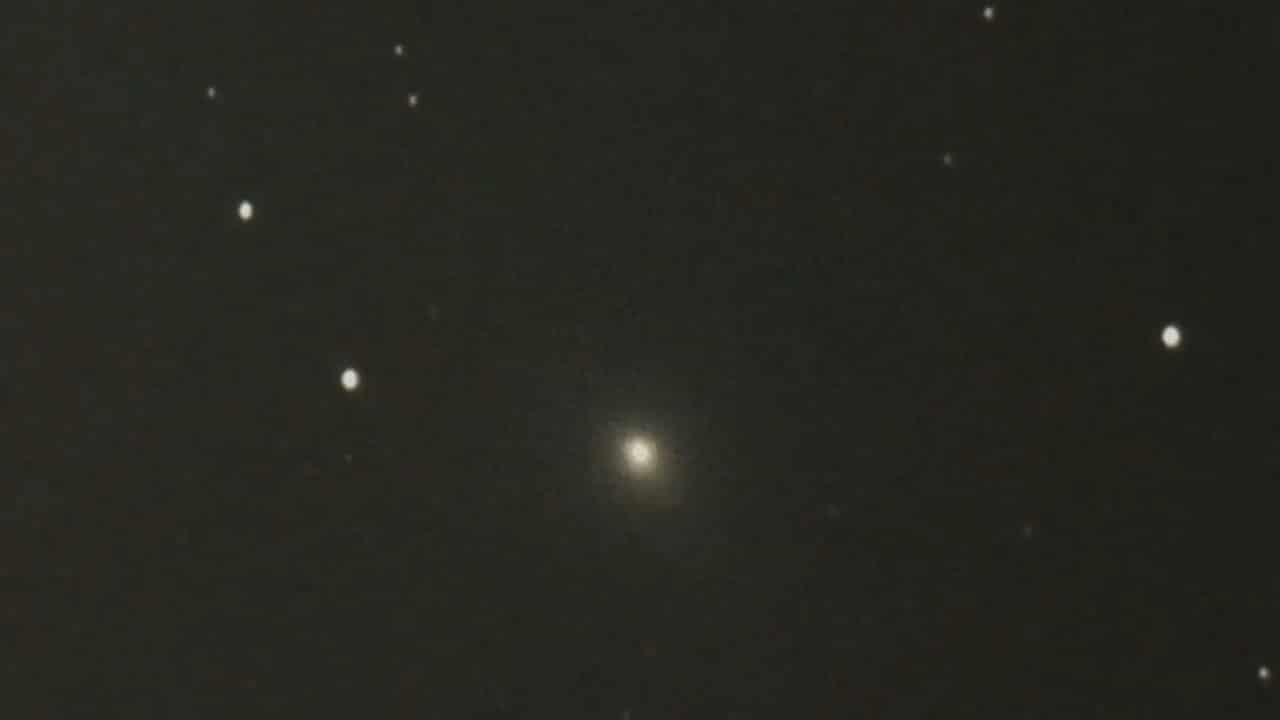
Changes in structure observed
Images from Nasa on November 3 captured the antitail jet of material against Sol. On November 5, it disappeared, giving way to the extended ionic tail.
This transition defies standard outgassing-based explanations. Partículas charged interact in an atypical way with the solar magnetic field.
Probes such as SOHO and STEREO-A recorded the event between September and October. The extreme polarization in the light suggests dust alignment not seen in other comets.
Reactions from the scientific community
Astronomers describe the behavior as difficult to model. Equipes rethink hypotheses about the ejection of interstellar objects from home systems.
Astrophysicist Avi Loeb, from Harvard, explores technological origins, but without concrete evidence. Debates occur in bulletins such as MPEC 2025-U142 of Minor Planet Center.
- Planetary defense protocol activated by Nasa in October to monitor particles.
- Possible collision with probe Europa Clipper between October 30th and November 6th.
- Observations coordinated by Rede Internacional of Alerta of Asteroides (IAWN).
Preliminary studies indicate formation billions of years ago in another star system.
Space telescope observations
The James Webb estimated hydroxyl emission activity 450 million km from the Sol. Dados of Hubble reveal irregular rotation, detected in TESS files from May 2025.
The MAVEN probe captured variations in the nucleus during the approach. Essas measurements provide baseline for comparisons with ‘Oumuamua and Borisov.
On November 11, Telescópio Óptico Nórdico in Ilhas Canárias recorded intense bluish tones. The tail grew three million km in days, driven by accelerated sublimation.
Possible interactions with planets
Jupiter will exert a significant gravitational influence in March 2026. Simulações predict a deviation in the comet’s exit trajectory.
Mars already registered the object at 27 million km in October, with an inexplicable stop for days. Sondas and Mars Reconnaissance Orbiter provide high-resolution images.
- Influence of Júpiter may eject additional particles.
- Continuous monitoring by ESA and Nasa to track orbital changes.
- No predicted impact on the orbit of inner planets.
These interactions highlight dynamics of interstellar visitors.
Radio signals and unprecedented broadcasts
Detections at radio frequencies confirm an icy composition similar to solar comets, but with exotic features. The event took place on November 13, 2025.
Radio astronomy techniques allowed us to “hear” the comet for the first time. Esses data validate models of preservation of primordial material.
Scientists plan additional observations with Very Large Array. The emissions suggest active volatile reserves at extreme distances.
Implications for interstellar studies
3I/ATLAS offers a time capsule of another system. Anomalias as extra acceleration questions the formation of comets in protoplanetary disks.
European research uses programs like Talicatcher to track particles. Global Colaborações accelerates raw data analysis.
On November 19, amateur observers at Áustria captured images of the glowing tail. Esses records complement professional data.
The object will leave Sistema Solar without returning, leaving lessons about cosmic migrations. Astrônomos predict more future detections with advanced telescopes.
