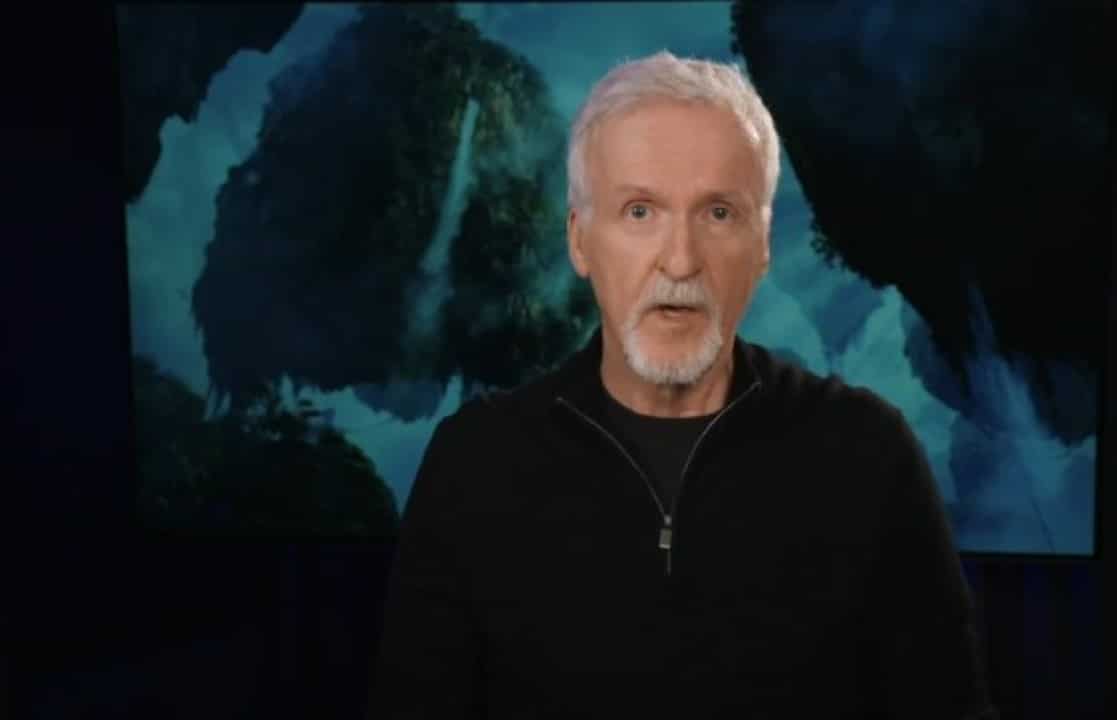
Director James Cameron, responsible for the Avatar franchise, stated in a recent interview that he is prepared to end the series if the next film, Avatar: Fire and Ash, does not achieve the expected box office performance. The statement occurred during participation in the The Town podcast, presented by Matt Belloni, where Cameron discussed the challenges of the current film market. The third chapter of the saga premieres on December 19, 2025, and its reception will define the course of the films planned for 2029 and 2031.
Cameron, who has been developing the Pandora universe for three decades, expressed confidence in the project, but highlighted the financial pressure involved in producing blockbusters with advanced visual effects. Previous films, Avatar (2009) and Avatar: The Caminho from
The franchise explores themes of conflict between humans and the Na’vi, with Fire and Ash introducing more aggressive clans, such as the Ash People, led by the character Varang, played by Oona Chaplin. Sam Worthington and Zoe Saldaña return as Jake Sully and Neytiri, in a plot that deals with family grief and escalating tensions in Pandora.
- Top previous successes: Avatar grossed US$2.9 billion; The Caminho of the Água, US$2.3 billion.
- Estimated budget: Filmes of the series exceeds US$300 million each, with no official announcement for the third.
- Expanded cast: Inclui Kate Winslet, Stephen Lang and David Thewlis as leader of the Wind Traders.
Nervousness about the current market
The filmmaker mentioned specific concerns about “sequelitis,” a term that describes audience fatigue with excessive sequels. In 2025, productions such as M3GAN 2.0 and Thunderbolts faced rejection, with Blumhouse admitting to an error in assessing interest in its killer cyborg.
Cameron compared the situation to that of Caminho of Água, who overcame similar doubts in 2021 and became the third biggest hit of all time. Ele expects Fire and Ash to revitalize movie theaters, which are operating at 75% of pre-pandemic capacity.
The film’s duration, around 3 hours and 15 minutes, requires high engagement from the public, especially with competition from animations such as Zootopia 2 and musicals such as Wicked: For Good, scheduled for the next few weeks.
Contingency plan in detail
Cameron emphasized that he would not hand over creative control to other directors, but could act as a producer on any sequels. Sua alternative solution involves resolving a single pending plot through a book, avoiding unfinished cliffhangers.
This approach ensures narrative closure for the arcs of Jake, Neytiri and their family, who deal with grief over the death of Neteyam. The director sees the literary format as viable after 30 years in the project, prioritizing quality over indefinite expansion.
The strategy reflects maturity in franchise management, where high budgets demand proportional returns. Disney, rights holder via 20th Century Studios, is closely monitoring early performance.
Franchise development over the years
The saga began in 2006, when Cameron announced sequels conditioned on the success of the first film. Produção of Fire and Ash began in 2020, with breaks due to the pandemic, and included filming at Nova Zelândia under special protocols.
The script was co-written by Cameron, Rick Jaffa and Amanda Silver, with contributions from Josh Friedman and Shane Salerno. An early version of the cut was nine hours long, spread across the next three films.
Performance capture technologies were prioritized for greater realism in Na’vi, with innovations in CGI that increased costs. Bob Iger, CEO of Disney, praised a preliminary version, highlighting potential for the holiday market.
Impact on casting and production
Sam Worthington described the return as emotional, focusing on Jake’s evolution as a protective leader. Zoe Saldaña highlighted the depth of Neytiri, exploring themes of motherhood amid conflict.
Stephen Lang reprises Coronel Quaritch, now in a Na’vi body, expanding moral dilemmas. The escalation of tension with the Ash People introduces elements of fire and destruction, contrasting with previous peaceful clans like the Omaticaya and Metkayina.
Filming took place in Wellington studios, with New Zealand government support for projects of high economic value. The team included more than 2,000 visual effects professionals.
Lightstorm Entertainment, producer of Cameron, integrated underwater and aerial advancements for scenes in Pandora. The return of Payakan, the tulkun, connects past narratives.
Expectations for the launch
Fire and Ash arrives with a PG-13 rating, targeting families and science fiction fans. Trailers emphasize immersive 3D visuals, launching simultaneously globally on December 19th.
Analysts predict openings above US$150 million in the US, driven by holidays. Comparado to recent successes, such as Ne Zha 2, which surpassed US$2 billion, the film seeks to maintain the legacy.
Cameron expressed optimism but realism: success depends on cinema attendance, which has fallen with streaming. Disney promotes the film as an exclusive theatrical experience.
Pending plots and alternative resolution
At the end of O Caminho da Água, multiple narrative lines converge to Fire and Ash, leaving only one loose thread. Cameron plans to explore it in a book if film sequels don’t move forward.
This issue involves cultural elements of the Na’vi, potentially expanding lore without much cost. The format allows for details not possible in cinema, such as the characters’ internal perspectives.
The director rejects spin-off ideas without his supervision, prioritizing artistic integrity. Após decades, he sees the book as a worthy goodbye to the saga.
Industry context in 2025
The year saw fluctuations in blockbusters, with animations leading collections. Zootopia 2 projects $1 billion, while Wicked: For Good tests musical appeal.
Pandemic and streaming reduced audiences by 25%, forcing studios to recalculate strategies. Cameron criticizes the rapid release model, which accelerates “sequelitis”.
Despite this, Avatar maintains global appeal, with re-airings boosting nostalgia. The third film tests the franchise’s resilience in the digital age.
