

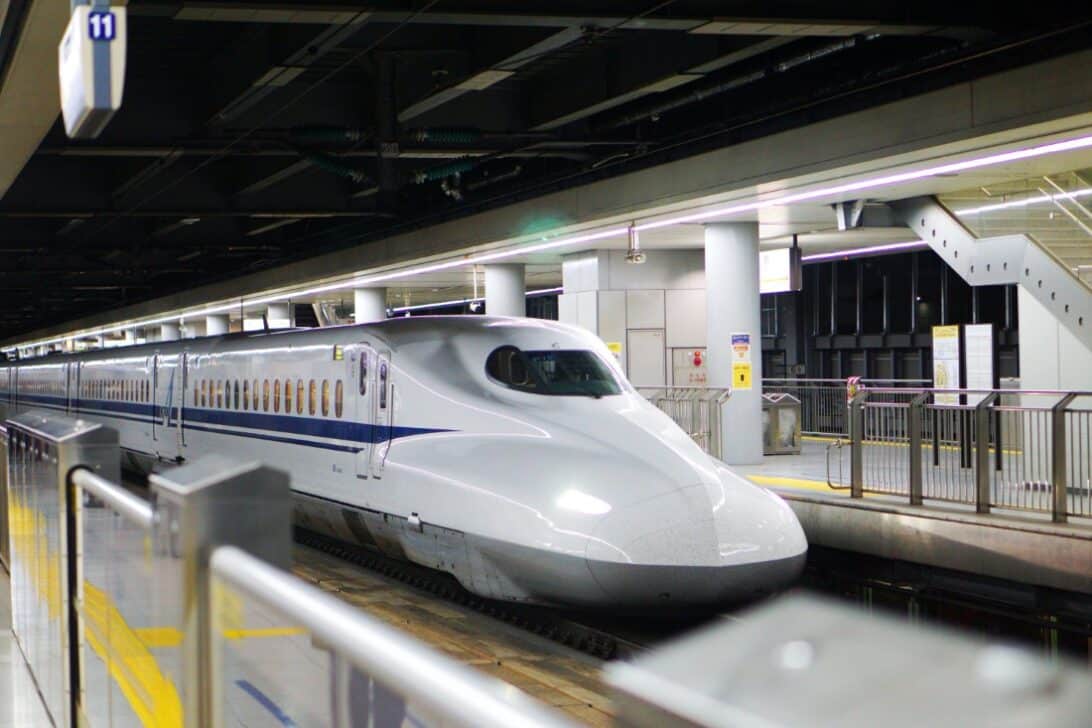
JR East confirmed that the same control panel was used in the two uncoupling incidents that occurred on line Tohoku Shinkansen. The first episode occurred on September 19, 2024, between stations Furukawa and Sendai, in Miyagi province, when train Hayabusa-Komachi number 6, traveling at around 315 km/h, suffered involuntary formation separation. The second record dates from March 6, 2025, near station Ueno, at Tóquio, involving Hayabusa-Komachi number 21, at approximately 60 km/h.
The company identified a possible malfunction in the panel, which issued a separation signal due to error. In Nesses cases, there were no injuries among passengers, but operations were temporarily halted across the entire network. Preliminary analysis suggests that metallic fragments or repeated electrical failures activated the uncoupling mechanism.
These events mark the first occurrence of moving separation in the line’s history, highlighting vulnerabilities in the coupling system between E5/H5 and E6 series trains. JR East prioritizes safety, with inspections on all 96 coupled sets.
Details of incidents on the line
The September 2024 episode mobilized maintenance crews quickly after the emergency shutdown. The train, with 320 passengers on board, stopped without structural damage to the formations. Técnicos examined the coupling mechanism and detected metallic residue behind the switch, which caused the false separation signal.
In March 2025, the incident near Ueno affected 642 travelers, who were reassigned to other trains after three hours of disruption. The separation occurred at reduced speed, but disrupted services on parallel lines, such as Joetsu and Hokuriku, for more than two hours.
Repetition in less than six months exposes flaws in the post-incident verification process. JR East admitted that the control panel, after inspection in the first case, was transferred to another formation, without detecting a latent defect.
Investigation reveals flaw in shared dashboard
The joint analysis of the two formations pointed to the control panel as a common element. Esse device manages electrical signals to the coupling, and tests indicated repeated issuance of release commands. Especialistas in railway engineering highlight that the metallic residue from the first incident could have persisted, despite the cleaning carried out.
The company reviewed telemetry data from the trains involved, confirming involuntary activation of the separation switch. In the second case, the release lever worked intermittently, suggesting wear or residual contamination in the circuit.
Initial measures included temporarily disabling the forced separation function on all panels. JR East plans to fully replace the affected components, with an accelerated schedule to avoid prolonged downtime.
Operational impact and immediate adjustments
The suspension of couplings affected routes dependent on integration between Tohoku and regional lines. Para o Komachi, services were limited to short sections between Akita and Essa configuration reduced daily capacity by around 27 thousand seats.
- Operations suspended on 60 trains per day on lines Yamagata and Akita;
- 20% increase in capacity at connecting stations such as Fukushima and Morioka;
- Relocation of 153 thousand affected passengers in March 2025;
- Gradual resumption of normal schedules scheduled for March 15, 2025.
Passengers faced average delays of 30 minutes, with full refund options for impacted tickets. JR East reinforced communications at stations to provide guidance on transport alternatives.
Correction measures and security reinforcement
Engineers at JR East developed prototype metal fasteners for the air compressor switches on the panels. Esses devices prevent accidental unlocking, even with erroneous electrical signals. The installation will take place in phases, prioritizing the 96 coupled sets.
Additional training for operators focuses on early detection of electrical anomalies. The company invests in digital simulations to test failure scenarios, reducing risks at varying speeds.
Independent audits, coordinated with regulatory agencies, will validate the changes before full resumption. The president of JR East, in a recent press conference, emphasized his commitment to total transparency in investigation reports.
History of couplings on Shinkansen
The coupling system has enabled efficient integration between main and regional lines since the extension of Tohoku in 2011. Formações like Hayabusa and Komachi operate coupled from Tóquio to Essa practice optimizes fleet and schedules, transporting millions annually.
Similar incidents on conventional lines occurred sporadically, but never at high speeds as on Shinkansen. Registros from 2007 show mechanical failures in local trains, resolved with reinforcements in hooks.
The Tohoku Shinkansen, opened in 1982, is more than 2,900 km long, with speeds of up to 320 km/h. Manutenções per year in 100% of the fleet maintains a punctuality rate above 99%.
In the current context, JR East evaluates expansion of inspections for other panels, ensuring uniformity in series E5, H5 and E6.
Reactions and chronology of events
Japanese transport authorities required detailed reports within 24 hours of each incident. Agência of Ferrovias of Ministério of Terras,
The chronology highlights agility in the response: in September 2024, inspections of the entire fleet were completed in one week; in March 2025, the suspension of couplings began on the same day. Até December 2025, all modifications must be operational.
Railway safety experts recommend continuous monitoring of electrical circuits via IoT sensors. Essa preventive approach aligns with global standards, such as those adopted in European high-speed networks.