Nasa announced this week the discovery of sugars and a gum-like organic substance never before identified in extraterrestrial materials in samples from the asteroid Bennu.
The analyses, published in three articles in the magazines Nature Geosciences and Nature Astronomy, were carried out using material collected by the Osiris-REx mission, which returned to Terra in September 2023.
The results indicate that these compounds may have contributed to the emergence of life on the planet, alongside previously detected amino acids and DNA precursor molecules.
Sugars detected in material from Bennu
Researchers at Universidade of Tohoku, in Japão, identified sugars in the asteroid’s particles.
These compounds are considered fundamental building blocks of terrestrial biology.
The team led by Yoshihiro Furukawa highlights that the presence reinforces hypotheses about the delivery of organic materials by celestial bodies.
Sugars were associated with other organic molecules.
The combination suggests chemical environments favorable to the formation of complex biological structures.
Gum-like substance sparks interest
A second study, conducted by scientists from Centro of Pesquisa Ames of Nasa and Universidade of Califórnia in Berkeley, describes the unprecedented organic substance.
Scott Sandford and Zack Gainsforth explain that the material may have acted as a catalyst in primitive chemical reactions.
The space gum has a composition that indicates formation in the first million years of the solar system.
The high concentration points to its origin in a region rich in interstellar matter.
This type of compound rarely appears preserved in meteorites that reach Terra.
Stardust from before Sol
The third paper, led by Ann Nguyen of Centro Espacial Johnson, analyzed microscopic grains in the sample.
The grains contain isotopic signatures of stars that existed before the formation of Sol.
These elements were incorporated into the asteroid during its accretion about 4.5 billion years ago.
The presence confirms that Bennu is a primordial remnant of the protoplanetary disk.
Context of the collected samples
The Osiris-REx mission captured about 121 grams of material from the surface of Bennu in October 2020.
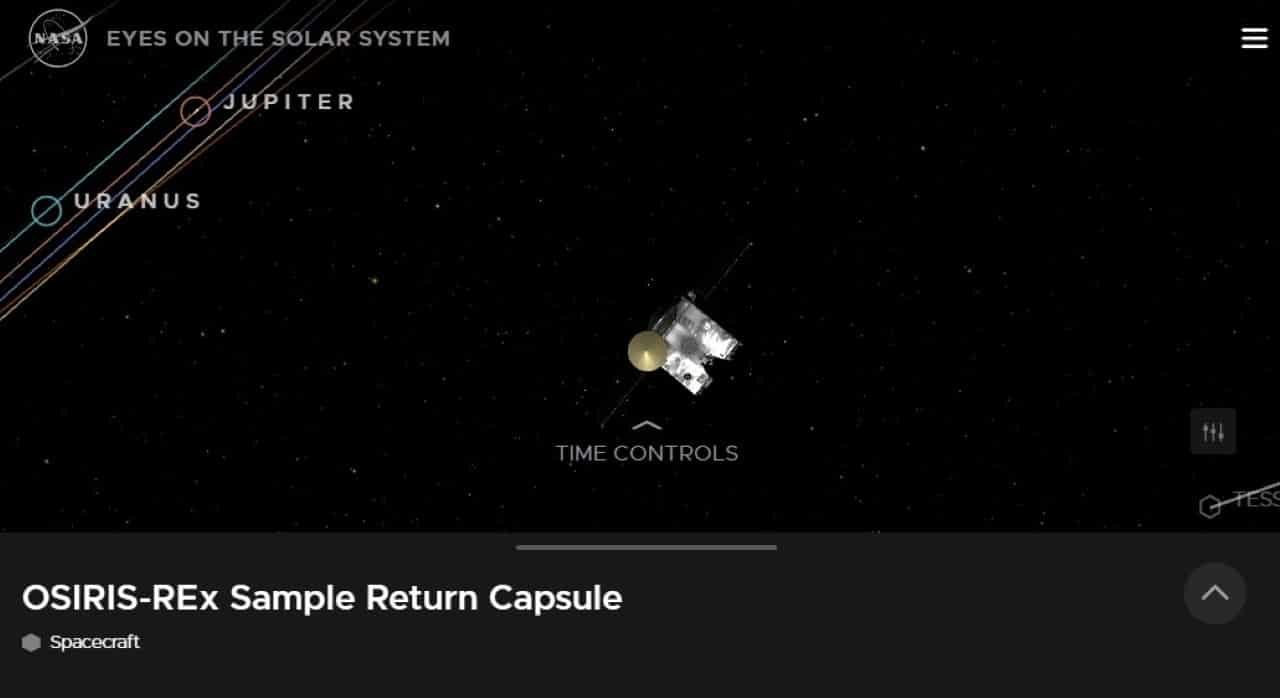
The capsule with the samples landed in the desert of Utah, at Estados Unidos, on September 24, 2023.
Since then, laboratories in several countries have carried out detailed analyzes of the content.
- The samples contain a high carbon content, around 4.7% by mass.
- Dozens of amino acids and nucleobases were identified.
- The mineral composition includes hydrated clays and carbonates.
- There is no direct evidence of life, only chemical precursors.
Implications for the origin of terrestrial life
The organic compounds found in Bennu reinforce the chemical panspermia hypothesis.
Carbon-rich asteroids would have delivered water and complex molecules to the young planet.
Impacts that occurred between 4.5 and 3.8 billion years ago released this material onto the Earth’s surface.
The preservation of these compounds in Bennu is due to the absence of intense geological processes.
Unlike Terra, the asteroid has not undergone significant heating or change since its formation.
The studies continue with the division of samples between institutions into Estados Unidos, Japão, Canadá and Europa.
New publications are planned for the coming months with additional analyses.
