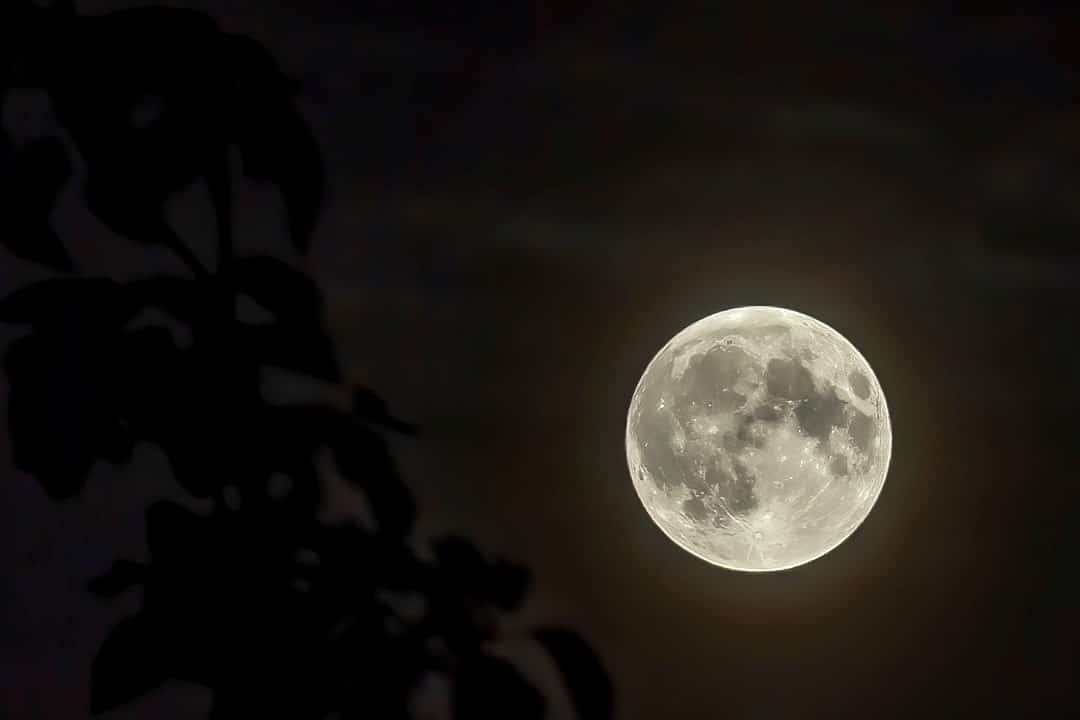
The last supermoon of 2025 occurs this Friday, December 5th, from sunset. The phenomenon occurs when the full moon coincides with perigee, the closest point to Terra, leaving the lunar disk up to 14% larger and 30% brighter than normal.
This month, the distance will be approximately 357,218 km, according to data from NASA and USP’s Instituto Astronômico and Geofísico. The event marks the fourth and final supermoon of the year, ending the cycle that began in September.
Experts highlight that capturing clear images of the full moon requires specific camera adjustments, regardless of the equipment used.
Basic settings for sharp photos
The moon moves quickly across the sky due to the rotation of Terra. Portanto, long exposure times result in blurring.
Professionals recommend following the “loonie rule”, an adaptation of the sunny 16 rule for lunar photography. The initial values are usually ISO 100, aperture f/8 to f/11 and speed between 1/125 and 1/400 second.
Quick on-site tests allow for small adjustments depending on ambient light and the presence of thin clouds.
Recommended equipment
A tripod eliminates shake and ensures maximum sharpness. Quem cannot place the camera on a stable surface or use the 2-second timer.
Telephoto lenses starting at 200mm produce larger moons in the frame. Modelos 70-300 mm or 100-400 mm are the best for versatility.
Smartphones also achieve satisfactory results with night mode or manual control apps combined with at least 5x optical zoom.

Accessories that make registration easier
- Tripod or firm support
- Remote control or timer to avoid vibrations
- Headlamp for adjustments in the dark
- Fingerless gloves for precision on cold nights
- Cover or cloth to protect equipment from dew
These items, many of them low cost, significantly increase the final quality of the images.
Manual focus is essential
Autofocus often fails on the moon due to lack of contrast. Manual mode with screen magnification (live view) allows precise focus on the details of the craters.
After locking focus, disable the body or lens image stabilizer when using a tripod, as it can introduce unnecessary micro-vibrations.
Best observation times and locations
The moon rises around 6:30 pm at Brasília time and reaches its highest altitude around midnight. The moonrise, with a landscape foreground or silhouette of buildings, creates impactful compositions.
Regions with low light pollution offer darker skies and higher contrast. Praias, mountains and rural areas are privileged points throughout the country.
Care during the night session
Temperatures drop quickly after sunset in December. Roupas suitable equipment and protection against mosquitoes make the experience more comfortable.
Batteries discharge faster in the cold; Taking a reservation avoids unforeseen events. The use of RAW format makes it possible to recover details in the light and dark areas of the moon during editing.
The supermoon remains visible until dawn on Saturday, offering several hours for recording different phases of the lunar rise.