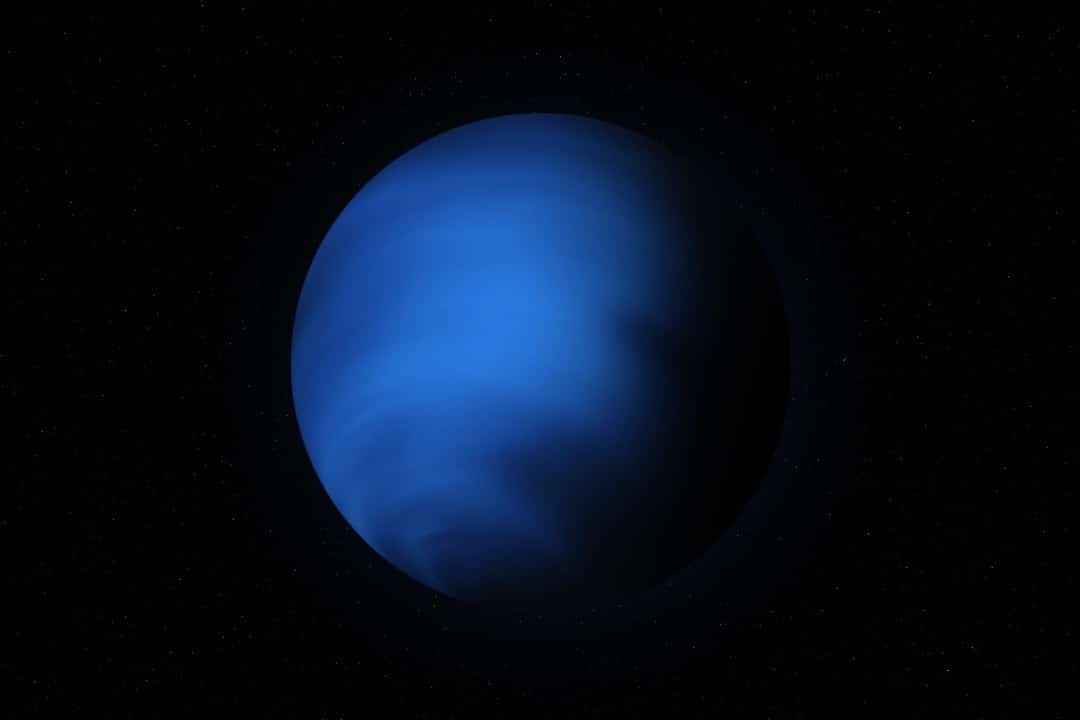
Nasa’s Voyager 2 probe performed the only close flyby of Urano in January 1986, collecting crucial data on the gas giant. Cientistas of Southwest Research Institute, in the Estados Unidos, announced this week a reanalysis that explains a nearly four-decade-old enigma related to the planet’s radiation belts. The research, published in the journal Geophysical Research Letters, indicates that exceptionally high levels of energetic electrons detected by the probe were influenced by an intense solar wind storm, and do not represent the normal state of the Uranian magnetosphere.
This discovery comes amid increased solar activity in the 25-year cycle of Sol, which affects distant planets like Urano. The flyby of Voyager 2, which occurred 39 years ago, occurred during a rare compression of the magnetosphere caused by charged particles ejected from Sol, which altered radiation measurements. The analysis compares data from 1986 with similar events observed in Terra in 2019, revealing identical patterns of electron acceleration by high-frequency waves.
The radiation belts, donut-shaped regions around the planet, appeared with an intensity comparable only to that of Júpiter, according to initial readings. However, the absence of plasma in the Uranian magnetosphere during the flyby caused confusion, as plasma is essential to sustain such structures on other planets. The new interpretation suggests that the solar event temporarily depleted the plasma and injected extra energy into the electrons, creating a skewed view of the Uranian environment.
- Electron radiation in Urano reached levels 10 times higher than expected for an ice giant.
- Comparison with Terra: Evento from 2019 increased energy by 50% in a few hours.
- High chorus waves: Frequências accelerated particles rather than dispersing them into the atmosphere.
- Implication: Necessidade of new mission for unbiased data.
Spatial conditions during flyby
The magnetosphere of Urano, inclined at 59 degrees in relation to the axis of rotation, was already considered unique before 1986. time, resulted from a region of co-rotating interaction in the solar wind, which generates waves capable of propelling electrons to energies of up to 10 MeV.
Researchers noted that days before the flyby, the dynamic pressure of the solar wind was low, allowing for an expanded magnetosphere. At the time of the probe’s passage, however, the flow of particles increased dramatically, overwhelming the magnetic field and altering the internal dynamics. Essa compression not only explained the plasma depletion, but also why the moons of Urano appeared inactive, with no sources of particles to power the belts.
The 1986 solar event was similar to storms affecting Terra, where bursts of plasma distort the belts of Van Allen. Em Urano, the 2.7 billion kilometer distance from Sol makes such impacts less frequent but more intense due to the low basal plasma density. The reanalysis used modern plasma physics models to simulate the scenario, confirming that the waves generated by the storm accelerated electrons instead of losing them to the atmosphere, as expected at the time.
Comparative analysis with Terra
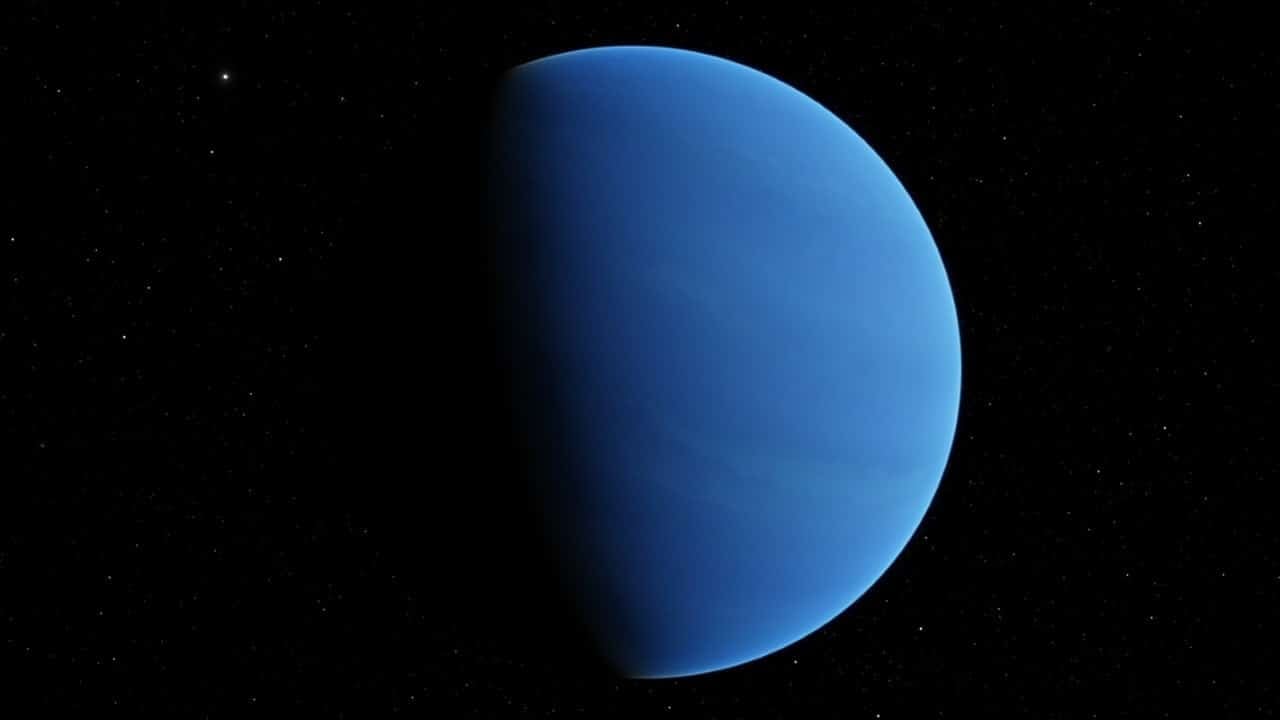
Scientists have applied recent knowledge about Earth’s magnetosphere to reinterpret Uranian data. In 2019, a solar storm on Terra caused an energy spike in the radiation belts, with electrons gaining relativistic speeds in hours. The chorus wave patterns observed at the time exactly mirror the emissions captured by Voyager 2 in Urano, suggesting a universal mechanism in planetary magnetospheres.
The comparison highlighted that without the solar event, the Urano belts would be fainter, in line with models for ice giants like Netuno. Essa comparative approach, which integrates observations from multiple Earth-based missions, allows for a more accurate understanding of plasma physics in distant environments. In the case of Urano, the analysis reveals that the planet is not an outlier, but rather a victim of unfortunate timing during the flyby.
Additionally, the research emphasizes technological advances since 1986, such as more sensitive sensors on satellites like Van Allen Probes. Esses instruments captured electron accelerations by chorus waves under controlled conditions, validating the hypothesis for Urano. The similarity between the events reinforces the idea that Sol uniformly influences the solar system, even on distant scales.
The Uranian magnetosphere, with its extreme obliquity, responds in an amplified way to solar perturbations, which may explain previously undetected seasonal variations. Essa integrated vision not only solves the 1986 puzzle, but opens the door to predictions of future behavior based on current solar monitoring.
Implications for future missions
The reanalysis reinforces the urgency of a new mission to Urano, proposed by A dedicated probe could map diurnal variations in the magnetosphere, capturing normal states absent in 1986.
Projects like Uranus Orbiter and Probe aim to orbit the planet for years, measuring radiation in multiple solar contexts. Isso would allow us to quantify the frequency of magnetospheric compressions and their impact on moons like Miranda and Titânia. Além Furthermore, modern instruments would detect low-density plasma, resolving debates about internal particle sources.
The study also impacts modeling of similar exoplanets, where remote solar events shape habitability. Para Urano, the discovery corrects perceptions of a hostile environment, suggesting a more dynamic and less extreme magnetosphere than previously thought.
Chorus waves and particle acceleration
Chorus waves, low-frequency electromagnetic emissions, were the most intense recorded by Voyager 2 throughout the interstellar flight. Inicialmente interpreted as scattering electrons for the Uranian atmosphere, they are now seen as accelerators, injecting extra energy into the belts. Essa duality, observed in Júpiter and Saturno, depends on conditions such as plasma density and propagation angle.
During the flyby, these waves reached amplitudes that, in Earth models, increase electron flows by orders of magnitude. The 1986 solar storm, with wind speeds above 600 km/s, generated the ideal environment for such acceleration, explaining why Urano exhibited radiation from 100 keV to 10 MeV with no apparent plasma sources.
Remaining mysteries of the Uranian magnetosphere
Despite the advance, questions persist about the internal composition of Urano. The observed plasma depletion may indicate low volcanic activity on the moons, or simply a transient effect of compression. Futuras observations from Telescópio Espacial James Webb, which detected auroral emissions in 2023, complement data from Voyager, but in situ measurements are essential.
The magnetic obliquity of Urano creates asymmetries that amplify responses to solar winds, potentially leading to irregular auroras. Essa unique feature, combined with the 84-year orbital cycle, suggests drastic seasonal variations not captured in 1986. Current research highlights the need for continued monitoring to unravel these patterns.
Furthermore, computer simulations indicate that frequent compressions could modulate the planet’s internal heat, affecting its methane and hydrogen atmosphere. Esses elements maintain Urano as a priority target for exploration, promising insights into the formation of the outer solar system.
