

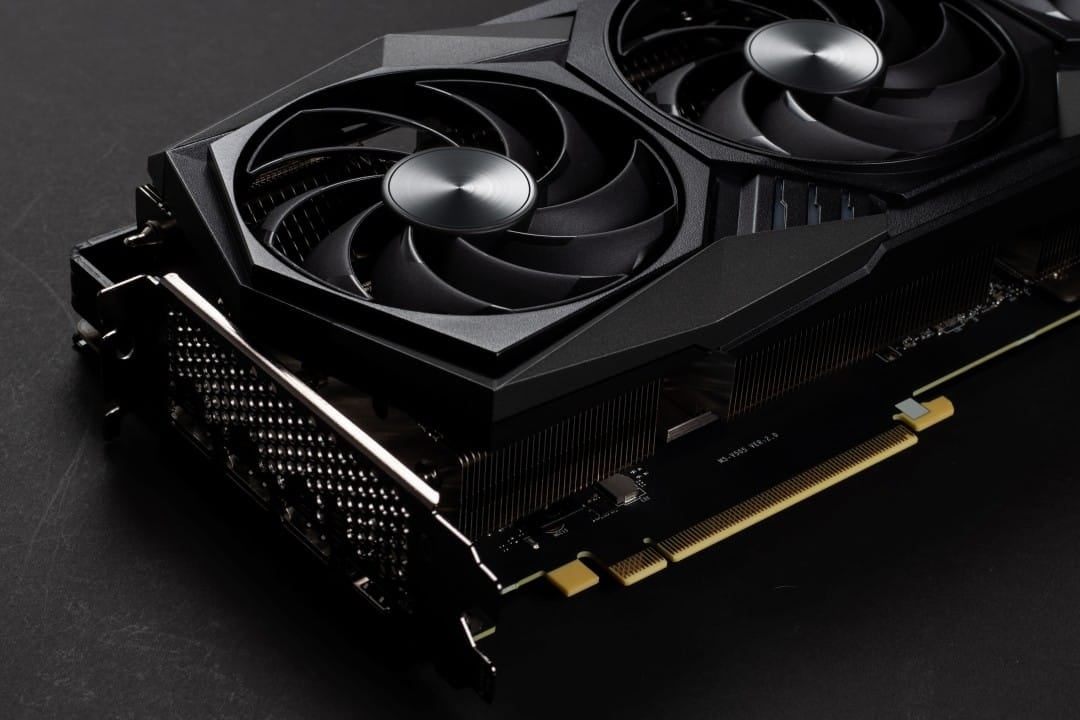
An NBD shipping manifest revealed details about the Intel Arc B770, the next graphics card in the Battlemage line. The document indicates a TDP of 300 watts for the model, higher than the 225 watts of the predecessor Arc A770. The information emerged on December 8, 2025, during analyzes of initial engineering submissions.
The GPU, based on the BMG-G31 chip, represents the top of the Xe2 architecture and targets the mid-high market segment. Fabricantes and enthusiasts await the launch, scheduled for early 2026.
- Part number: N38341-001, exclusive to Intel consumer GPUs.
- Comparison with B580: 58% higher TDP and 60% more Xe2 cores.
- Memory: 16 GB GDDR6 at 19 Gbps, with 256-bit bus.
Technical specifications confirmed in registration
The manifesto highlights the focus on performance for 1440p games and professional tasks. The Arc B770 uses the larger BMG-G31 chip, with 32 Xe2 cores and 4096 shaders. Essa setting increases bandwidth to 608 GB/s.
Initial engineering tests indicate support for PCIe 5.0 x16, optimized for modern systems. The card should surpass the B580 in benchmarks, with gains of up to 50% in graphics loads.
Pro versions also derive from the same chip, adapted for workstations.
Comparison of consumption and performance with rivals
The increase in TDP reflects demands from the Xe2 architecture, which prioritizes efficiency at high resolutions. The A770 consumed 225 watts, but had limitations in ray tracing; the B770 fixes this with optimizations.
Rivals like the RTX 5060 Ti and RX 9060 XT operate in similar ranges, but the Intel bets on an affordable price. Estimativas suggest $350 for the base model.
The 33% increase in TDP over the A770 requires robust power supplies, above 650 watts.
Advances in the Battlemage architecture for the market
The Battlemage line introduces improvements in drivers and support for XeSS 2.0, Intel’s upscaling technology. The B770 integrates these features for smooth AAA titles.
Production takes place at Vietnã, with packaging shipments since June 2025. Atualizações in software such as VTune

Details of the BMG-G31 chip and its variants
The BMG-G31 appears as the heart of the B770, with a die larger than the G21 of the B580. Essa expansion allows more transistors for parallel processing. The GPU supports multi-GPU in professional workloads.
Four configurations derive from the chip: three Pro and one consumer. The consumer model focuses on gamers, with factory overclocking in customized variants.
Preliminary benchmarks on Linux show stability, with PCI ID E221. Intel coordinates the launch with Panther Lake CPUs, for integrated ecosystems.
8 MB L2 cache developments speed up accesses on complex textures.
Impact on the discrete GPU segment
The market reacts to the leak with optimism for affordable options. The Intel gains ground on desktops, where the B580 already sells well.
Manufacturers like ASRock prepare references, with advanced cooling to 300 watts. Preços of GDDR6 memory influences the final cost, but analysts predict competitiveness.
The B770 can increase Intel’s share to 15% in the midsize market.
Expanded memory and bus configurations
The 256-bit width doubles that of the B580, optimizing 4K data streams. Velocidade of 19 Gbps ensures low latency on 16GB VRAM.
This benefits video editors and 3D modelers, with gains in rendering. Comparado to A770, the shader upgrade doubles the computational capacity.
Support for modern interfaces on the B770
The adoption of PCIe 5.0 x16 accelerates transfers in hybrid setups. Sistemas with Core Ultra 3 explore native synergies.
Driver updates reduce overhead by 20%, according to internal tests. The card integrates HDMI 2.1 and DisplayPort 2.0 for multiple monitors. Variantes mobile test chip in thin laptops such as Surface Laptop 7.
Logistical preparations and testing schedule
Initial shipments include engineering samples for validation. NBD has been managing global logistics since Vietnã. CES 2026 should reveal live demos, with benchmarks against competitors.
Test phases cover thermal stability under prolonged loads. Intel prioritizes compatibility with recent Windows 12 and Linux kernels.
Main upgrades compared to the previous generation
Transitioning to Xe2 improves energy efficiency per watt despite high TDP. Ray tracing gains 40% in performance via dedicated hardware.
XeSS 2.0 integrates AI for upscaling, rivaling DLSS in quality.
- Efficiency: 25% more FPS per watt than Alchemist.
- Shaders: 4096 units, focus on parallelism.
- Cache: Expansão for dynamic textures.
These advancements position the B770 as a versatile option for creators.
Price Expectations and Initial Availability
Rumors point to a launch in January 2026, with limited stock. Preço starting at US$349 competes directly with mid-range.
Global distribution via partners such as Newegg and Amazon begins in Américas. Atualizações BIOS ensures broad compatibility on Z790 motherboards. The Intel monitors feedback for final firmware adjustments.