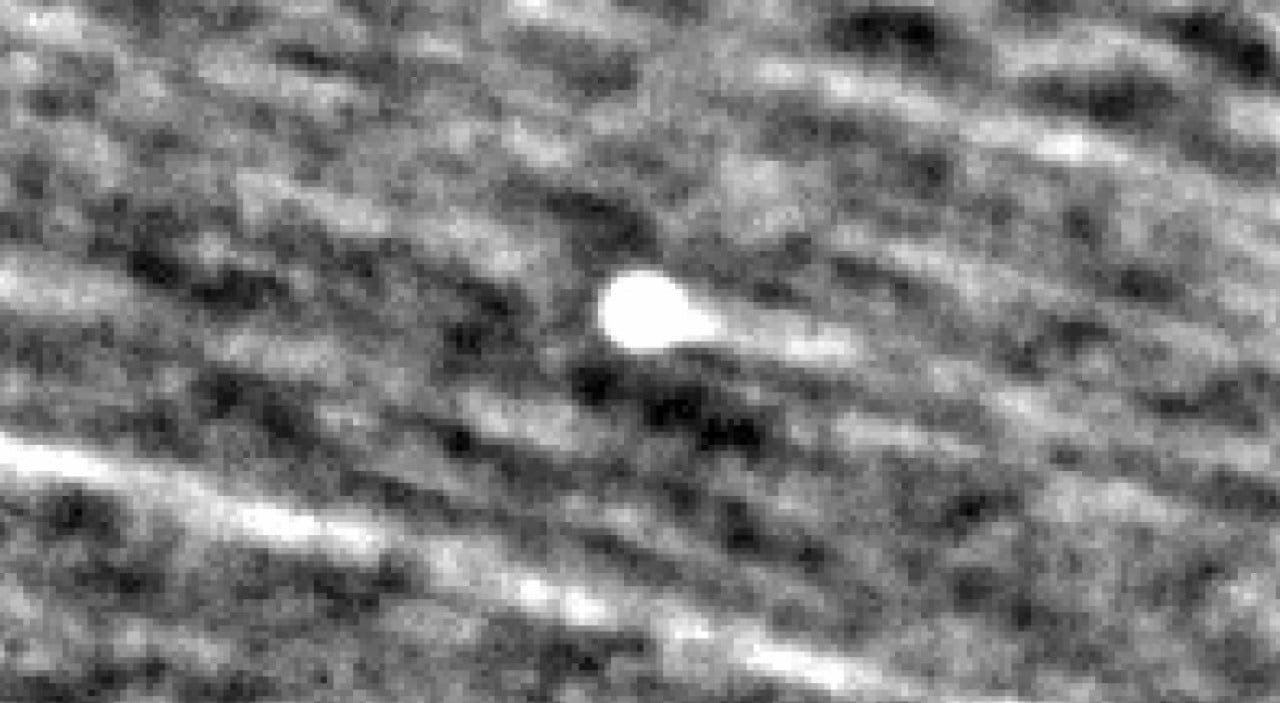
As 2025 approaches, NASA’s deep space observation initiatives are poised for a potentially groundbreaking year, with scientists and astronomers keenly anticipating the discovery and study of new celestial bodies, including the tantalizing prospect of a third interstellar object, colloquially referred to as a “3I Atlas” comet. This hypothetical designation reflects the ongoing vigilance of global astronomical surveys, such as the ground-based ATLAS (Asteroid Terrestrial-impact Last Alert System), which continuously scan the heavens for transient phenomena. The agency’s commitment to advancing our understanding of the cosmos means that any such discovery would immediately trigger a coordinated international response, leveraging a formidable array of Earth-based telescopes and orbiting observatories to gather critical data. This collective effort aims to provide unprecedented insights into the origins of our solar system and the broader galactic environment.
The scientific community holds immense interest in interstellar objects, which offer direct samples of material from other stellar systems, providing unique clues about planet formation and stellar evolution beyond our sun. Each new visitor from interstellar space presents a rare opportunity to study exotic compositions and dynamics not found in our own cosmic neighborhood. The potential for a “3I Atlas” type discovery in 2025 underscores the excitement surrounding next-generation observational capabilities and the ever-present possibility of unexpected cosmic encounters.
NASA’s preparations for such events include:
– Upgrading data processing pipelines to handle rapid influxes of observational data.
– Developing flexible mission planning protocols to quickly re-task assets like the Hubble Space Telescope or the James Webb Space Telescope.
– Fostering international collaboration agreements for shared observation time and expertise.
The quest for interstellar visitors
The search for interstellar objects has intensified significantly since the detections of 1I/’Oumuamua in 2017 and 2I/Borisov in 2019. These pioneering discoveries confirmed that objects from other star systems routinely traverse our solar system, albeit infrequently observed. Scientists are now better equipped with predictive models and enhanced survey technologies to increase the likelihood of detecting and characterizing future interstellar visitors.
Modern astronomical surveys are designed to sweep vast swathes of the sky, detecting faint, fast-moving objects that might otherwise go unnoticed. The continuous monitoring provided by networks like ATLAS is crucial for identifying these transient phenomena early enough to initiate follow-up observations. This proactive approach ensures that if a “3I Atlas” or similar object enters our detectable range in 2025, the scientific community will be ready to act swiftly.
Advanced detection and tracking systems
NASA’s observational infrastructure, both terrestrial and space-based, plays a pivotal role in detecting and tracking comets and interstellar objects. Ground-based observatories contribute significantly by providing initial discovery and rapid trajectory calculations, essential for planning subsequent, more detailed studies. These facilities are continuously being refined with more sensitive detectors and wider fields of view.
Complementing these ground efforts are NASA’s space telescopes, which offer unparalleled clarity and access to wavelengths unobscured by Earth’s atmosphere. Instruments like the James Webb Space Telescope are capable of analyzing the spectroscopic signatures of these distant travelers, revealing their chemical composition, volatile content, and physical characteristics. Such detailed analysis is vital for distinguishing between interstellar and solar system objects, and for understanding their unique formation environments.
Unraveling cosmic origins with 3I Atlas
The prospect of a “3I Atlas” comet, whether an interstellar visitor or a new discovery from the ATLAS survey, represents a unique opportunity to probe the conditions of other star systems and the early solar nebula. Interstellar objects carry pristine material from their birth environments, offering a direct window into processes that occurred billions of years ago in distant stellar nurseries. By studying their composition, velocity, and trajectory, scientists can deduce information about the types of planetary systems they originate from, and how common different chemical elements are across the galaxy. Such data provides crucial context for our understanding of how planets form, the prevalence of water and organic molecules in space, and ultimately, the potential for life beyond Earth.
NASA’s collaborative observational strategies
Effective observation of rare and fleeting events like the passage of a “3I Atlas” comet requires seamless global collaboration. NASA works closely with international partners, including the European Space Agency (ESA) and various national observatories, to share data, coordinate telescope time, and pool expertise. This collaborative model maximizes the chances of successful observation and comprehensive data collection, ensuring that no critical information is lost due to geographical or technical limitations.
In 2025, these partnerships will be crucial for leveraging diverse observational capabilities across different hemispheres and spectral ranges. From radio telescopes mapping molecular emissions to optical and infrared instruments capturing visual and thermal properties, each facility contributes a unique piece to the cosmic puzzle. The coordinated effort allows for continuous monitoring as objects traverse the sky, providing a complete picture of their behavior and characteristics.
Advanced data sharing platforms and communication networks are also being enhanced to facilitate rapid dissemination of alerts and observational targets among participating institutions. This ensures that once a potential “3I Atlas” is identified, follow-up observations can commence almost immediately across the globe.
Preparing for the 2025 observational window
The year 2025 is anticipated to be a period of significant advancements in astronomical observation, with new technologies and methodologies coming online. NASA’s strategic planning includes not only the readiness of its existing fleet but also the integration of data from new instruments and missions. This forward-looking approach ensures that the agency remains at the forefront of cosmic discovery.
Training programs for astronomers and data analysts are continuously updated, focusing on the specific challenges posed by fast-moving, faint objects. These programs emphasize rapid data interpretation, anomaly detection, and the use of artificial intelligence to sift through vast datasets. The goal is to minimize reaction time between discovery and detailed scientific analysis.
Logistical preparations also involve securing adequate computational resources for modeling trajectories, simulating potential observation scenarios, and processing the enormous volumes of data expected from multiple observatories. These resources are critical for turning raw telescope images into meaningful scientific insights.
Furthermore, public outreach initiatives are being planned to engage and inform the global community about these exciting scientific endeavors. NASA understands the importance of sharing these discoveries with the public, inspiring the next generation of scientists and fostering a greater appreciation for space exploration.
Scientific implications and public engagement
A confirmed sighting and detailed study of a “3I Atlas” comet or similar interstellar object in 2025 would profoundly impact our understanding of planetary science and astrobiology. Such an event would not only refine our models of stellar system evolution but also ignite public imagination, highlighting the dynamic and interconnected nature of the universe.