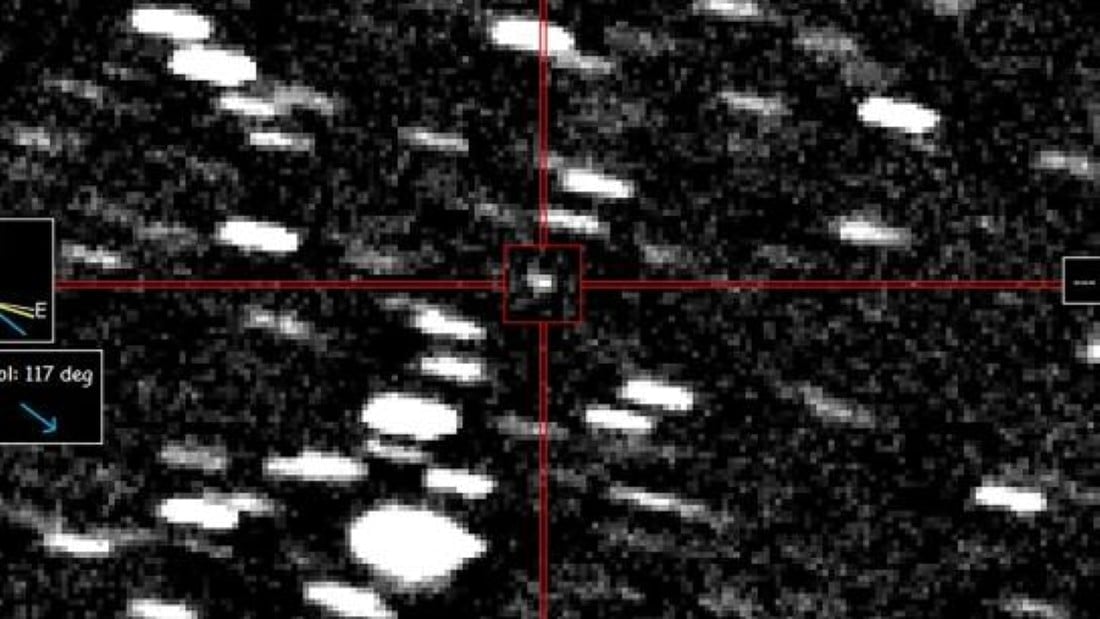
Scientists worldwide are currently tracking Comet 3I Atlas, a celestial body recently identified by the Panoramic Survey Telescope and Rapid Response System (Pan-STARRS). This comet, now under intense scrutiny by Nasa and other astronomical institutions, is projected to make its closest approach to Earth in 2025, offering unprecedented opportunities for research and public viewing. Its unique trajectory and composition promise to reveal new insights into the early solar system.
The discovery has prompted a coordinated effort among international observatories, leveraging advanced telescopic arrays to gather preliminary data. Researchers are particularly interested in its volatile ice content and dust trail, which can illuminate processes of planetary formation. The upcoming approach is anticipated to provide a rare chance to study a relatively pristine object from the outer reaches of our solar system.
Discovery and designation of comet 3I Atlas
The initial detection of Comet 3I Atlas was a collaborative triumph, involving automated sky surveys that continuously scan vast areas of the night sky. Once flagged, the object underwent verification by multiple observatories to confirm its cometary nature and orbital path. This rigorous process ensures that transient celestial visitors are accurately identified and cataloged for future study.
Following its confirmation, the comet received its official designation, 3I Atlas, reflecting its discovery source and sequential numbering. This formal naming allows the scientific community to track and discuss the object consistently, facilitating data sharing and collaborative research initiatives. The designation also signifies its importance as a new subject for detailed astronomical investigation.
Nasa’s ongoing observation efforts
Nasa’s commitment to understanding comets is evident in its immediate response to the discovery of 3I Atlas. The agency has allocated significant resources, deploying both ground-based telescopes and space-based assets, to monitor the comet’s evolution as it approaches the inner solar system. These efforts are crucial for predicting its behavior and potential visibility.
The Hubble Space Telescope and the James Webb Space Telescope are expected to play pivotal roles in capturing high-resolution images and spectroscopic data. These instruments can provide detailed information about the comet’s nucleus, coma, and tail, offering clues about its chemical makeup and physical properties. Such detailed observations are vital for deciphering the conditions under which comets form.
Furthermore, Nasa-funded research teams are developing advanced modeling techniques to simulate Comet 3I Atlas’s trajectory and potential interactions with solar wind. These models will help scientists anticipate any changes in its brightness or fragmentation events, ensuring optimal planning for observational campaigns throughout 2025. The data collected will also contribute to understanding broader cometary dynamics.
Understanding cometary composition and origins
Comets are often referred to as “dirty snowballs” or “cosmic fossils” because they retain pristine material from the solar system’s birth. Studying Comet 3I Atlas offers a direct window into the primordial conditions that existed billions of years ago. Its composition, including various ices and organic molecules, can shed light on the building blocks of planets and potentially the origins of life.
Key aspects scientists hope to study include:
The potential for a visible spectacle in 2025
The anticipation surrounding Comet 3I Atlas’s 2025 approach is not limited to the scientific community; there is considerable public interest in its potential visibility. Depending on its exact trajectory and the amount of dust and gas it ejects, the comet could become a naked-eye object for observers in certain parts of the world. Such events are rare and generate widespread excitement.
Astronomers are continually refining their predictions regarding its brightness and optimal viewing times. While a definitive forecast is still developing, the prospect of a prominent comet gracing our skies in 2025 adds a captivating dimension to this scientific endeavor. Public outreach initiatives will likely be launched to guide enthusiasts on how and when to best observe this celestial visitor.
Scientific implications of the close approach
The close approach of Comet 3I Atlas in 2025 represents a critical opportunity for advancing our understanding of cometary science. Data gathered during this period will be instrumental in refining models of solar system evolution, investigating the delivery of water and organic materials to terrestrial planets, and assessing potential hazards from similar objects. Scientists will analyze changes in the comet’s activity, its interaction with the solar environment, and any structural alterations it undergoes. This comprehensive study will not only enhance fundamental knowledge but also contribute to planetary defense strategies by improving our ability to characterize and track near-Earth objects. The detailed information about its composition and physical properties will be compared with other known comets, helping to classify it and understand its origins, whether from the Kuiper Belt or the Oort Cloud.
Future missions and comet studies
Lessons learned from the observation of Comet 3I Atlas will undoubtedly inform the design and objectives of future space missions targeting comets. Agencies like Nasa are continuously planning probes that could rendezvous with or even sample cometary material, offering an even more detailed analysis than remote observation. This ongoing research ensures that our knowledge of these ancient remnants of the solar system continues to expand.
