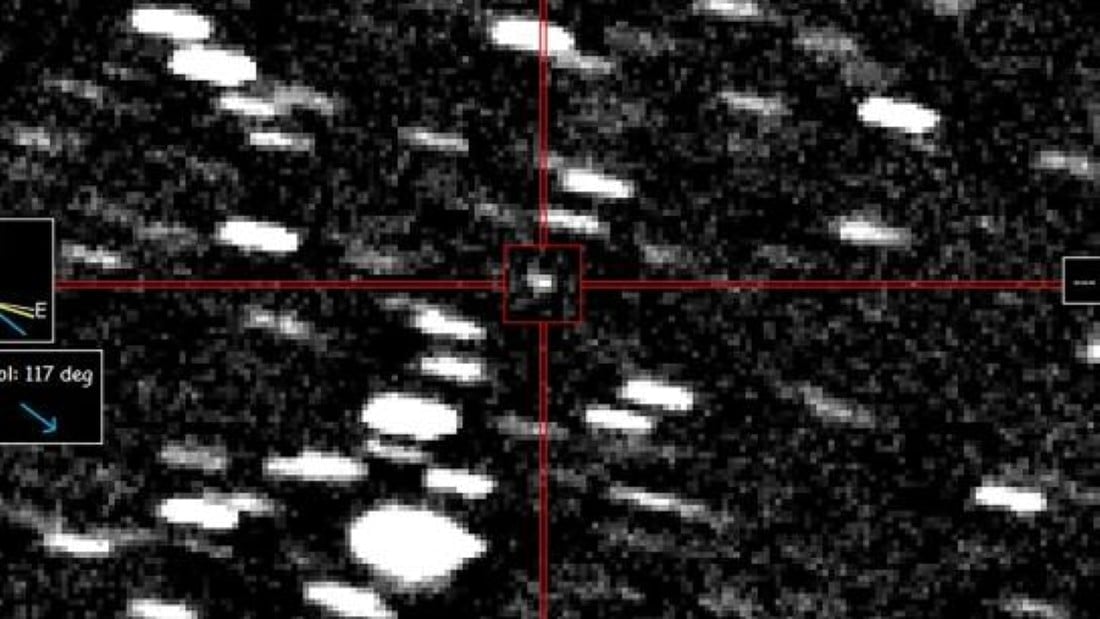
The interstellar object 3I/ATLAS, the third of its kind identified in our solar system, will make a close and safe pass by Terra on December 19, 2025. Este astronomical event will position the comet at a distance of approximately 270 million kilometers from our planet.
The comet’s current trajectory confirms its origin outside the solar system, a fact that has been the subject of intense study since its discovery. The relative speed of 3I/ATLAS in relation to Terra will reach a remarkable 58 km/s during its journey.
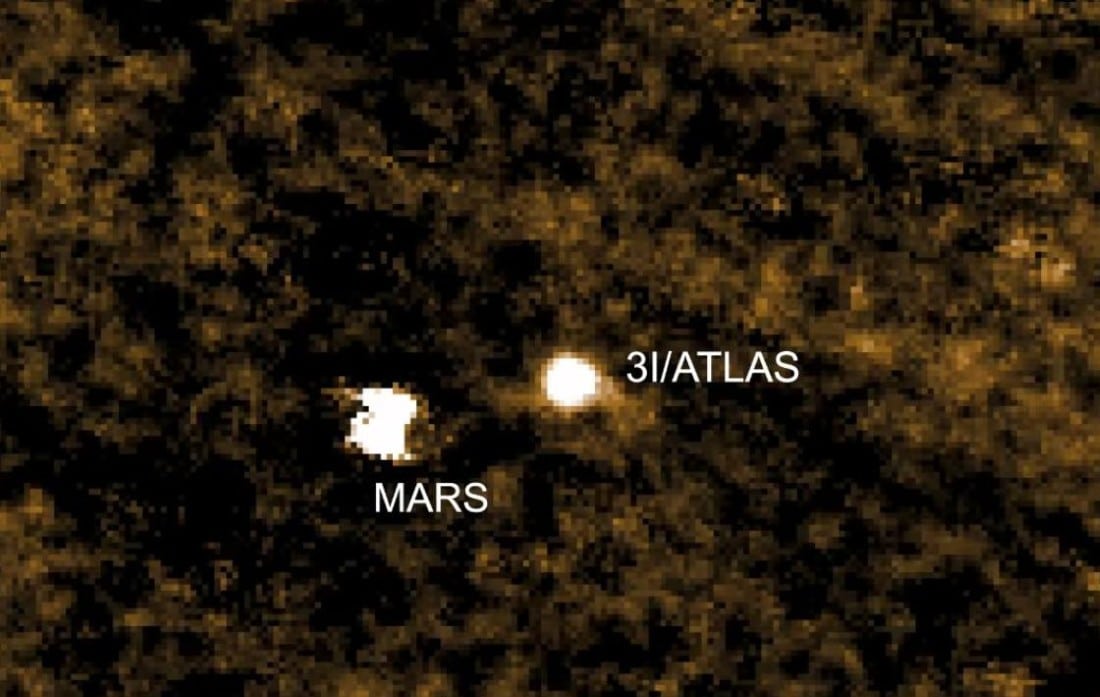
Scientists and astronomers around the world are monitoring the comet to collect crucial data about its composition and behavior. Importante emphasize that there is no threat of impact with Terra, guaranteeing the safety of the planet during this passage.
Discovery and classification
Astronomers identified comet 3I/ATLAS using the ATLAS survey system (Asteroid Terrestrial-impact Last Alert System) at Chile on July 1, 2025.
Subsequent observations, including analyzes from Hubble and other telescopes, were instrumental in confirming the presence of a distinct coma and tail. The object’s orbital eccentricity, which exceeds 6, served as conclusive evidence of its origin outside the gravitational limits of our solar system.
Recent observations detail characteristics
Telescópio Espacial Hubble carried out a detailed observation of comet 3I/ATLAS on November 30, 2025, when the object was 286 million kilometers from Terra. The captured images revealed a prominent blue coma and a well-defined dust tail, offering crucial visual information.
The Agência Espacial Europeia (ESA) mission Hera, originally designed to study binary asteroids, also trained its instruments on the comet, contributing additional data on the formation and dynamics of its tail. Collaboration between different space agencies amplifies the ability to collect information.
In addition to Hubble and Hera, other missions such as Psyche, Lucy and MAVEN are recording trajectory and composition data from 3I/ATLAS. Essa observation network allows a multifaceted understanding of the comet, from its internal structure to its interaction with the interplanetary environment.
Chemical composition reveals cold origins
Observations by the Atacama Large Millimeter/submillimeter Array (ALMA) have revealed a remarkable chemical composition in the coma of comet 3I/ATLAS. Foram detected large amounts of methanol and hydrogen cyanide, organic compounds that indicate an extremely cold formation environment.
The presence of these elements suggests that the comet originated in very distant and icy regions of its home planetary system. Unlike typical comets in our solar system, 3I/ATLAS has an unusual abundance of water ice and diatomic sulfur.
The absence of more complex carbon chain compounds in its chemical composition reinforces the theory that the comet formed in the outer regions of its stellar system. Esta feature offers a window into the primordial conditions of other planetary systems in formation.
Researchers are focusing on analyzing these volatiles and primordial organic compounds. In-depth study of the composition of 3I/ATLAS could provide valuable clues about the building blocks of life in different cosmic environments, expanding our knowledge of astrobiology.
Trajectory and speed of the interstellar object
Comet 3I/ATLAS entered the solar system at an impressive speed of 58 km/s, surpassing the speed of previously observed interstellar comets. Essa high speed is one of the characteristics that distinguish the object and corroborate its extrasolar origin.
Perihelion, the point of closest proximity to Sol, was reached on October 29, 2025, at a distance of 1.4 astronomical units. Após its passage through Terra in December, the comet will continue its journey, heading out of the solar system on a hyperbolic trajectory.
The hyperbolic orbit of 3I/ATLAS is a clear indication that it is not gravitationally bound to our Sol. Acredita its orbital period in its system of origin is between 7.6 million and 140 million years, demonstrating its long cosmic journey.
Visibility for ground observers
Astronomy enthusiasts had the opportunity to observe comet 3I/ATLAS in November 2025, in dark skies over rural areas. The comet appeared as a diffuse blur, with a discernible tail, through common observing equipment. Sua visibility could extend until January 2026, before beginning to decline.
Scientific importance of 3I/ATLAS
Comet 3I/ATLAS offers a unique opportunity to deepen understanding of the formation of other stellar systems. The data collected from their observation is crucial for refining orbital and compositional models of celestial bodies.
Current research focuses on volatiles and primordial organic compounds found on the comet. Esses elements are essential for understanding the initial conditions of planetary formation and the distribution of materials in the universe.
Core dynamics and stability
The 3I/ATLAS core, with an estimated diameter of between 440 meters and 5.6 kilometers, has demonstrated constant activity, ejecting gas and dust at different speeds. Partículas smaller ones are expelled at about 22 m/s, while the larger ones reach approximately 2 m/s.
A notable increase in its brightness, of 5 to 6 magnitudes, was recorded in August 2025, indicating a period of increased activity. Desde so, the comet’s dynamics have remained stable, without new bursts of brightness or unexpected ejections.
