

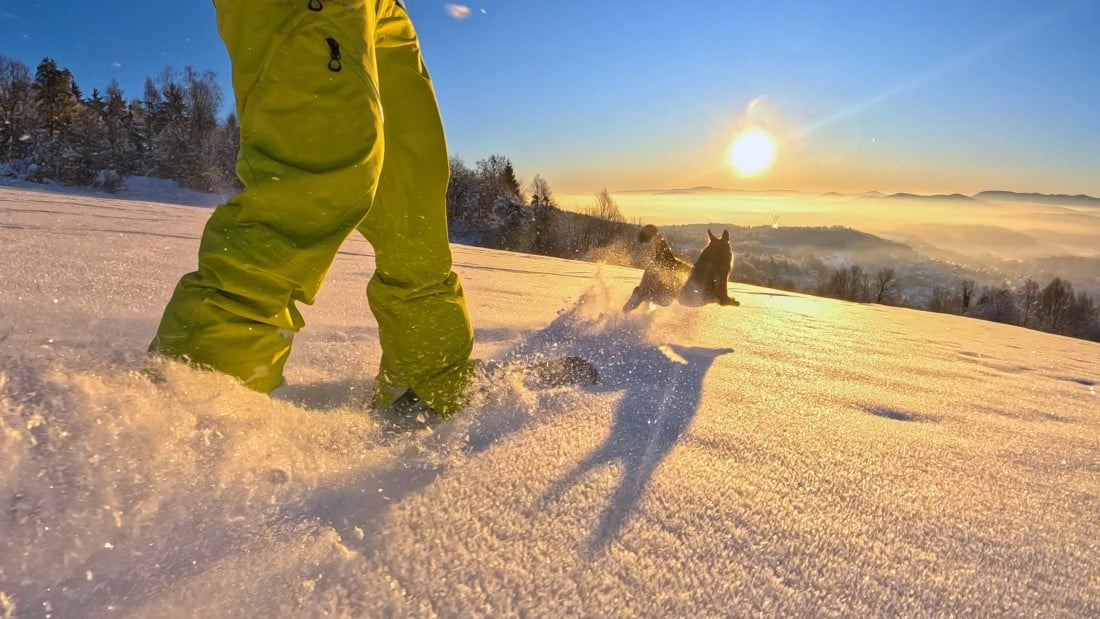
Canadá records an intense cold wave in December 2025, with temperatures reaching -53 degrees Celsius in the territory of Yukon. Essa mark, observed in places like Braeburn, represents one of the lowest values of the period and affects several regions of the country.
The main cause involves the disruption of the polar vortex, which allows Arctic air masses to descend south. Províncias like Alberta, Saskatchewan and Manitoba face extreme cold alerts, with thermal sensations between -40 and -45 degrees Celsius due to the winds.
Meteorologists indicate that the phenomenon will persist until the end of the month in some areas, with the possibility of further drops in temperature after Natal.
Origin of the atmospheric phenomenon
The polar vortex consists of a circulation of cold air in the stratosphere that normally contains the low temperatures in polar regions. Quando Sudden stratospheric warming occurs, this structure weakens or splits, releasing Arctic air to lower latitudes.
In the winter of 2025/2026, an early disruption split the vortex, directing a lobe of cold air toward América from Norte. Esse pattern, known as “Polar Express”, generates successive waves of intense cold in Canadá and parts of Estados Unidos.
Long-term forecasts point to recurring episodes of cold in January, also influenced by phase La Niña in Pacífico.
Most affected regions
The western and central provinces suffer the most severe impacts. No Yukon and in Alberta, temperatures fell to values close to -50 degrees Celsius, with alerts issued by Environment Canada.
- Thermal sensations of -50 degrees in Whitehorse and Dawson City.
- Risk of rapid freezing on exposed skin.
- Interruptions in transport and energy supply in isolated areas.
- Associated blizzards in eastern parts such as Ontario and Quebec.
Manitoba and Saskatchewan record historic lows for December, affecting daily activities and infrastructure.
These events require precautions such as reducing energy consumption to avoid overloading the electrical grid.
Recorded temperatures
Stakes highlight cold records in different locations.
- Yukon: up to -53 degrees Celsius at Braeburn.
- Alberta: lows below -40 degrees with strong winds.
- Central Prairies: Wind chills of -45 degrees persisting.
- Northern parts: values close to seasonal records.
Comparisons with previous years show that these temperatures have not occurred at this intensity in some seasons for decades.
Winter forecast
The cold pattern is expected to continue into early 2026 for much of Canadá. Modelos indicate maintenance of the weakened polar vortex, favoring new Arctic incursions.
Regions like British Columbia remain milder due to oceanic influences. In the east, heavy snowfalls accompany cold fronts.
Authorities recommend constant monitoring of weather alerts to minimize risks to the population.
Possible impacts on the continent
The division of the polar vortex concentrates the main cold in the América of the Norte. Nos Estados Unidos, central and eastern parts face similar waves, with snow and ice.
The Atlântico acts as a thermal barrier, reducing the chances of direct transfer to the Europa in the short term. Previsões indicate milder patterns in Velho Continente during the period.
This contrast highlights the regional variability of the effects of the weakened polar vortex.
Protection measures adopted
Provincial governments activate emergency plans for extreme cold. Abrigos expand capacity in larger cities, and campaigns provide guidance on the risks of hypothermia.
Energy companies ask for moderation in use to avoid blackouts. Escolas and outdoor events adjust schedules in critical areas.
These actions aim to protect vulnerable people, such as the elderly and homeless people, during cold peaks.
Current climate context
The winter of 2025/2026 begins with below-average temperatures in large areas of the Canadá. The combination of La Niña and stratospheric disruption reinforces the cold pattern.
Observations show an increase in the frequency of extreme events in recent years. Continuous Monitoramento helps predict seasonal variations.