
Chevrolet launches the long-awaited Tracker 2026, a restyled compact SUV that will arrive at dealerships in July 2025. The innovations seek to consolidate its position among sales leaders, offering a renewed proposal to Brazilian consumers.
With a price range that starts at R$ 119,900 in the entry-level AT 1.0 turbo version, the Tracker 2026 reaches R$ 190,590 in the top of the line RS, seeking competitiveness against rivals such as the Hyundai Creta, Honda HR-V and Volkswagen T-Cross. Esta pricing strategy aims to attract different buyer profiles, from those looking for savings to those who prioritize equipment and performance.
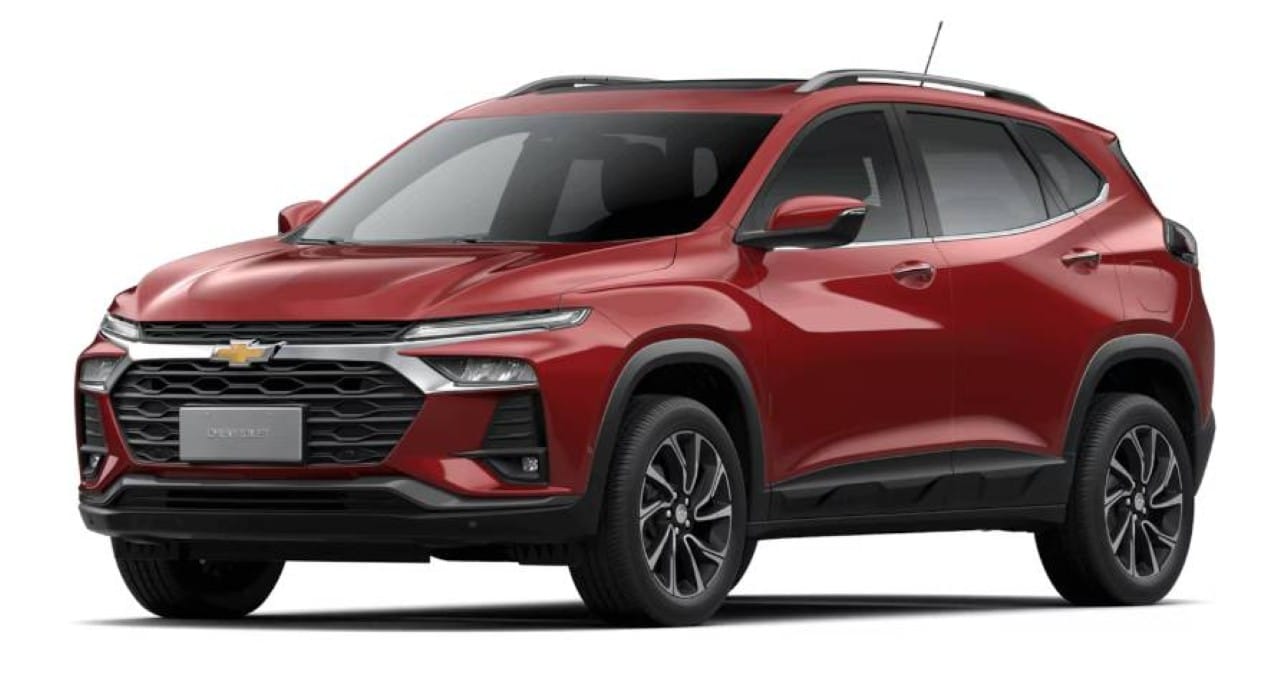
The updates include a redesigned front end, a renewed interior with an 11-inch multimedia center and an extended warranty, key points that the brand hopes will positively influence the purchasing decision.
Modernized aesthetics and technological cabin
The Tracker 2026 incorporates the latest global visual identity of the Chevrolet, adopting headlights divided into two blocks and an enlarged front grille. The rear lights also received a new graphic, giving the vehicle a more robust and contemporary presence on the streets, aligning it with the brand’s other SUVs, such as the Blazer and the Equinox.
Inside, the SUV features a more sophisticated cabin, with an 8-inch digital panel that harmoniously integrates with the new 11-inch multimedia center. The Esse set, slightly angled towards the driver, offers an advanced connectivity experience, inspired by recent models such as the Spin and the Montana pickup truck.
Enhanced security and connectivity
The Chevrolet raised the level of connectivity in the Tracker 2026, equipping the 11-inch multimedia center with support for remote updates. Este system integrates the renowned OnStar, which provides concierge and vehicle tracking services, adding value and convenience to the driver’s daily life on their urban and highway journeys.
Active safety features are offered starting with the LTZ trim, including forward collision warning, automatic emergency braking and blind-spot monitoring. Tais technologies aim to help the driver prevent accidents, increasing the level of protection for all vehicle occupants.
All configurations of the SUV have six standard airbags, stability control and hill start assistant, reinforcing the brand’s commitment to protecting occupants in various driving situations. The inclusion of these items from the entry-level versions is an important differentiator in the segment.
Turbo engines and energy efficiency
The Tracker 2026 maintains the 1.0 turbo flex engine options, with 115.5 hp, and 1.2 turbo flex, which delivers up to 141 hp, both coupled to a six-speed automatic transmission. Version 1.0 had its power adjusted to 5.5 hp to adapt to the Programa Carro Sustentável, resulting in a more advantageous IPI range for the consumer.
The 1.2 turbo engine, present in the Premier and RS versions, delivers agile responses, allowing the SUV to accelerate from 0 to 100 km/h in 10.6 seconds. Essa performance is remarkable for the segment, providing dynamism both in the city and on roads.
However, recent tests indicate that fuel consumption has worsened slightly: the 1.2 turbo registers 7.6 km/l in the city with ethanol and 13.7 km/l on the highway with gasoline. Esses numbers are impacted by the greater aerodynamic drag of the new front end, a consequence of the renewed design.
Despite the slight change in consumption, the general performance of the turbo engines remains one of the model’s strong points, balancing power and the proposal of a compact SUV for daily use. The choice between engines will depend on the consumer’s priority regarding economy or performance.
Oil-plated belt: durability and extended warranty
The controversial oil-bathed belt, a component present in turbo engines, was maintained in the Tracker 2026, but the Chevrolet ensures that a new chemical formulation guarantees greater durability. Proprietários of the previous model reported early wear, often associated with the use of oil outside the recommended specifications, generating concerns among consumers.
The brand emphasizes the importance of regular changes and the exclusive use of the correct lubricant to avoid failures, seeking to mitigate previous criticisms. The warranty extension to five years is a direct response to these concerns and an attempt to restore consumer confidence in the component’s durability, despite the absence of a timing chain, a common solution in competing vehicles.
Versions and their differences
The Tracker 2026 is offered in five versions, with a price range that extends from R$119,900 to R$190,590, seeking to meet different demands and budgets in the compact SUV market. Há is also a special edition of 100
Impressions behind the wheel of the Premier 1.2 turbo
The Premier 1.2 turbo version was subjected to an evaluation on a 240 km route, which covered both urban and highway sections in the region of Ouro Preto (MG). The engine demonstrated agile responses, especially when overtaking manoeuvres, ensuring safe driving and good performance on winding roads.
The suspension, calibrated to face roads with uneven paving, provides a good level of comfort, absorbing imperfections in the asphalt efficiently, although it does not offer the same smoothness as models like the Peugeot 2008. The electric steering is precise, but the feedback to the driver could be more communicative, offering a more direct connection with the road.
Market positioning
The SUV stands out for its elevated driving position, which provides excellent visibility, and for its good behavior in curves, providing safety to the driver. Entretanto, the absence of more advanced technologies in a vehicle in this price range, such as the electronic handbrake or a 360-degree camera, which are common in some of its competitors, may be a factor of consideration for part of the public.
