
Telescópio Espacial James Webb (JWST) continues to investigate the exoplanet TRAPPIST-1e, a rocky world located in the habitable zone of its red dwarf star. Localizado about 40 light years from Terra, in the constellation of Aquário, the planet has a similar size and mass to Terra and orbits the star every six days. The recent observations, carried out in multiple transits during 2023 and 2024, use transmission spectroscopy to analyze starlight filtered by the planet’s possible atmosphere. The data obtained so far rule out hydrogen-dominated primary atmospheres, but do not definitively confirm or exclude the presence of a denser secondary atmosphere, such as those found on terrestrial planets in Sistema Solar.
Researchers face significant obstacles due to the high activity of the star TRAPPIST-1, which is an ultra-cool red dwarf with frequent flares and starspots. Essas features cause variations in the observed signals, making it difficult to separate the effects of the planetary atmosphere from stellar contamination.
The TRAPPIST-1 system and the habitable potential of its planets
The TRAPPIST-1 system is home to seven rocky planets, all with sizes close to that of Terra. Três of them, including TRAPPIST-1e, are in the habitable zone, where temperatures allow liquid water to exist on the surface, provided there is a suitable atmosphere. TRAPPIST-1e receives about 60% of the stellar irradiation that Terra receives from Sol, making it one of the most promising candidates for habitable conditions. Estudos indicate that the planet has a slightly higher density than Terra, suggesting a rocky composition with a possible denser iron core.
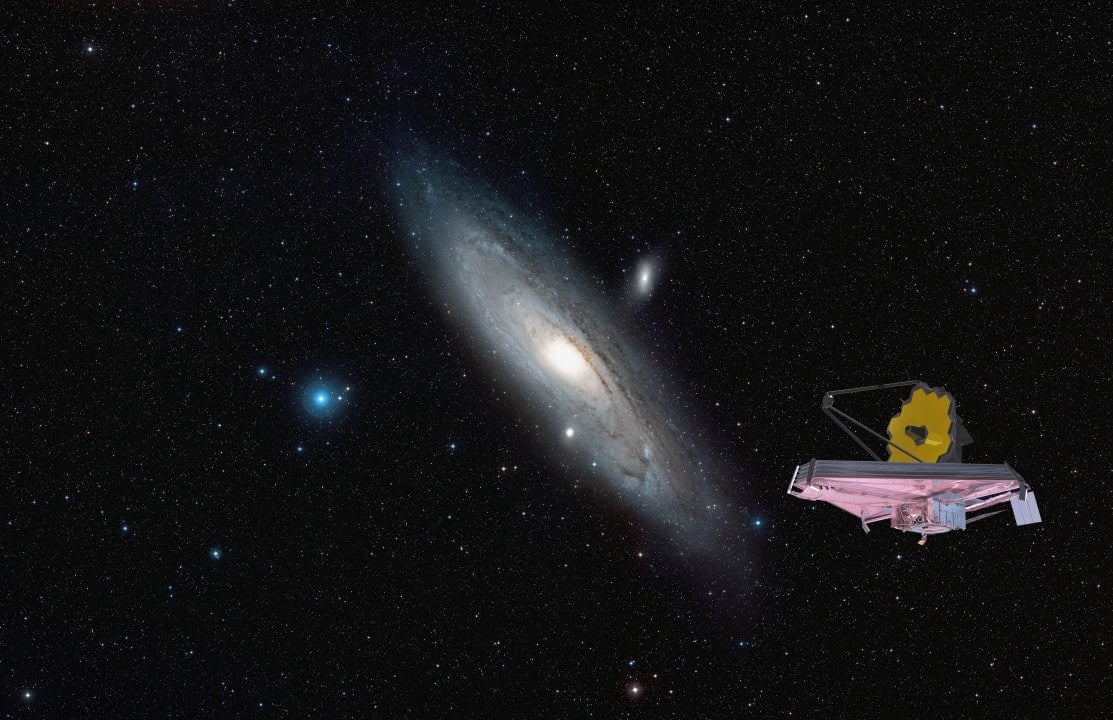
JWST observations focus on transits, when the planet passes in front of the star and starlight passes through its atmosphere. Quatro analyzed transits reveal variations in the spectra that can be attributed to stellar activity, such as flares and heterogeneities on the star’s surface.
Stellar contamination impacts data analysis
The magnetic activity of the TRAPPIST-1 star generates significant contamination in the JWST data, especially at wavelengths above 3 micrometers. Flares observed during measurements, such as one recorded in July 2023, change the depth of transits by up to hundreds of parts per million. Traditional Modelos of stars fail to explain these variations, requiring more advanced approaches to isolating atmospheric signals.
Scientists use Gaussian processes to model stellar variability and correct the data. Essa methodology allows us to discard hydrogen-rich atmospheres with confidence greater than 3 sigma, even with clouds or hazes.
Methodological advances in the study of exoplanetary atmospheres
The DREAMS project team, linked to JWST, applies hierarchical modeling techniques to differentiate between stellar and atmospheric effects. The NIRSpec/PRISM instrument collects data over a wide range of wavelengths, allowing it to search for molecules such as CO2, CH4, H2O and N2. Combined analyzes of multiple transits achieve accuracy of about 50 ppm in the average spectrum.
These methods represent progress in the characterization of rocky exoplanets, establishing standards for future observations of similar worlds. The inclusion of clouds and hazes in atmospheric models helps to refine the constraints imposed on possible scenarios.
Remaining possibilities for atmospheric composition
The observations exclude primary atmospheres of hydrogen and helium, which would be lost to hydrodynamic escape driven by stellar radiation. Atmosferas secondary sources, formed by volcanic degassing or retention of volatiles, remain a viable option. Cenários with dense CO2 or methane are less likely but not entirely ruled out, while a thin nitrogen-rich atmosphere could be compatible with the data.
The planet may have lost much of its original atmosphere due to its proximity to the active star, but the presence of water in the form of vapor or ice has not been refuted. Estudos complementary with other JWST instruments look for more subtle signals.
Next steps in exoplanet characterization
New observations scheduled with JWST aim to accumulate more transits to increase sensitivity. Técnicas who use the planet TRAPPIST-1b, considered without an atmosphere, as a reference for correcting stellar contamination, promise to refine the results. Telescópios Large terrestrial data such as the ELT will complement space data in the future.
These collective efforts advance understanding of the retention of atmospheres on rocky planets orbiting red dwarfs, a common stellar type in the galaxy.
