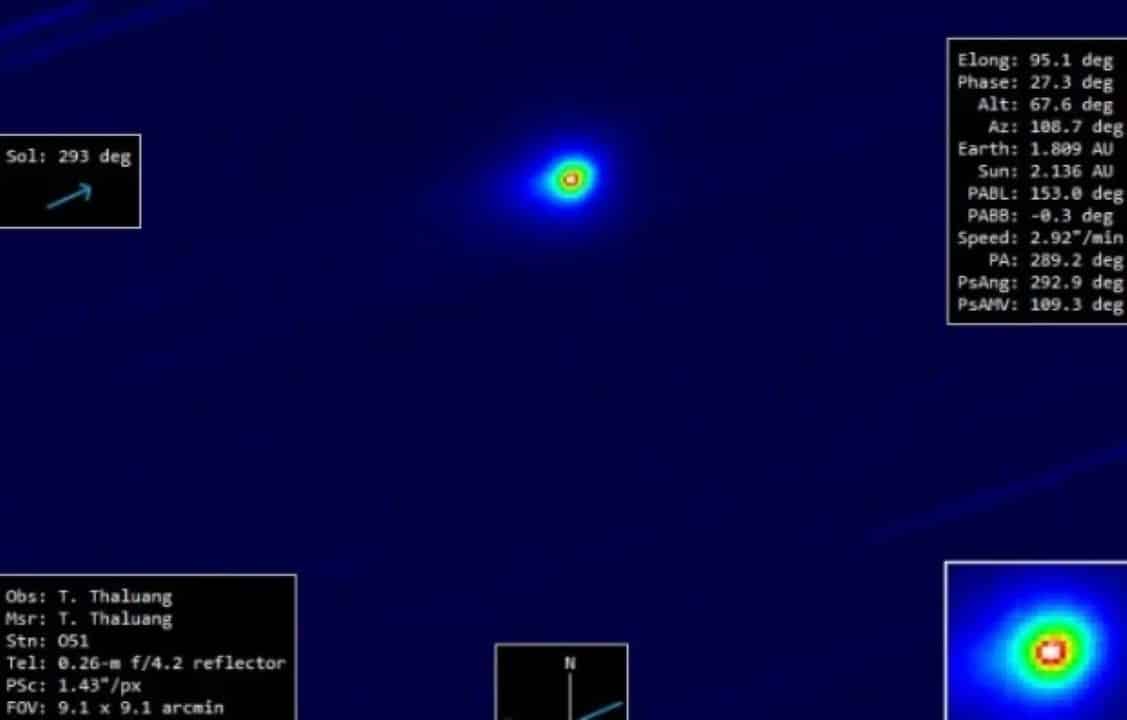
Astronomers and space agencies worldwide are gearing up for an extraordinary celestial event anticipated in late 2025: the close approach of 3I Atlas, a newly identified interstellar comet. This cosmic wanderer, originating from beyond our solar system, presents an unparalleled opportunity for scientific discovery. NASA, in particular, is orchestrating a comprehensive observational campaign utilizing its most advanced space and ground-based telescopes to study the comet’s unique characteristics. Scientists are eager to unlock secrets about star formation, planetary system evolution, and the composition of matter from other stellar neighborhoods. The discovery of 3I Atlas marks a significant moment in astrophysics, promising to expand our understanding of the universe’s vast and diverse material content.
The arrival of 3I Atlas follows previous interstellar visitors, 1I/’Oumuamua and 2I/Borisov, but its predicted trajectory and composition offer novel research avenues. Initial data suggests a potentially volatile icy body, differing from its predecessors.
Key aspects of 3I Atlas’s observation in 2025 include:
Unveiling 3I Atlas: A groundbreaking interstellar visitor
The discovery of 3I Atlas was made public in early 2025 by an international team of astronomers using a network of automated sky surveys. Its highly eccentric orbit and extreme velocity unequivocally confirm its origin outside our solar system, making it only the third such object definitively identified. The comet’s initial brightness and distinct coma, even at a considerable distance, quickly drew the attention of the global astronomical community.
This interstellar designation is crucial, meaning 3I Atlas has likely traveled for millions, if not billions, of years through the emptiness between star systems. Its pristine composition, untouched by the Sun’s radiation for most of its existence, offers a unique window into the conditions of its birth environment, potentially shedding light on how other planetary systems form and evolve.
NASA’s observational strategy for 2025
NASA is mobilizing an extensive array of assets to maximize the scientific return from 3I Atlas’s flyby. The James Webb Space Telescope (JWST) will be crucial, providing unprecedented infrared insights into the comet’s chemical makeup, including water, carbon dioxide, and other organic molecules. Its ability to pierce through the comet’s dust cloud will allow for detailed analysis of the nucleus itself. Complementing JWST, the Hubble Space Telescope will capture high-resolution visible and ultraviolet images, tracking changes in the comet’s tail and coma morphology as it approaches the Sun.
Ground-based observatories, including those in Chile and Hawaii, equipped with adaptive optics systems, will provide continuous monitoring, contributing to precise astrometry and early detection of any unexpected activity. Additionally, specialized radar facilities are being prepared to bounce signals off the comet’s nucleus, aiming to determine its shape, size, and rotation rate with high accuracy. This multi-pronged approach ensures a comprehensive dataset will be collected across various wavelengths, offering a holistic view of this rare visitor.
Unique challenges in tracking interstellar comets
Observing interstellar objects like 3I Atlas presents distinct challenges due to their incredible speeds and often unpredictable paths. Unlike comets native to our solar system, which follow well-established orbital mechanics, interstellar objects arrive from unknown directions and can accelerate or decelerate in unexpected ways due to outgassing, making precise trajectory predictions difficult. The brief window of opportunity for observation, as they quickly pass through our solar neighborhood, also demands rapid response and coordinated efforts from observatories worldwide.
Furthermore, the faintness of these objects, especially when first detected far from the Sun, requires extremely sensitive instruments and sophisticated image processing techniques. Scientists must also contend with the inherent unknowns of a body formed in a different stellar environment, whose physical properties might deviate significantly from those of our solar system’s comets. These challenges underscore the monumental effort required to study 3I Atlas effectively.
Expected scientific insights from comet 3I Atlas
The study of 3I Atlas is anticipated to yield groundbreaking insights into a multitude of astrophysical questions. Scientists hope to compare its chemical signature with that of our solar system’s comets, revealing fundamental differences or surprising similarities that could redefine our understanding of universal cosmic chemistry. This comparison offers a rare chance to sample matter from another star system directly, providing empirical data to refine models of exoplanetary formation.
Understanding the volatile compounds present in 3I Atlas could also shed light on how water and other life-essential ingredients are distributed across the galaxy. If its composition is vastly different from local comets, it might suggest diverse pathways for the origin of water on planets.
The comet’s physical characteristics, such as its density and internal structure, will offer clues about the conditions in its home stellar nursery. For instance, a highly porous nucleus might indicate formation in a very cold, diffuse environment.
Ultimately, 3I Atlas serves as a crucial comparative study object, complementing previous observations of 1I/’Oumuamua and 2I/Borisov. Each interstellar visitor provides a unique data point, helping astronomers build a more complete picture of the interstellar medium and the vast diversity of objects traversing it.
International collaboration and data sharing
The global scientific community has swiftly responded to the advent of 3I Atlas, fostering extensive international collaboration. Observatories from numerous countries are coordinating their efforts, sharing observational schedules and preliminary data to ensure maximum coverage and efficiency. This collaborative spirit is vital, given the comet’s rapid movement and the need for continuous monitoring across different longitudes.
Data collected from various telescopes, both space-based and ground-based, will be made publicly available to researchers worldwide through centralized archives. This open-access approach ensures that the broadest possible scientific expertise can contribute to the analysis and interpretation of the comet’s properties, accelerating the pace of discovery. Such coordinated campaigns highlight the unified human endeavor to explore the cosmos.
Amateur astronomers, often equipped with advanced backyard telescopes, are also expected to play a role. Their observations can provide valuable supplementary data, particularly for tracking the comet’s visible behavior and contributing to light curve analysis.
The journey of a cosmic wanderer
Having journeyed through interstellar space for an unknown duration, 3I Atlas will make its closest approach to the Sun in late 2025 before being flung back out into the cosmic void. Its fleeting visit offers a brief yet profound opportunity to glimpse a piece of another star system, a silent messenger from distant celestial shores, continuing its endless voyage across the galaxy.
