
Samsung announced the hiring ofJohn Rayfield, executive with extensive experience in companies such as AMD and Intel, to assume leadership of Advanced Computing Lab (ACL) in Samsung Austin Research Center (SARC), in Estados Unidos. The change took place in November 2025 and aims to strengthen the development of Exynos processors, especially in areas such as GPUs and system architecture.
Rayfield will hold the position of senior vice president and will oversee teams responsible for innovations in graphics, systems IP and SoCs. Sua’s arrival coincides with the recent launch of the Exynos 2600, the first mobile chip manufactured on the 2nm process.
The initiative reflects Samsung’s commitment to increasing the competitiveness of its proprietary chips, which will power Galaxy devices in selected markets from 2026 onwards.
Professional trajectory of John Rayfield
John Rayfield has decades of experience in the semiconductor sector.
He served as Corporate Vice President at AMD, where he collaborated with Microsoft on the development of Ryzen AI 300 processors for PCs with artificial intelligence capabilities.
Previously, at Intel, he led client AI and visual processing unit divisions, with an emphasis on graphics acceleration and computational architecture.
- Experience in companies such as Arm, Imagination Technologies and NXP Semiconductors.
- Focus on chip design, architectural systems and AI acceleration.
- Contributions to advances in graphics and energy efficiency.
This background positions Rayfield as a key piece in resolving historical challenges faced by Exynos.
Historical challenges of Exynos chips
In recent years, Exynos processors have received criticism for inferior performance compared to Snapdragon and Qualcomm equivalents.
Models such as the Exynos 990 and the Exynos 2200 presented limitations in graphics and sustained performance, especially in games and intense tasks.
Samsung responded with increasing investments in internal development.
Hiring outside experts accelerates efforts to match or surpass competitors in efficiency and power.
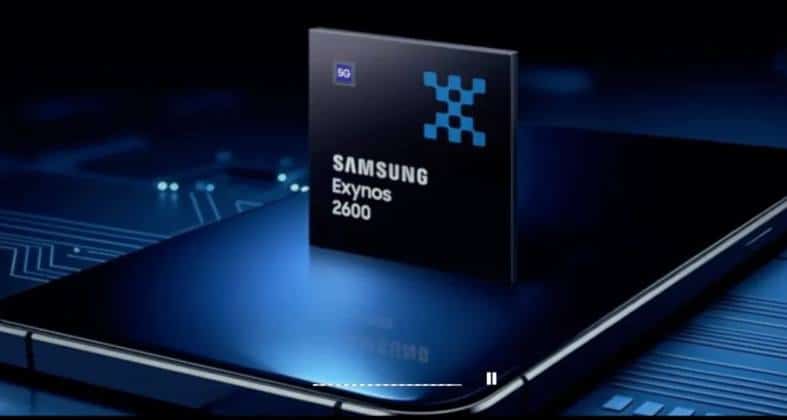
Recent Advancements in the Exynos 2600
The Exynos 2600, manufactured using a 2 nm process with Gate-All-Around technology, represents a milestone for Samsung.
It incorporates the Xclipse 960 GPU, developed internally at SARC and ACL, with improvements of up to 50% in ray tracing compared to the previous generation.
The company introduced ENSS (Exynos Neural Super Sampling) technology for image upscaling.
- Deca-core CPU configuration based on Arm architecture.
- Emphasis on sustained performance and AI workloads.
- Potential use on Galaxy S26 lines in specific regions.
Focus on graphic innovation and efficiency
Under the leadership of Rayfield, ACL will prioritize practical advancements in gaming, AI processing, and power consumption.
Teams will work on GPUs, SoC architecture, and system IPs to deliver smoother experiences on mobile devices.
The strategy aims to reduce dependence on Qualcomm chips in the long term.
Concrete results should appear in future generation products, consolidating Samsung’s position in the mobile semiconductor market.
Perspectives for Galaxy devices
Users of Galaxy devices can expect more uniform performance across regions with the advancement of Exynos.
The combination of advanced manufacturing processes and external expertise reinforces Samsung’s ability to deliver competitive chips.
Continued investment in research in the Estados Unidos signals global ambitions for the semiconductor division.
