Security camera footage obtained by federal authorities revealed the former director-general of Brazil’s Federal Highway Police (PRF), Silvinei Vasques, meticulously preparing for his escape in late 2023. The images depict Vasques loading a silver VW Polo, believed by the Federal Police to be a rental vehicle, at his home in Santa Catarina just hours before he vanished. This pivotal evidence contributed significantly to the minister’s decision for his preventive detention, highlighting his deliberate actions to evade justice.
Vasques, who was at the time awaiting the continuation of legal proceedings while under house arrest and equipped with an electronic ankle monitor, was captured by the CCTV system on Thursday, December 24, 2023, Christmas Eve. The recordings provided clear visual confirmation of his movements, painting a detailed picture of the events leading up to his disappearance. The comprehensive nature of the surveillance left little doubt about his intentions to flee.
The former PRF chief’s actions, documented meticulously by the security cameras, underscored a calculated effort to elude the ongoing legal process. His subsequent arrest in Paraguay while attempting to reach El Salvador further solidified the interpretation of these initial movements as a direct prelude to his attempted flight.
Surveillance footage details
Around 7:06 PM, the footage shows Silvinei Vasques methodically placing bags into the trunk of the silver vehicle. This initial action was followed by several trips back into his residence, indicating a comprehensive packing effort rather than a casual departure.
Minutes later, he returned to the car with more personal belongings, which he carefully arranged in the back seat. Among these items were packages of dog food and several large packs of canine hygiene mats, suggesting he was preparing for an extended period away from his home, potentially with a pet.
Following these preparations, Vasques reappeared carrying additional dog food containers and leading a dog, which he secured within the vehicle. Shortly after, the former director departed the location, initiating what authorities would later confirm as his attempted evasion from the judicial system.
The escape plan
The Federal Police’s investigation, detailed in the decision issued by Minister Alexandre de Moraes of the Supreme Federal Court (STF), unveiled the intricate details of Vasques’ flight. He reportedly left Santa Catarina by car, traveling to Paraguay, where he intended to board a flight to Central America. The critical element of his plan involved using a fake Paraguayan passport, a clear indicator of his intent to circumvent legal and immigration controls. His capture at the Silvio Pettirossi International Airport in Asunción, Paraguay, on the morning of January 26, 2024, thwarted these elaborate efforts and brought an end to his brief period as a fugitive. This incident highlighted the lengths to which individuals might go to avoid legal consequences, despite being under judicial supervision.
Moraes’ decision and arrest
Minister Alexandre de Moraes’ order for preventive detention was a direct response to the clear evidence of Vasques’ attempts to flee the country. The minister’s decision emphasized the severity of the former director’s actions, which included discarding his electronic ankle monitor, rendering it without signal, and subsequently using a rented car as part of his escape.
The coordinated efforts between Brazilian and Paraguayan authorities led to his swift apprehension. The arrest underscored the robust international cooperation in combating fugitives, particularly those involved in high-profile cases with national security implications.
Conviction and charges
In December 2023, the First Panel of the STF convicted Silvinei Vasques, sentencing him to 24 years and six months in prison. The conviction stemmed from his involvement in an alleged attempt to subvert the democratic process during the 2022 general elections.
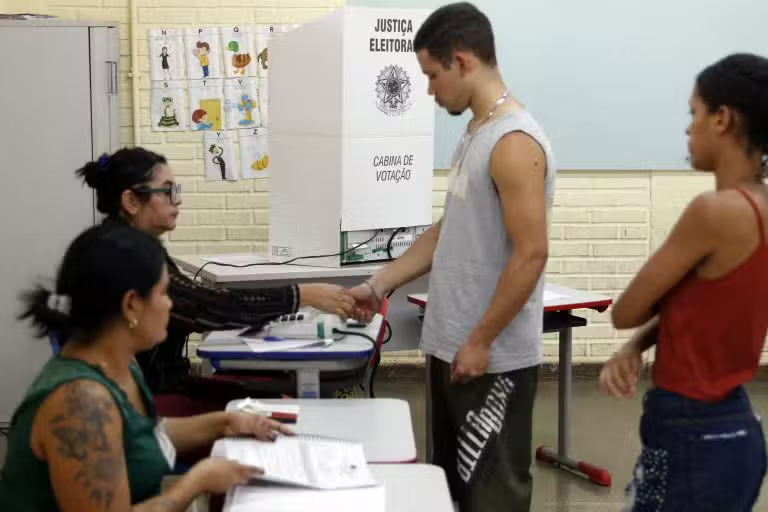
At the core of the accusation was the allegation that, as director-general of the PRF, Vasques orchestrated the use of the corporation to impede voters perceived as opposing then-President Jair Bolsonaro from reaching polling stations during the second round of the elections. This action was deemed a deliberate attempt to interfere with the electoral outcome.
Ministers of the Supreme Court also cited what they termed Vasques’ “criminal inertia” in response to widespread blockades organized by truckers on federal highways following the election results. This inaction was viewed as a dereliction of duty with potential political motives.
Minister Alexandre de Moraes, who served as the rapporteur for the case, highlighted the PRF’s failure to act. He stated that the corporation “crossed its arms” regarding the paralysis of numerous federal highways crucial for the transport of food and medicine, necessitating a direct judicial order for their intervention.
Violation of conditions
Vasques’ decision to remove his electronic ankle monitor and disappear constituted a direct violation of the conditions under which he had been granted provisional liberty. This breach of trust and judicial order immediately elevated his status from a defendant awaiting trial to a fugitive.
The swift legal and enforcement response underscored the judiciary’s resolve to maintain the integrity of the legal process and ensure that individuals, regardless of their past position, comply with court orders. His actions were a clear challenge to the authority of the justice system.
Judicial condemnation context
The conviction of Silvinei Vasques by the Supreme Federal Court sent a strong message regarding the accountability of public officials, particularly those in positions of power within law enforcement agencies. The judicial process meticulously examined the evidence, leading to a verdict that reflected the gravity of his offenses against democratic principles.
His role in the alleged coup attempt and the deliberate obstruction of the electoral process were central to the court’s decision. This case established a significant precedent, reinforcing the commitment to protect Brazil’s democratic institutions from internal threats and abuse of power.
Ongoing legal status
As of 2025, Silvinei Vasques remains imprisoned following his arrest and conviction. While possibilities for appeal typically exist within the Brazilian legal system, his current status is one of incarceration as he faces the full consequences of the court’s judgment. The legal proceedings continue to unfold, addressing any potential challenges to his conviction or sentencing.