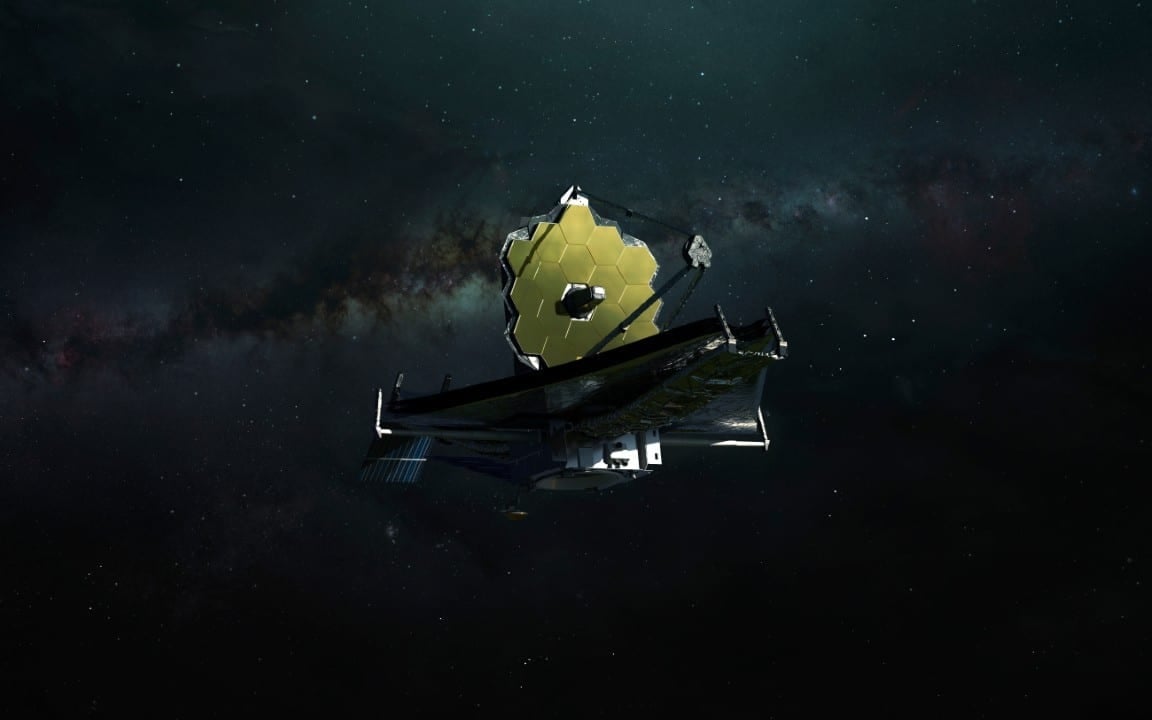
Telescópio Espacial James Webb (JWST) has made a spectacular observation, detecting the most distant supernova ever recorded, an event that opens a new window into the early universe. Esta colossal stellar explosion occurred billions of years ago, when the cosmos was just a fraction of its current age, defying previous understandings of stellar and galactic evolution. The discovery, reported in 2025, sets a new milestone for observational astrophysics.
The supernova, identified as GRB 250314A, represents a messenger photon from the distant past. Ela erupted into a mysterious period known as the Era of Reionização, a pivotal phase in which the first stars and galaxies began to transform the dark haze of the universe into a transparent, illuminated environment. Esta direct observation offers unprecedented data on the mechanisms that shaped the universe in its early stages.
Astronomers on the JWST team highlight the importance of studying GRB 250314A not only for its record-breaking distance, but also for the crucial information it offers about the physical conditions of the young universe. The ability to observe these primordial events allows us to test cosmological models and better understand the first generations of stars. Cada captured detail is a fragment of the history of the universe, revealing how it has developed to the present.
Unraveling the cosmic explosion
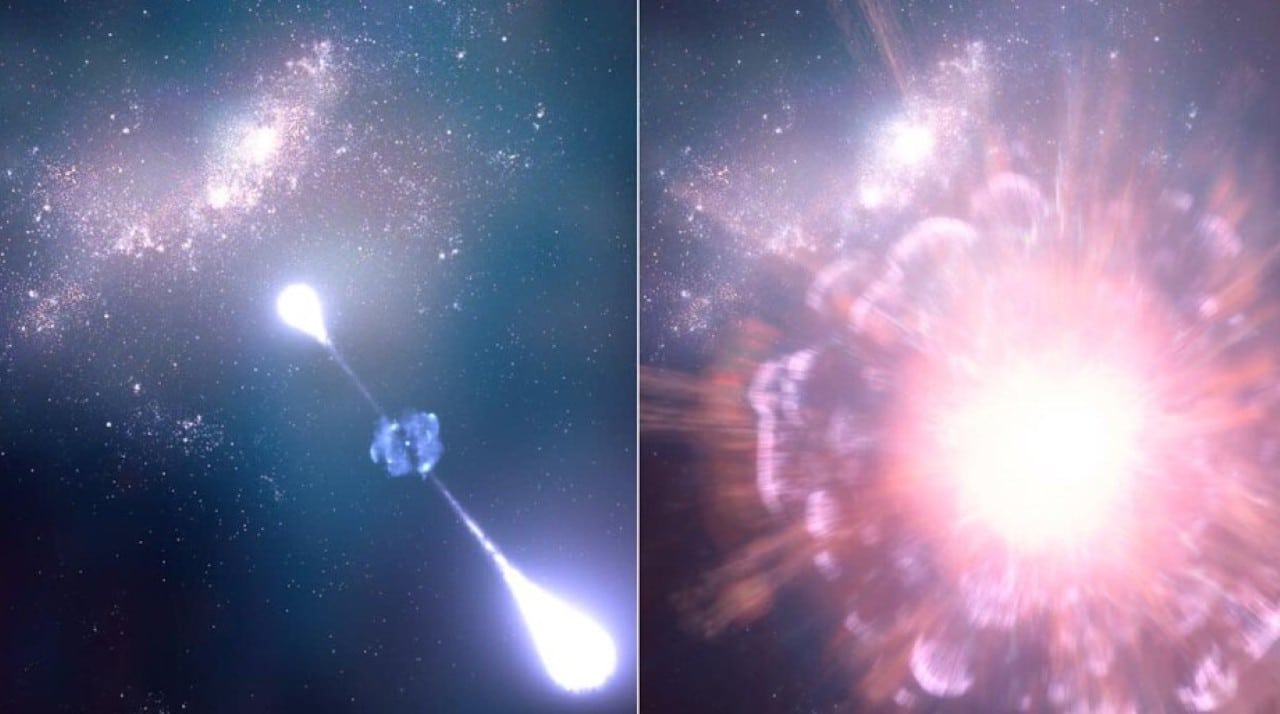
Supernova GRB 250314A is a stellar gamma-ray burst (GRB), one of the most energetic phenomena in the universe. Estima It is assumed that it occurred when the universe was approximately 730 million years old, which corresponds to approximately 5% of its current age. Observar such a remote event is like traveling 13 billion years back in time, providing an unprecedented view of a critical period in the formation of the cosmos.
The magnitude of the explosion and its distance make this detection a remarkable feat of engineering and science. James Webb’s ability to capture faint, highly redshifted infrared light from such distant sources was key. Essa observation not only confirms the power of JWST, but also validates the astrophysical techniques used to interpret these cosmic signals.
Observing the universe in its infancy
The early universe, especially Era of Reionização, is a period of intense investigation. Durante this phase, neutral hydrogen, which dominated the cosmos after Big Bang, was ionized by the light of the first stars and galaxies. The detection of GRB 250314A at this time provides direct evidence about the nature of the objects that drove this cosmic transition, one of the greatest enigmas in modern cosmology.
Understanding Era from Reionização is fundamental to tracing the evolution of the universe’s large-scale structures and the emergence of the first galaxies. Light from GRB 250314A acts like a probe, piercing clouds of early hydrogen and carrying information about the composition and state of the intergalactic medium at that time. The data collected by JWST offers a rare opportunity to examine physical conditions that existed billions of years ago.
James Webb Advanced Technologies
The success in detecting such a distant supernova is a testament to the cutting-edge technology embedded in Telescópio Espacial James Webb. Seus instruments, such as NIRCam (Near-Infrared Camera) and NIRSpec (Near-Infrared Spectrograph), are designed to observe at infrared wavelengths, which is essential for capturing light from extremely distant objects. The expansion of the universe causes light to stretch, shifting it into the infrared spectrum, a phenomenon known as redshift.
JWST’s 6.5-meter main mirror, comprised of 18 hexagonal segments, offers unprecedented sensitivity and resolution. Essa capability allows astronomers to detect and analyze light from sources that would be invisible to other telescopes. The accuracy and stability of the Webb platform, operating at an Lagrange L2 point, are crucial for performing the long exposure observations needed to capture these faint and distant signals.
The complexity of redshift
The concept of redshift, or redshift, is central to the measurement of cosmic distances. Conforme the universe expands, the light emitted by distant objects is stretched, moving into the redder parts of the electromagnetic spectrum. Quanto the greater the redshift, the more distant and older the light source. JWST is optimized for observing objects with high redshifts, such as GRB 250314A, allowing scientists to peer into the past of the cosmos.
Measuring a supernova’s redshift involves analyzing the spectral lines in its light, which act like a chemical “barcode.” By comparing the position of these lines with those of known elements in the laboratory, astronomers can calculate how much the light has been bent. Essa technique is an indispensable tool for mapping the distribution and evolution of galaxies and other celestial phenomena throughout cosmic history.
This spectral analysis not only provides the distance to the supernova, but also reveals information about the chemical composition and physical conditions of the environment around the exploding star. The precision of these measurements with the James Webb takes astrophysics to a new level, allowing detailed studies of objects in cosmic eras that were previously unattainable.
Implications for astrophysics and cosmology
GRB 250314A’s big surprise lies not just in its record-breaking distance, but in its shocking similarity to supernovae observed in the modern universe. The laws of physics, apparently, remained consistent even so far back in cosmic history. Essa consistency suggests that fundamental stellar processes and the evolution of massive stars may have been more universal than previously imagined.
Analyzing the characteristics of this primordial supernova allows scientists to test theoretical models about the formation and death of the first stars. The first stellar generations, known as População III stars, were theoretically very different from today’s stars, lacking heavy elements. The similarity of GRB 250314A may indicate faster evolution or unexpected mechanisms in the metallicity of the first stars.
This discovery paves the way for new investigations into the origin of chemical elements in the universe. Supernovas are the main mechanisms for the dispersion of heavy elements, essential for the formation of planets and life. Estudar such an ancient supernova helps understand how these elements began to enrich the intergalactic medium, paving the way for the formation of more complex stellar systems.
The implications for cosmology are vast, as each distant supernova serves as a potential “standard candle” for measuring the expansion rate of the universe. Although Embora GRBs are not standard candles in the same way as Ia-type supernovae, their detection at high distances offers new opportunities to refine the Hubble constant and other cosmological parameters. The scientific community now eagerly awaits more data and in-depth analysis.
Light separation: a challenge overcome
To study GRB 250314A in detail, astronomers faced the challenge of separating its light from the light of its host galaxy and the afterglow of the explosion itself. Essa complex task required the use of advanced image processing and spectroscopy techniques. The JWST team employed sophisticated algorithms to isolate each component, ensuring the analysis was accurate and focused on the supernova itself.
The afterglow of a GRB is a long-lived emission that follows the initial outburst, and its observation provides additional information about the parent star’s surrounding environment. By distinguishing the afterglow from the direct light of the supernova and the source galaxy, researchers were able to reconstruct the events in a chronological sequence, gaining a more complete understanding of the phenomenon. Esse separation detail is vital to avoid data contamination and extract pure information about the object of interest.
New perspectives on stellar evolution
The discovery of the supernova GRB 250314A reshapes our understanding of stellar evolution in the early universe. The observation of a massive star exploding at such an early stage in cosmic history provides valuable data on the lifespan, composition and death mechanisms of these stars. Anteriormente, many models were purely theoretical, but can now be refined based on direct empirical evidence.
The existence of supernovae with “modern” characteristics so early in the universe suggests that cycles of star formation and death may have been faster and more efficient in spreading heavy elements than previously thought. Essa perspective is crucial to understanding how the universe became capable of forming rocky planets and eventually harboring life, pushing astrophysics research in new directions.
