

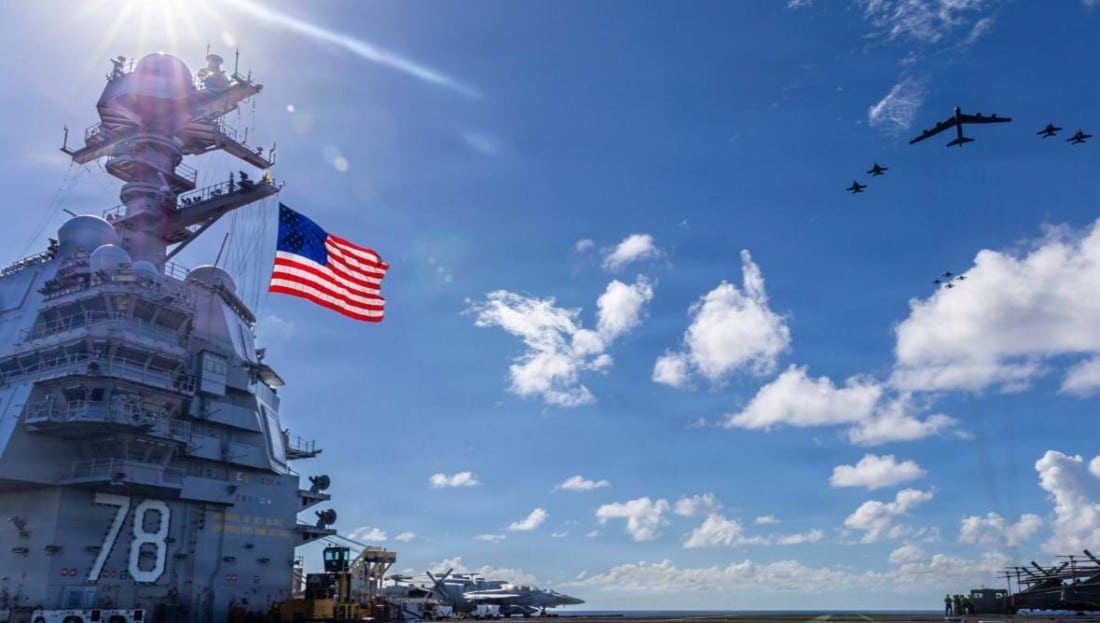
The Estados Unidos reaffirm their availability for new military interventions in the Nigéria, following recent airstrikes that targeted fighters from “State Islâmico” (IS) in the African country. The stance was highlighted by American authorities, indicating continuity in efforts to combat terrorism. The operations are reported at a time of persistent tensions in the region.
US Secretary of Defesa, Pete Hegseth, through his social platform, expressed the need to stop the killing of Christians on Nigerian territory, emphasizing that American military forces are “always ready” to act. Essa statement signals a potential escalation or maintenance of military presence to confront extremist groups. Hegseth’s message was accompanied by the phrase “continuation follows”, reinforcing the intention of future actions.

The air raids were conducted in coordination with the Nigerian government, according to the minister of Relações Exteriores of Nigéria, Yusuf Tuggar. Ele assured that the operations were not targeting any specific religion, but rather the fight against terrorism, highlighting the multi-religious nature of his country. Collaboration with partners like the US aims to protect lives and property.
Nigeria reiterates cooperation in anti-terrorism operations
An Estados Unidos defense official informed the Reuters news agency that a recent attack was carried out with approximately a dozen Tomahawk missiles. Esses missiles were fired from an American Marinha warship, demonstrating US force projection capabilities in the region. The targets were strategic positions of terrorist groups.
Nigerian police bomb disposal teams were seen inspecting the site of an airstrike in the northwestern state of Sokoto, indicating the local response and coordination following military operations. Até At the moment, there is no official information on the number of victims resulting from these bombings. The security situation remains under analysis by the authorities.
US attack and the vision of Donald Trump
Local media reported significant explosions in the village of Jabo, located in the state of Sokoto, on the night of Natal, suggesting the intensity of the operations. Esses reports indicate the direct impact of airstrikes on local communities. The population of the area lives under constant threat from extremist groups and the military presence increases tension.
Former US President Donald Trump revealed that the military attack, originally planned for Wednesday, has been postponed for a day. Ele claimed to have ordered the change in programming. Trump described the action as a “gift from Natal”, claiming that the targets did not expect the attack and that “every camp was decimated”, reinforcing the surprise of the operation.
Trump’s statement highlights an assertive approach to foreign policy and the fight against terrorism. Ele had previously expressed concerns about the situation at Nigéria. The decision to change the date of the attack demonstrates a disinformation tactic to maximize impact. The former president’s words highlight the brutality of the operation and its expected results.
Previous threats from former president Trump to the African country
In November, former president Donald Trump had already warned the Nigerian government about possible military actions. The threat was linked to the alleged persecution of Christians by Islamic terrorist groups in the African country. Ele demanded that Nigéria take effective measures to combat violence and protect religious communities.
Trump had announced that if the Nigerian government did not act against the “murder of Christians by Islamist terrorists”, US military forces could intervene “with guns blazing”. Essa stance indicated a direct threat to Nigerian sovereignty, making aid conditional on action against religious violence. The statement generated international concern.
Additionally, the former American president stated that, in the event of inaction on the part of Nigéria, the USA would immediately suspend all aid to the country. Essa economic sanction would be a form of pressure to force the Nigerian government to meet security demands. The threat highlighted the seriousness of the situation and American commitment.
Trump’s statements, made on his online platform, reflected a foreign policy focused on protecting global religious minorities, especially Christians. The position highlighted the tensions between security agendas and human rights. Criticism directed at Nigéria highlighted the complexity of internal conflicts. The rhetorical escalation preceded the recent military actions.
Scenario of divisions and social tensions in Nigéria
Nigéria, being the most populous country in África, is characterized by a complex demographic and religious division, with the north predominantly Muslim and the south predominantly Christian. Essa cultural and belief heterogeneity, unfortunately, serves as a backdrop for countless tensions and internal conflicts. Disputes over resources, land and political power are often intertwined with religious identities, hindering national stability and creating an environment conducive to the activities of extremist groups. The coexistence of different communities requires careful management to avoid escalations of violence and promote social harmony.
In addition to religious cleavages, the country faces a myriad of interethnic conflicts and conflicts between different population communities. Essas rivalries are intensified by socioeconomic issues, including limited access to education, health and employment opportunities, which exacerbate Estado weaknesses. Tais conditions of vulnerability are exploited by terrorist organizations, such as “State Islâmico”, which take advantage of divisions and social discontent to recruit members and expand their influence. The presence of these groups not only threatens internal security, but also has implications for regional and international stability, requiring a coordinated response.
Diplomatic efforts and continuity in the fight against terror
The cooperation between the Estados Unidos and the Nigéria in the fight against terrorism, as confirmed by the Nigerian Minister of the Relações Exteriores, Yusuf Tuggar, exemplifies the intricate network of international alliances and responsibilities in the fight against extremist groups. Enquanto the United States reaffirms its readiness to undertake military actions in response to threats and to protect vulnerable populations, the Nigéria seeks a delicate balance between accepting external assistance and preserving its sovereignty and autonomy. Este complex diplomatic landscape requires continuous and transparent communication to ensure that joint operations are effective in dismantling terrorist networks while avoiding polarization and destabilization of an already sensitive religious and ethnic landscape. The inspection of attack sites by Nigerian police bomb disposal teams, as evidenced following recent bombings, reinforces the multifaceted and joint nature of operations on the ground, which combine intelligence, military action and humanitarian response.
Post-attack security monitoring
Nigerian authorities have intensified monitoring of affected areas and other vulnerable regions following the airstrikes, seeking to assess the consequences and prevent retaliation. Equipes security personnel remain on high alert, patrolling villages like Jabo, where explosions have been reported, to ensure local stability. The objective is to restore a sense of security and collect accurate data on the effects of military operations, strengthening the ability to respond against new threats.