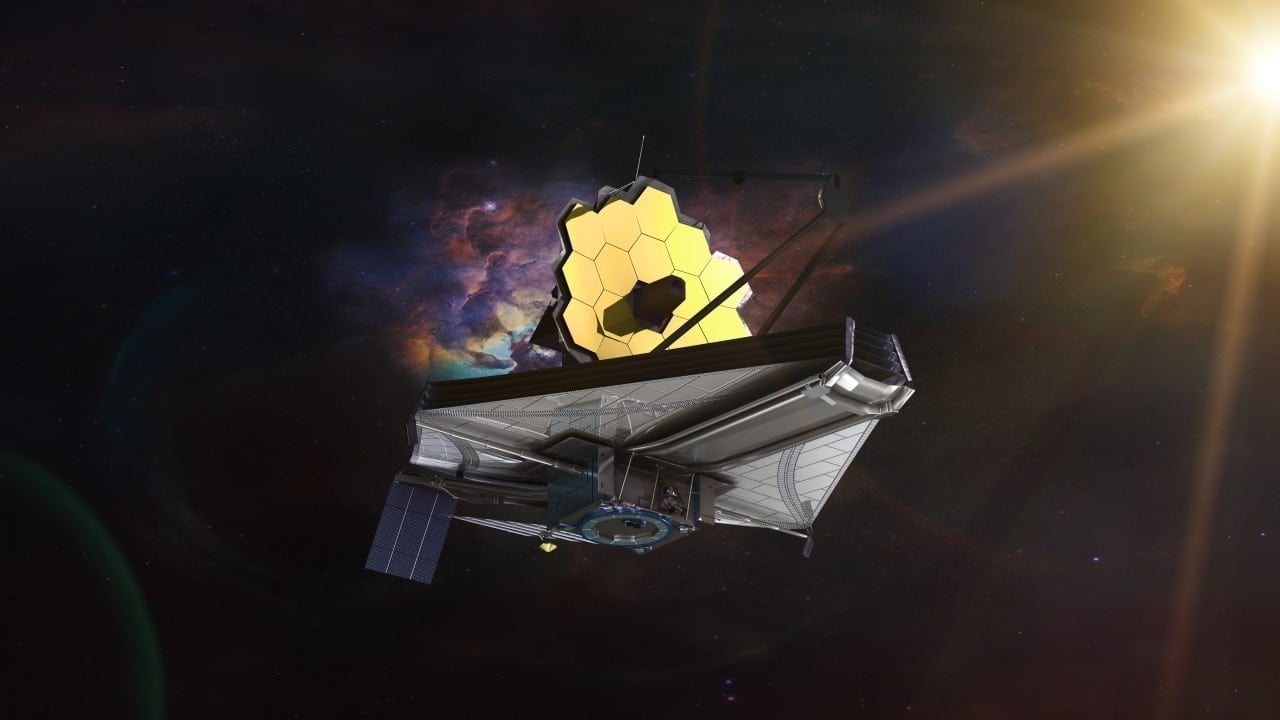
Astronomers have confirmed the detection of the most distant supernova ever recorded, associated with the gamma-ray burst known as GRB 250314A. Essa explosion occurred when the universe was just 730 million years old, during the era of reionization. Telescópio Espacial James Webb (JWST) captured detailed images of the infrared light from this explosion, allowing it to separate the supernova signal from the faint host galaxy.
The event was initially identified on March 14, 2025 by the SVOM satellite, which recorded the intense, long-lasting burst. Subsequent Observações with Very Large Telescope (VLT) of Observatório Europeu of Sul confirmed the redshift of approximately 7.3. Essa distance places the supernova as the most remote observed to date, surpassing previous records.
Light from the explosion traveled billions of years to reach Terra, offering a direct look at the death of a massive star in the early universe. Pesquisadores highlight that this detection represents a milestone in high-redshift astronomy.
Event detection process
The GRB 250314A gamma-ray burst was detected by the Franco-Chinese SVOM satellite in March 2025. Esse intense signal of high-energy radiation indicated a distant and powerful event.
Rapid observations with ground-based telescopes, including the Nordic Optical Telescope and the VLT, confirmed the infrared afterglow and measured the spectroscopic redshift. Esses data placed the event in the first billion years of the universe.
- Initial detection by SVOM on March 14.
- Distance confirmation by VLT in subsequent hours.
- Observations planned with JWST to capture the supernova peak.
Observations carried out by JWST
JWST used its Near Infrared Camera camera (NIRCam) to image approximately 110 days after the burst. Essas observations revealed a growing signal in infrared bands, consistent with the presence of a supernova.
The data made it possible to isolate the contribution of the host galaxy’s light explosion, which appears as a compact, bluish source. The galaxy presents characteristics similar to others known at high redshifts, with an absolute ultraviolet magnitude estimated at around -18.
Researchers modeled light curves based on local supernovae associated with bursts. The JWST observations aligned well with these predictions, confirming the nature of the detection.
Characteristics of ancient supernova
The supernova associated with GRB 250314A exhibits similar brightness and spectral properties to SN 1998bw, a prototype explosion observed in the local universe. Essa similarity is surprising, given the primordial environment with low metallicity.
The explosion shows no evidence of being superluminous, reinforcing the comparison with modern events. Modelos indicate that the progenitor star was massive, collapsing in a similar way to present-day stars despite different conditions.
Comparison with known supernovae
Researchers compared the light curve and spectrum of the SN in GRB 250314A with nearby events. The proximity to SN 1998bw suggests that physical processes of stellar collapse were consistent even in the young universe.
This observation challenges expectations that primordial stars would produce radically different explosions. The low dust extinction, inferred from the blue afterglow colors, supports the exclusion of brighter models.
The similarity opens up possibilities for using distant supernovae as tools for mapping cosmic evolution. Estudos future JWST plans to better characterize host galaxies after supernova fades.
Host galaxy properties
The host galaxy appears faint and compact in JWST images. Suas features align with Lyman-break galaxies at z ~ 7, showing blue emission and young structure.
The detection of the galaxy represents an achievement, as events so distant rarely allow a clear view of the stellar environment. The estimated magnitude indicates a typical galaxy from the reionization era, contributing to the initial chemical enrichment.
Additional observations planned will better isolate galactic light after the supernova decays. Esses data will help understand how massive stars formed and died in early galaxies.
Significance to primordial astronomy
This detection provides direct insight into the death of individual stars in the universe less than 1 billion years old. Ela reinforces the role of gamma ray bursts as probes of distant regions.
Confirmation of a supernova at redshift 7.3 expands knowledge about early star formation. Pesquisadores anticipate more similar discoveries with JWST observing programs.
- Window opening for População II or III stars.
- Contribution to studies of cosmic reionization.
- Basis for evolution models of massive stars.
- Potential to map metal enrichment in the young universe.
Technological advances involved
JWST has demonstrated unique ability to resolve far-infrared sources. Sua sensitivity allowed us to separate components of the supernova, afterglow and galaxy.
The combination with satellites like SVOM and ground-based telescopes illustrates multinational coordination. Programas of quick discretionary time enabled critical observations.
This achievement highlights JWST’s potential to explore the early universe in unprecedented detail. Futuras missions will complement these efforts in understanding cosmic origins.
