


An astronomical spectacle of rare magnitude is scheduled for August 2, 2027, when a total solar eclipse will surprise the world with extraordinary duration. The event, lasting up to 6 minutes and 23 seconds in total, is positioned as one of the most extensive to be observed on dry land in the coming decades, promising an unprecedented visual experience for millions of people. The uniqueness of this celestial alignment establishes it as an astronomical landmark that will not be surpassed in terms of longevity until the year 2114, arousing great expectations among enthusiasts and scientists.
During the minutes of totality, sunlight will disappear completely, giving way to a surreal twilight in broad daylight. Este magical moment will transform the sky, revealing stars and planets that are not normally visible. Além In addition, the ambient temperature will tend to drop noticeably, and the horizon will be dyed with unusual colors and tones, providing a mystical and memorable setting for observers.
The grandeur of the 2027 phenomenon
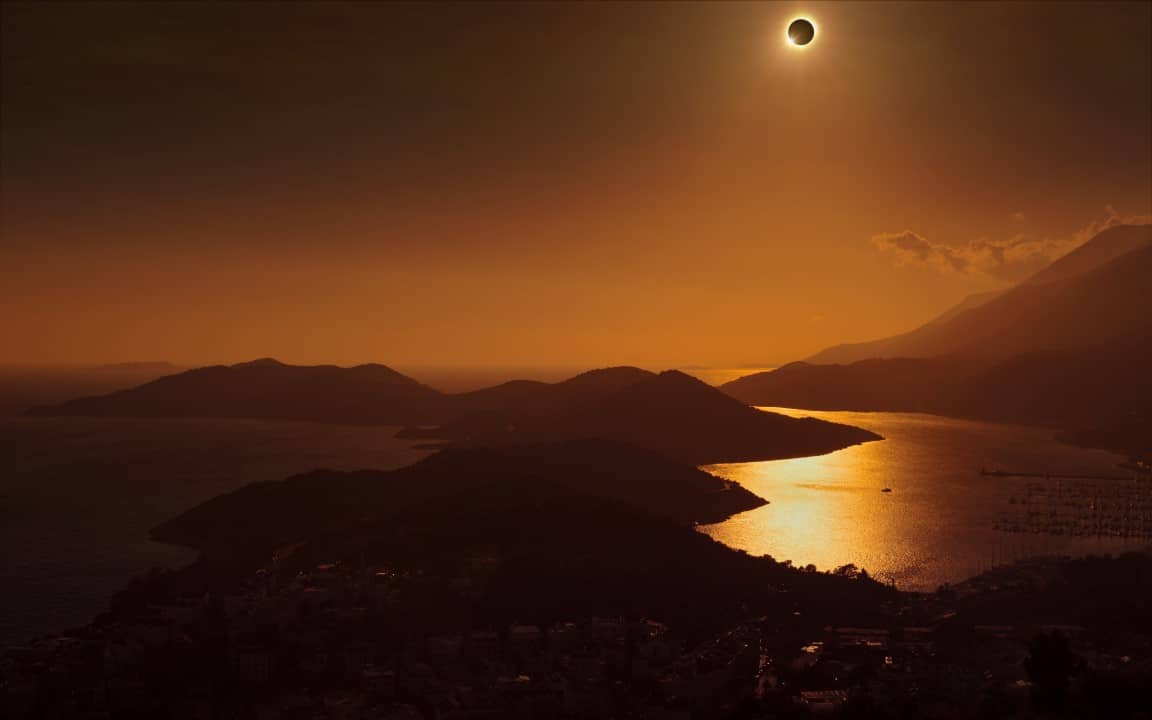
The anticipation surrounding the August 2, 2027 total solar eclipse is considerable, driven by its exceptional duration and the vast audience that will be able to witness it. Observadores in different parts of the globe are already planning their trips and preparations to ensure the best visibility of the phenomenon. The scientific community, in turn, sees this eclipse as a unique opportunity to carry out detailed studies on the solar corona, Terra’s atmosphere and other astrophysical aspects that can only be investigated during totality. The synchrony of celestial movements that will result in this long totality is an event that inspires fascination and curiosity in all ages, consolidating the 2027 eclipse as one of the most anticipated eclipses of the century.
Astronomy behind prolonged totality
Not all solar eclipses are created equal, and the longevity of the 2027 event is the result of a rare confluence of astronomical factors. The main reason for the extended totality is the position of Lua in its orbit.
On this specific date, Lua will be very close to its perigee, the point in its orbit closest to Terra. Essa proximity makes Lua appear larger in the sky, more efficiently covering the solar disk. Simultaneamente, Terra will be at a point in its orbit close to aphelion, its greatest distance from Sol, which makes Sol appear to be slightly smaller.
Additionally, the band of totality, which is the region where the eclipse can be seen in full, will pass through low latitudes. Esse geographic path slows the movement of the lunar shadow across the Earth’s surface, allowing persistent darkness to last for a longer period than usual. The combination of these three elements – larger Lua, smaller Sol and slower movement of the shadow – culminates in a totality that exceeds the three-minute average, reaching more than six minutes in certain locations.
Where the spectacle will be visible in its fullness
The band of totality, where Sol will be completely covered by Lua, will extend across strategic regions of the planet, covering Norte from África, the south of Espanha and Península Arábica. Nessas areas, the day will turn into deep twilight despite Sol’s high position in the sky, creating an unforgettable visual experience for millions of viewers.
Approximately 89 million people are estimated to be within the zone of totality, making the 2027 eclipse one of the most closely watched astronomical events in recent history. Grandes cities and tourist attractions in these regions must prepare for a significant flow of visitors interested in witnessing the phenomenon, generating opportunities for tourism and scientific education.
Preparations for safe observation
Observing a total solar eclipse requires specific care to avoid permanent damage to your vision. It is essential that spectators use special eclipse glasses, which have certified filters, or project the image of the Sol indirectly. Nunca You should look directly at Sol without adequate protection, even during a partial eclipse, as ultraviolet and infrared rays can cause serious damage to the eyes.
Scientific institutions and groups of amateur astronomers are already organizing events and workshops to educate the public about best observational practices. Além Additionally, many observatories and science centers in totality regions plan live broadcasts and educational activities. Eye safety is the top priority, and awareness about the use of certified protective equipment is widely promoted by health authorities and astronomy experts.
Partial visibility in Itália and regional specificities
Itália, although not in the totality band, will experience a notable partial eclipse, especially in its southern regions. The coverage of the solar disk will vary significantly depending on geographic location, providing different degrees of darkness and visibility.
In Nordeste and Itália, for example, the coverage of the solar disk will be approximately 55%, an interesting spectacle, but without the immersion of totality. As you move towards the south of the country, the coverage percentages progressively increase, intensifying the experience for observers.
On Lampedusa, an Italian island in Mediterrâneo, visibility will reach an impressive 99.8% solar coverage. Isso means that Sol will be almost completely covered over, and the landscape will transform into a deep twilight, very close to totality. Teoricamente, for those seeking the full experience of totality without leaving the Italian geographical area, moving about 20 kilometers south of Lampedusa, just before the limits of international waters, would be an option to observe the totally hidden Sol.
– Northeast of Itália:Cerca 55% solar coverage.
–South of Itália:Percentagens increasing coverage.
–Lampedusa:Visibilidade maximum of 99.8%.
Comparison with other major historical eclipses
The eclipse of August 2, 2027, although exceptional in its duration, does not hold the absolute record for the longest solar eclipse of the century. Esse title belongs to the total eclipse of July 22, 2009, which had a maximum duration of 6 minutes and 39 seconds. Contudo, most of the totality of the 2009 event occurred over the vast ocean, with very few inhabited locations being marginally affected by the lunar shadow.
The relevance of the 2027 eclipse lies precisely in its accessibility. It is widely considered the longest eclipse observable from densely populated and easily accessible continental areas, distinguishing it from other events with similar or even longer durations that have predominantly occurred in remote or oceanic regions. The availability of infrastructure and population density in the 2027 total areas amplify its impact and the number of potential witnesses, justifying its designation as the most significant event of its kind by 2114.
A milestone for science and the public
The total solar eclipse of August 2, 2027 transcends the mere astronomical event, consolidating itself as a significant milestone both for scientific research and for public awareness about the phenomena of the universe. The opportunity to observe the solar corona and atmospheric effects under conditions of prolonged totality is of immense value to astronomers.
This rare event boosts collective interest in astronomy and science in general. Escolas, universities and communities around the world will use the eclipse as a catalyst for educational programs, inspiring future generations of scientists and enthusiasts. The union of scientific, cultural and educational elements ensures that the 2027 eclipse will be remembered as a transformative and enriching experience for all who experience it.



