
Ukrainian President Volodymyr Zelensky has issued a stark warning regarding the nation’s ongoing conflict against Russian aggression, emphasizing that victory remains unattainable without continued, substantial military assistance from the United States. His direct statement underscores the critical role of Washington’s aid in Kyiv’s defense efforts amidst persistent large-scale offensives.
Responding pointedly during a televised interview on January 29, 2025, Zelensky firmly declared “no” when asked if Ukraine could prevail or end the war without continuous American support. This unequivocal answer highlights the profound dependency on external backing for sustaining their defense.
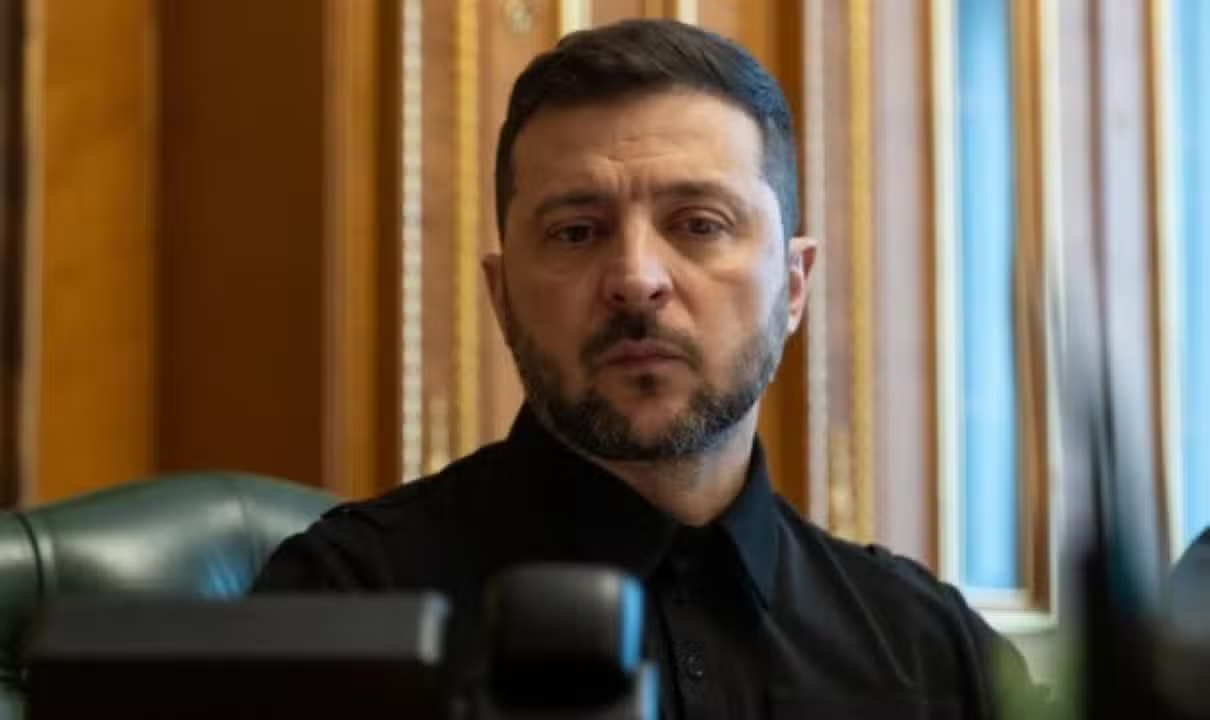
The president detailed several key areas where U.S. assistance is indispensable for Ukraine’s defense posture in 2025:
* Air defense systems, particularly missiles, crucial for intercepting Russian aerial attacks.
* Artillery weapons and ammunition, vital for frontline engagements and counter-offensives.
* Maintaining troop morale, which he indicated would significantly decline without visible, ongoing international solidarity.
Russia continues to deploy vast quantities of weaponry, including “hundreds and thousands of drones and missiles,” to target Ukrainian cities and military installations, Zelensky noted, making the struggle for aerial superiority an acute challenge even with current aid levels.
The existential dependence on US air defense
Without American support, the ability to defend Ukrainian skies against sustained aerial bombardments becomes critically compromised. Even with existing aid, the task of intercepting sophisticated Russian drones and various missile types presents immense difficulties for Ukraine’s air defense units. The sheer volume of incoming threats necessitates a continuous supply of interceptor missiles and advanced radar systems from partners like the United States.
Zelensky specifically highlighted that the provision of U.S.-made air defense missiles is “really very helpful,” indicating that these assets are not merely supplementary but fundamental to protecting civilian populations and critical infrastructure. The ongoing attrition of existing stockpiles means that a consistent replenishment of these specialized munitions is paramount for Ukraine to avoid overwhelming its defensive capabilities.
Battlefield realities: The critical role of American armaments
Ukrainian forces operating on the front lines are heavily reliant on weapons and artillery ammunition procured from the United States. These vital supplies underpin their capacity to engage Russian units, defend fortified positions, and conduct necessary counter-offensives against entrenched adversaries. The consistent delivery of these armaments ensures that Ukrainian soldiers have the necessary firepower to match or, in some sectors, overcome the aggression they face daily.
The combat environment in 2025 demands a steady flow of high-quality munitions, ranging from advanced artillery shells to precision-guided missiles, to maintain tactical parity. Without these provisions, Ukraine’s ability to effectively prosecute its defense and reclaim occupied territories would be severely hampered, potentially leading to significant strategic setbacks. The ongoing intensity of ground engagements makes such material support non-negotiable for Kyiv’s war effort.
Beyond direct combat supplies, American logistical and training support further augments Ukraine’s military capabilities, ensuring effective deployment and maintenance of sophisticated equipment. This comprehensive assistance package is designed to maximize the operational readiness and long-term sustainability of Ukrainian forces in the face of persistent Russian pressure across multiple fronts.
Maintaining morale amid relentless conflict
The morale of Ukraine’s military personnel and civilian population is deeply intertwined with the visible and tangible commitment of international partners, especially the United States. A perceived wavering or cessation of American aid would send a profoundly negative signal, potentially eroding the resolve of those fighting on the front lines and those enduring daily attacks in cities. The psychological impact of such a shift could be as damaging as any material loss.
Zelensky articulated concerns that a reduction in U.S. assistance would inevitably lead to a “fall in morale” among military forces, emphasizing the direct correlation between sustained support and national resilience. Soldiers facing relentless bombardments and fierce ground battles draw strength from the knowledge that global powers stand with them. This psychological assurance translates into continued fighting spirit and commitment to the national cause.
Furthermore, the Ukrainian population, which has endured years of conflict, looks to the United States as a steadfast ally providing a beacon of hope against an aggressor with vastly superior resources. News of strong American commitment reinforces their belief in a favorable outcome and strengthens their resolve to resist. Conversely, any indication of abandonment could foster despair and undermine societal cohesion.
The symbolic value of American leadership in the international coalition supporting Ukraine cannot be overstated. It encourages other allied nations to continue their contributions and demonstrates a unified front against aggression. Therefore, maintaining this support is not just about equipment but also about upholding the broader spirit of resistance.
Evolving dynamics of international support for 2025
Throughout early 2025, discussions within the United States Congress and among European allies continue regarding the optimal levels and mechanisms of aid to Ukraine. The complex geopolitical landscape necessitates constant evaluation of aid packages, ensuring they meet the evolving needs of the battlefield while balancing domestic political considerations. Different factions within partner nations hold varying perspectives on the scale and scope of future assistance.
Leaders across the globe recognize the broader implications of the conflict extending beyond Ukraine’s borders, impacting European security and the international rules-based order. Continued diplomatic engagement and strategic coordination are essential to solidify a unified approach that can effectively counter Russian aggression and support Ukraine’s long-term sovereignty and territorial integrity.
Strategic implications of potential aid disruptions
Any significant disruption in American aid would carry profound strategic implications for Ukraine’s war effort, potentially forcing Kyiv to make agonizing decisions about resource allocation and defense priorities. Without the critical flow of U.S. weaponry and financial backing, Ukraine could face severe shortages in key areas, from air defense munitions to essential artillery shells, leaving its cities and troops increasingly vulnerable to Russian offensives. Such a scenario would not only threaten the territorial integrity of Ukraine but also risk prolonging the conflict, increasing humanitarian costs, and sending a dangerous message about the effectiveness of international deterrence. The long-term consequences could fundamentally reshape the security architecture of Eastern Europe and empower revisionist powers globally, making the steadfastness of U.S. commitment a cornerstone of broader international stability.
Ukrainian resilience and future outlook
Despite the daunting challenges, Ukraine has consistently demonstrated remarkable resilience and an unwavering commitment to defending its sovereignty. The nation’s armed forces, bolstered by international aid, continue to adapt and innovate on the battlefield, leveraging their determination against a numerically superior foe. The future outlook, while heavily dependent on the sustained solidarity of its allies, remains focused on eventual victory and the restoration of peace and territorial integrity.
